Are Gravity Water Filters Really Good?
As people’s demands for drinking water quality increase, various household water treatment devices are emerging. Among them, gravity water filters have attracted much attention from specific user groups due to their electricity-free operation and simple structure. So, are these products actually good? This article will provide an objective analysis from multiple dimensions, including working principle, advantages and disadvantages.
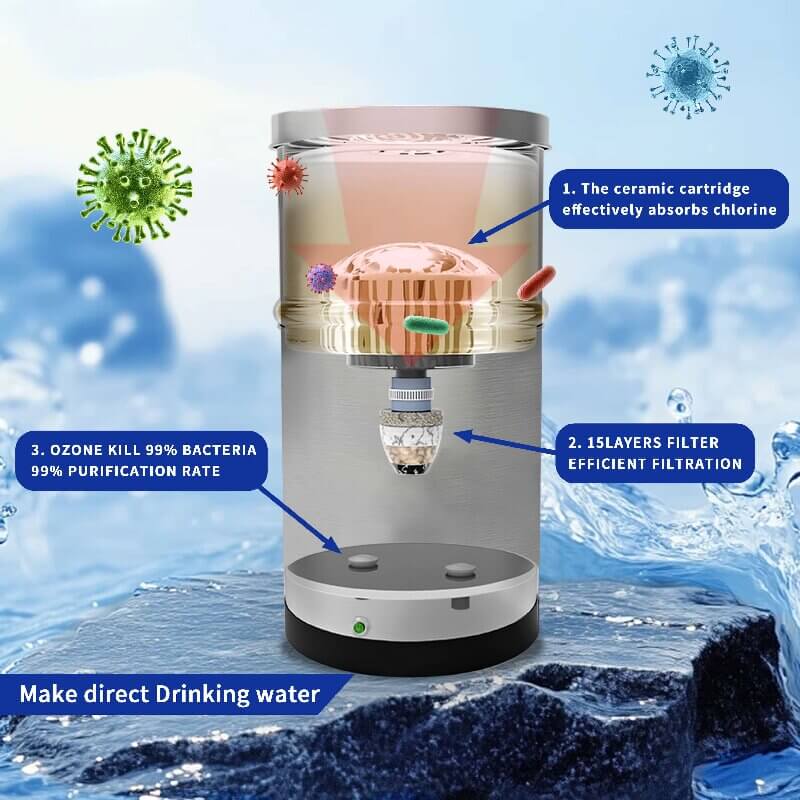
Working Principle and Core Advantages: A gravity water filter is essentially a physical system that relies on natural gravity to purify water. Water flows from the upper container through the filter element into the lower container, and the entire process requires no electricity. The filter element is usually made of ceramic, activated carbon, or composite materials, removing impurities through microporous filtration and adsorption.
This design brings several significant advantages.:
First, it operates with zero energy consumption, allowing continuous operation even in areas with prolonged power outages or unstable power supplies. Second, it is cost-effective, with relatively affordable equipment prices and low maintenance costs; ceramic filter elements can be reused by simple washing.
Third, it is easy to operate, requiring no complicated installation, making it suitable for renters or outdoor use. For treating seemingly clear municipal tap water, rainwater, or well water, these devices effectively remove sediment, rust, bacteria, residual chlorine, and pesticide residues, significantly improving taste and odor.
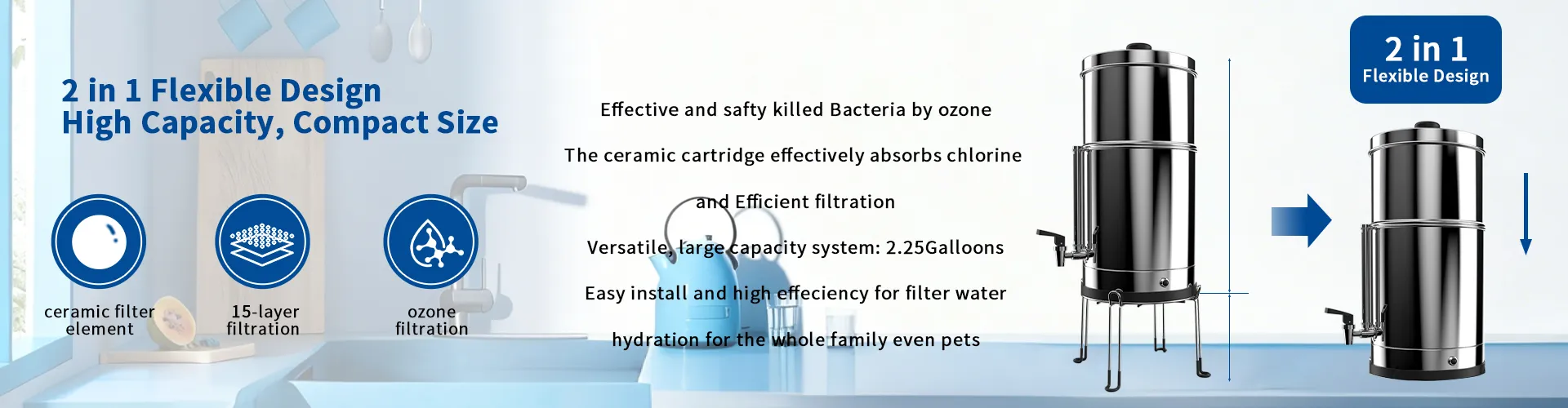
Regarding to the limitations of gravity filtration system that the general filter can’t cannot remove dissolved solids from water, such as heavy metal ions (lead, mercury, arsenic), fluoride, nitrates, and hardness components and also the bacteria and virus; we have special and new technology design special for this that is the Ozone disinfection funtion, and also the composite 15 layer can removal the heavy metal-lead, mercury, aresnic and suspended solids, residuel chlorine; and bacteria removal such as Salmonella enterica ,Staphylococcus aureus and Escherichia coli, the removal rate reaches 99.9%, with the third party testing report.
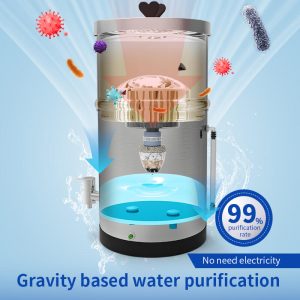
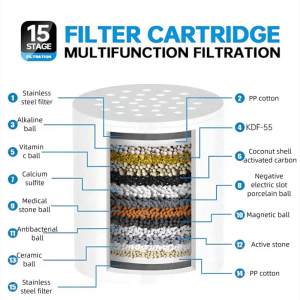
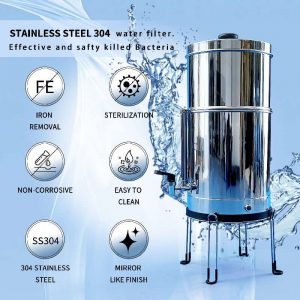
The gravity stainless steel water filter are in wide applications:
- Deep purification of regular drinking water.For urban tap water users, gravity filters can effectively remove residual chlorine, rust, sediment, and odors, improving the taste.
- Outdoor adventure and camping activities.Its portable design makes it ideal for activities such as hiking, picnicking, and mountaineering.
- Emergency relief and household reserves.When natural disasters (earthquakes, floods) cause water supply disruptions, gravity filter tanks can be quickly activated to convert rainwater and well water into safe drinking water.