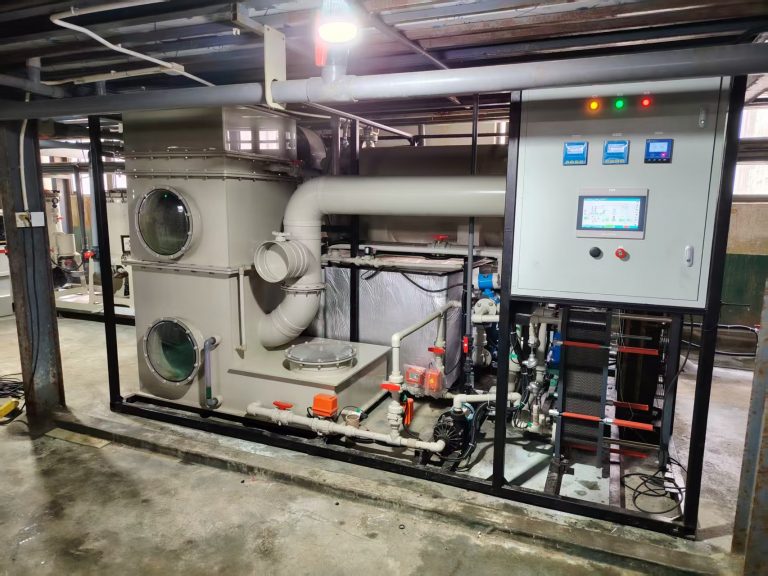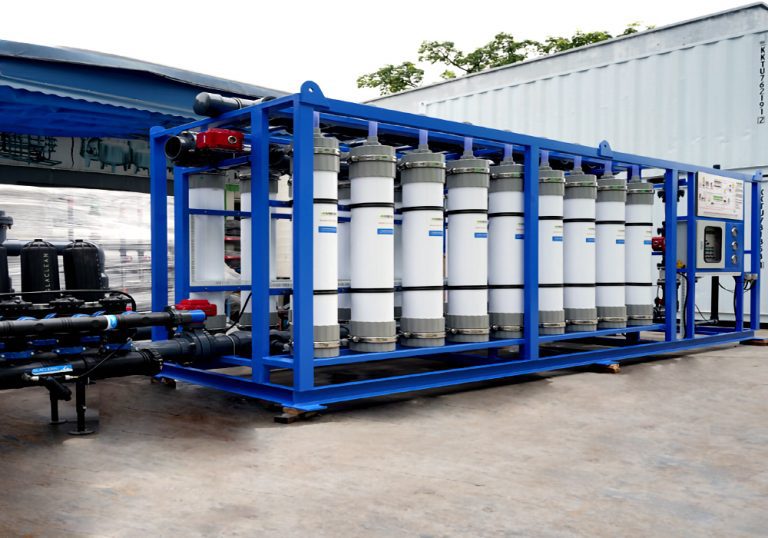
Reverse osmosis (RO) water treatment equipment
In the water treatment field, reverse osmosis (RO) water treatment equipment and gravity ozone sterilization stainless steel filter tanks are two common but fundamentally different types of equipment. Reverse osmosis (RO) technology is a pressure-driven membrane separation technology. The equipment uses a high-pressure pump to apply pressure to the raw water, forcing water molecules to pass through a semi-permeable membrane with a pore size of only 0.0001 micrometers. Dissolved salts, colloids, microorganisms, organic matter, and other impurities in the water are retained, achieving a purification efficiency of 97-98%. A typical reverse osmosis system includes multi-stage filtration: PP cotton and activated carbon pretreatment → precision filtration → RO membrane module → post-treatment (such as EDI or mixed bed technology). Its core advantage lies in physical isolation, producing high-purity water without the need for chemical additives.

Gravity Ozone Sterilization Stainless Steel Filter Tank
This equipment utilizes a gravity flow design, relying on water level difference rather than pressure for filtration. The core component is a stainless steel tank integrating an ozone generator. Ozone (O₃), as a strong oxidant, sterilizes 300-600 times faster than chlorine, rapidly killing bacteria and viruses. The stainless steel material (typically 316L food-grade) provides excellent pressure resistance and corrosion resistance; however, the filtration accuracy depends on the internal filter media (such as quartz sand and activated carbon), and generally cannot achieve the micron-level precision of reverse osmosis.
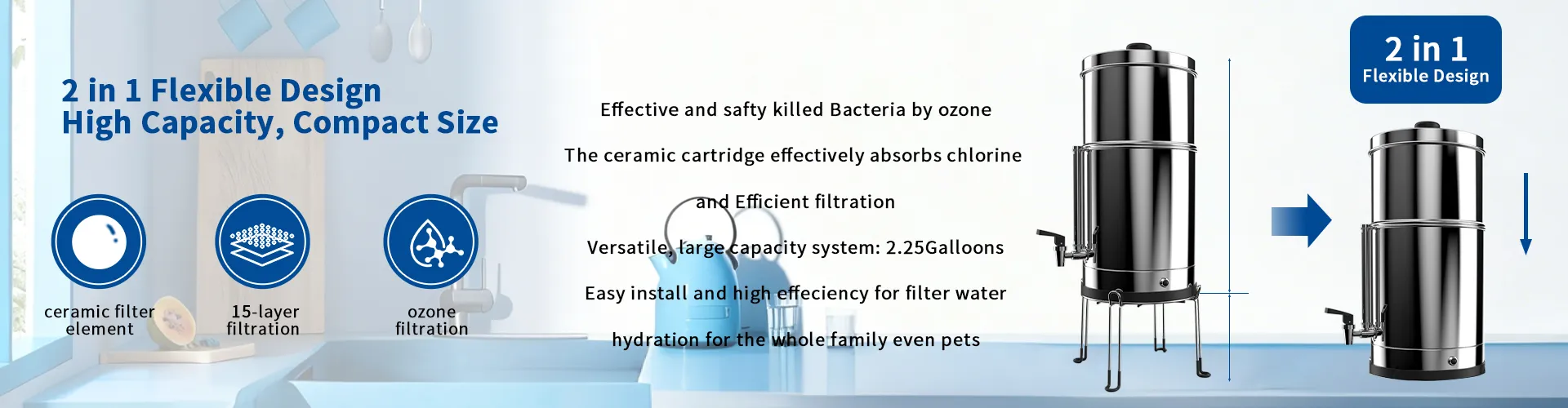
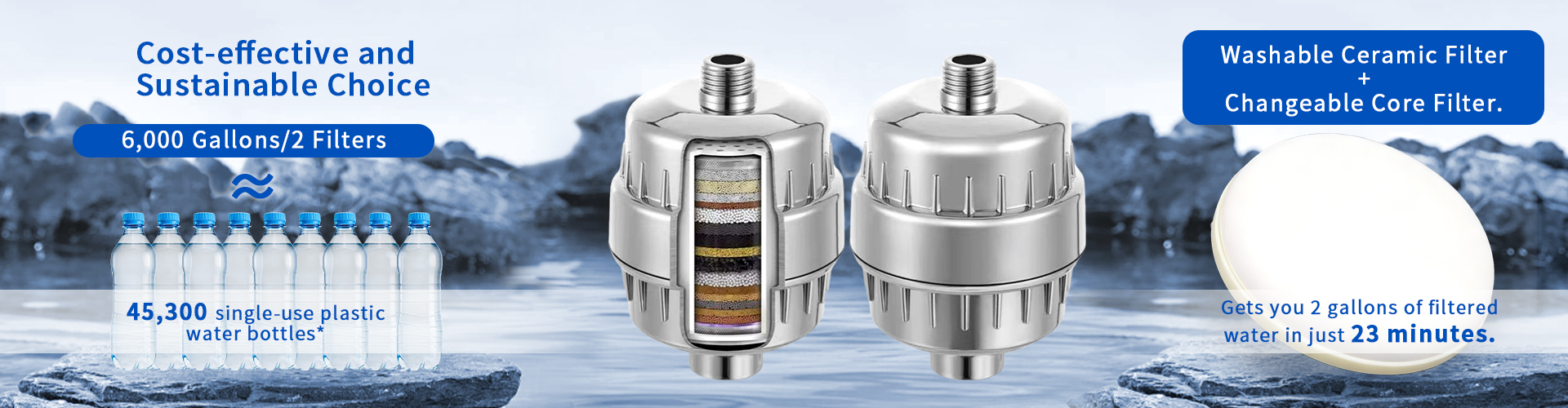
Differences between Reverse Osmosis and Gravity Filtration:
- Filtration Precision: Reverse osmosis removes 0.0001 microns, eliminating almost all impurities; gravity filtration primarily uses filter cartridges, typically removing 0.5-50 microns.
- Sterilization Capacity: Reverse osmosis removes bacteria and viruses, but the membrane is prone to fouling, and cleaning and replacement are relatively troublesome; gravity filters use ozone for broad-spectrum sterilization with no chemical residue.
- Water Production Rate: RO reverse osmosis typically produces 50-70% of water, including both wastewater and concentrate; stainless steel gravity filters use gravity flow, producing no wastewater but with a slower flow rate.
- Energy Consumption: RO reverse osmosis relies on electricity; stainless steel gravity ozone filters only require electricity for ozone generation, resulting in low overall energy consumption, and the ozone function has a built-in rechargeable battery.
- Inlet Water: RO filtration can reduce the TDS of influent water; gravity filtration cannot reduce the TDS of influent water.
Both small reverse osmosis and stainless steel gravity filters are suitable for household use. Reverse osmosis produces wastewater and concentrate, while gravity filtration does not produce wastewater. RO reverse osmosis has requirements for influent water quality and requires frequent filter replacements and is more expensive. Gravity filters include ozone sterilization, which removes bacteria from the water without causing secondary pollution. It allows for immediate filtration and drinking without the need for water storage.