NF vs RO Selection Guide for Sulfate Removal, Hardness Control and Mine Water Reuse
Mining water treatment projects often face complex water conditions, including high TDS, high sulfate, high hardness, scaling risks and dissolved metals. Although reverse osmosis (RO) is widely used for desalination, it is not always the most suitable technology for every mining application.
Nanofiltration (NF) membrane technology provides a selective separation solution for mining water treatment. Instead of removing all dissolved salts like RO, NF focuses on reducing specific ions such as sulfate, calcium, magnesium and certain metals while maintaining better energy efficiency and water recovery potential.
For mining sites requiring water reuse, hardness control or sulfate reduction, NF can provide a more optimized solution compared with traditional full desalination processes.
Why Mining Brackish Water Needs Nanofiltration Technology
Mining areas often rely on groundwater or mine wastewater sources with complicated chemical compositions. These water sources may contain high concentrations of sulfate, calcium, magnesium and other dissolved minerals, creating significant challenges for long-term water treatment operation.
High levels of hardness and sulfate can cause scaling problems on membrane surfaces, pipelines and process equipment. These deposits reduce system efficiency, increase cleaning frequency and limit the achievable recovery rate.
Nanofiltration technology is designed to selectively remove multivalent ions, making it an effective solution for controlling hardness, reducing sulfate concentration and improving the stability of downstream RO systems.
For mining projects where water reuse is required, NF provides a practical approach to improve treatment efficiency while reducing operational challenges.
NF Membrane vs RO Membrane: Understanding the Difference
Nanofiltration and reverse osmosis are both pressure-driven membrane separation technologies, but they solve different water treatment challenges.
Reverse osmosis is mainly designed for deep desalination. It provides high rejection of dissolved salts and is commonly used when very low TDS water quality is required, such as drinking water production, industrial pure water and high-purity applications.
Nanofiltration provides selective separation. It allows certain smaller monovalent ions to pass through while effectively reducing larger multivalent ions such as sulfate, calcium and magnesium.
For mining applications, this difference is important. Some projects do not require complete desalination but need targeted removal of hardness, sulfate or specific contaminants. In these cases, NF can provide a more efficient treatment approach.
How Nanofiltration Helps Mining Water Treatment
High Sulfate and Hardness Control
Many mining groundwater sources and tailings-related water streams contain high concentrations of sulfate, calcium and magnesium. These components increase scaling risks and create difficulties for water reuse.
NF membranes provide high selectivity for multivalent ions, helping reduce hardness and sulfate loading before further treatment processes. This can improve membrane system stability and reduce chemical cleaning requirements.
In applications where RO is required after NF treatment, NF can act as an effective pretreatment process to reduce scaling potential and improve overall system performance.
Acid Mine Drainage Treatment
Acid mine drainage (AMD) is one of the most challenging wastewater issues in mining operations. It usually contains low pH, high sulfate concentration and dissolved metals generated from mineral oxidation.
Traditional treatment methods such as chemical neutralization can reduce acidity and precipitate metals, but they often generate large amounts of sludge and may not achieve the required water reuse quality.
With suitable pretreatment, nanofiltration can help separate sulfate and dissolved components, creating opportunities for industrial reuse and improved water management.
Because AMD chemistry varies significantly between mining sites, membrane selection and process design should always be verified through actual water testing.
Selective Separation Instead of Complete Desalination
Not every mining project requires extremely low TDS water. Some applications only need reduced hardness, sulfate control or removal of specific contaminants.
Using RO alone in these situations may result in higher operating pressure, increased energy consumption and more complicated concentrate management.
NF provides a selective separation approach that can reduce unnecessary treatment intensity while achieving the required water quality targets.
For complex mining water, NF-RO hybrid systems often provide better flexibility than using a single membrane technology.
NF-RO Hybrid System for Complex Mining Water Conditions
For challenging mining water applications, Guanya can design integrated NF and RO treatment systems based on actual water characteristics and project requirements.
A typical process may include:
Raw Water Pretreatment → Filtration → NF Membrane System → RO Purification → Water Reuse
The NF stage reduces hardness, sulfate and scaling potential, while the RO stage provides deeper desalination when lower TDS water quality is required.
This combined approach can improve recovery potential, protect RO membranes and provide a more stable long-term operation solution.
Applications of Nanofiltration Technology Beyond Mining
Although NF has significant advantages in mining water treatment, its applications extend to many industrial sectors.
In industrial wastewater recycling, NF can help remove hardness, organic compounds and specific contaminants before water reuse processes.
In oilfield water treatment, NF is widely studied for sulfate removal because reducing sulfate can help prevent scaling problems caused by sulfate mineral formation.
In drinking water treatment, NF can be used for softening, organic matter reduction and improving water quality.
In lithium-related applications, NF technology is also being researched for selective ion separation in high magnesium-lithium ratio brine systems. However, lithium resource recovery requires detailed water analysis and process validation due to the complexity of brine chemistry.
How to Select the Right NF or RO Treatment System
Choosing between NF, RO or an NF-RO combination should always start with a detailed understanding of the raw water characteristics and final water requirements.
Important project information includes raw water analysis, TDS level, sulfate concentration, hardness, calcium and magnesium content, dissolved metals, pH, temperature and suspended solids.
The final application purpose is also critical. Drinking water, industrial process water, mining reuse water and environmental discharge requirements all require different treatment strategies.
The concentrate management plan is another important factor. A complete membrane solution must consider whether concentrate will be reused, evaporated, returned to mining processes or treated through additional systems.
Guanya engineers evaluate each project individually and recommend the most suitable membrane process according to actual operating conditions.
Guanya Mining Water Treatment Engineering Support
Guanya provides customized mining water treatment solutions combining engineering design, equipment manufacturing and technical support.
As a professional water treatment manufacturer in China, Guanya provides:
Customized NF, RO and NF-RO process design according to raw water conditions.
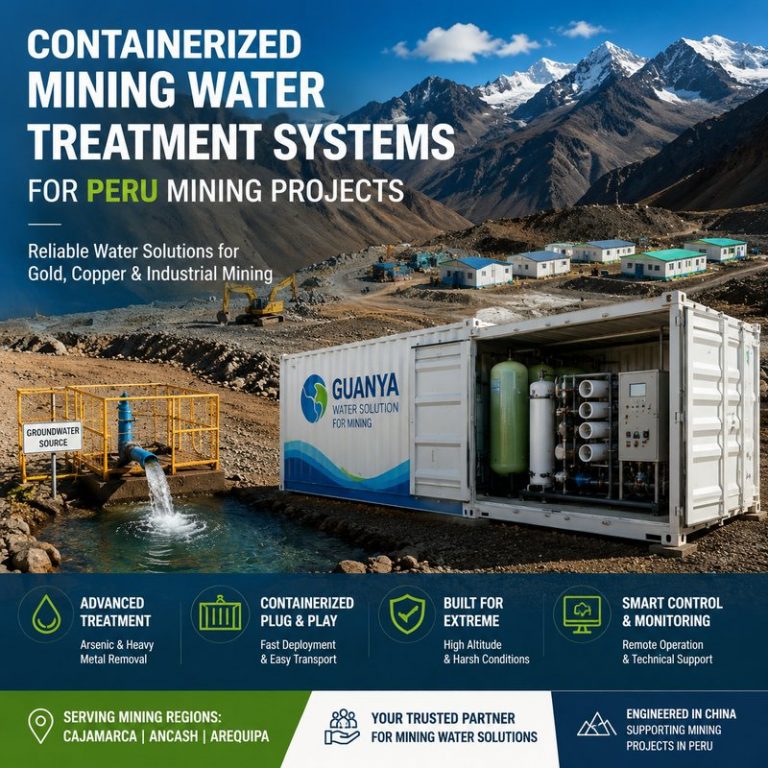
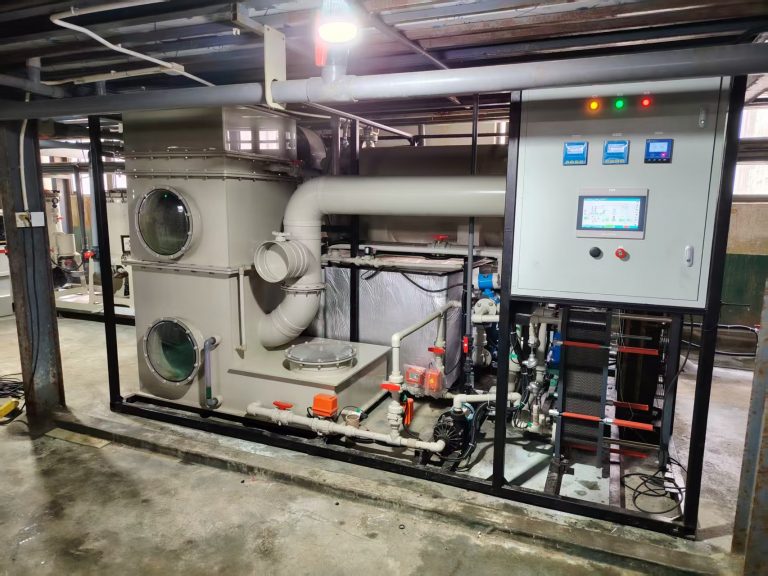
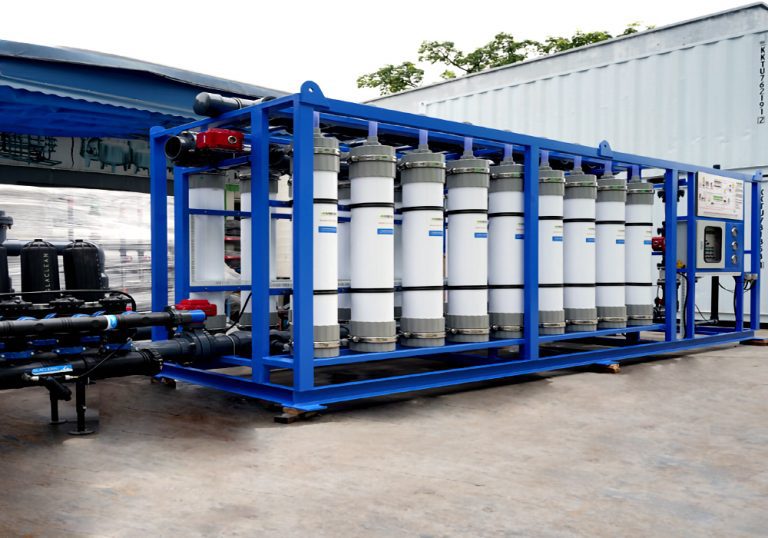
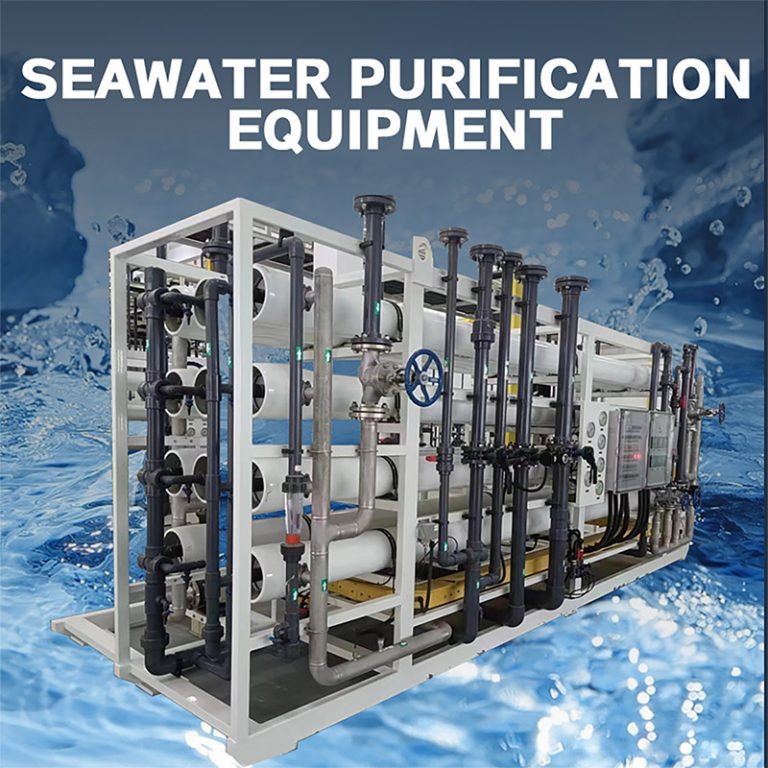
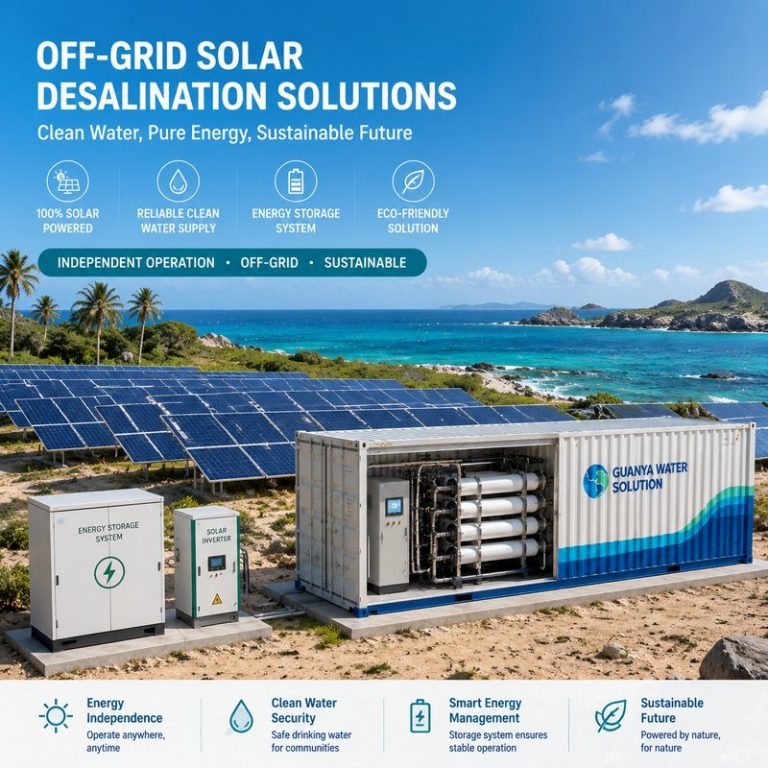
Containerized and modular water treatment systems manufactured and tested in our factory.
Technical drawings, equipment configuration and engineering documentation for EPC projects.
Remote technical support for international mining projects.
Our goal is to help mining companies and EPC partners develop reliable water treatment systems for complex and remote environments.
Technical Consultation
Need to Evaluate Whether NF or RO Is Suitable for Your Mining Water Project?
Please provide your raw water analysis, required capacity, water application purpose and concentrate disposal requirements.
Guanya engineering team can evaluate your project and recommend the most suitable solution, including:
NF membrane system
RO desalination system
NF-RO hybrid process
Containerized mining water treatment solution
Frequently Asked Questions
What is the difference between NF and RO membrane technology?
Nanofiltration focuses on selective removal of multivalent ions such as sulfate, calcium and magnesium, while reverse osmosis provides deeper desalination with higher rejection of dissolved salts.
Can nanofiltration treat mining wastewater?
Yes. NF is suitable for mining water containing high sulfate, hardness and scaling risks, especially when combined with proper pretreatment and, when necessary, RO polishing.
Can NF completely replace RO?
Not always. NF and RO solve different treatment objectives. NF is suitable for selective separation, while RO is preferred when very low TDS water quality is required.
Why is NF often used before RO?
NF can reduce hardness and sulfate loading, lowering scaling risks and improving the stability and efficiency of downstream RO systems.
What information is needed for mining NF system design?
Engineers need raw water analysis, required flow rate, final water quality requirements, recovery target, operating conditions and concentrate disposal method.