Project status · Shipped
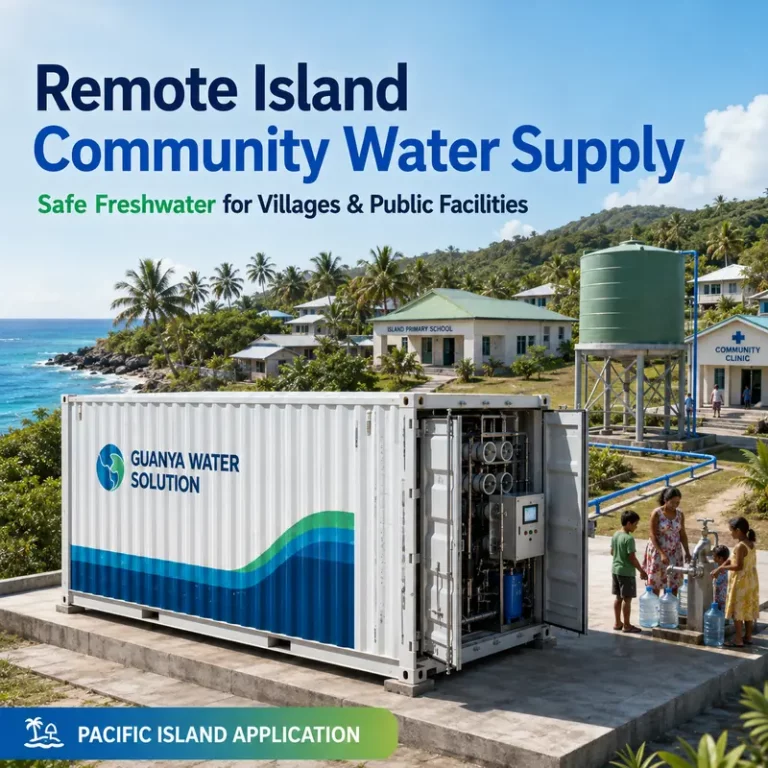
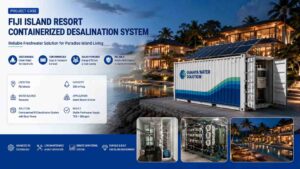
GUANYA shipped a seawater reverse osmosis (SWRO) system for an island resort in Fiji. The system brings three independent 1 m³/h units together in one customized 20-foot container, for a combined rated capacity of 3 m³/h. The configuration addresses island logistics, variable water demand and access for maintenance.
Project overview
| Application | Water supply for a Fiji island resort |
|---|---|
| Water source | Seawater |
| Project stage | Shipped |
| Rated product water | 3 m³/h combined from three independent 1 m³/h units |
| Enclosure | One customized 20-foot container with insulation and industrial air conditioning |
| Feedwater TDS design limit | Up to 36,000 mg/L |
| Design recovery | 31% |
| Operating pressure range | 3.5–5.5 MPa |
Project background
Guest rooms, kitchens, laundry and other resort services require a dependable freshwater supply. The project had to fit a tropical island setting where transport, installation access and availability of specialist service affect the equipment arrangement. Seawater intake, power, storage, final water conditioning and distribution are part of the wider supply plan.
The main challenges
- Transport and site assembly. Fit the process equipment into a shipment that the island site can receive and connect.
- Variable demand and maintenance. Match production to occupancy and water use, and plan for the lower capacity available during service.
- Tropical operating conditions. Manage the equipment enclosure temperature and provide service access in a hot, humid marine environment.
How the system was designed
Independent units give the resort operating flexibility
The operator can run one, two or three units according to demand and tank levels. With one unit offline, the other two have a combined nominal output of 2 m³/h. Whether that covers the resort’s needs depends on demand and available storage. With all three units at rated output, 16, 20 and 24 operating hours would yield 48, 60 and 72 m³/day respectively. These are planning figures. Actual output depends on feed conditions, cleaning and downtime.
Factory integration defines the site interfaces
The container integrates the treatment equipment, internal piping, electrical connections, instruments and controls. That reduces internal assembly at the destination. The site team still needs to prepare unloading and foundations, feed and discharge connections, power and grounding, product-water storage and any final treatment required for the intended use.
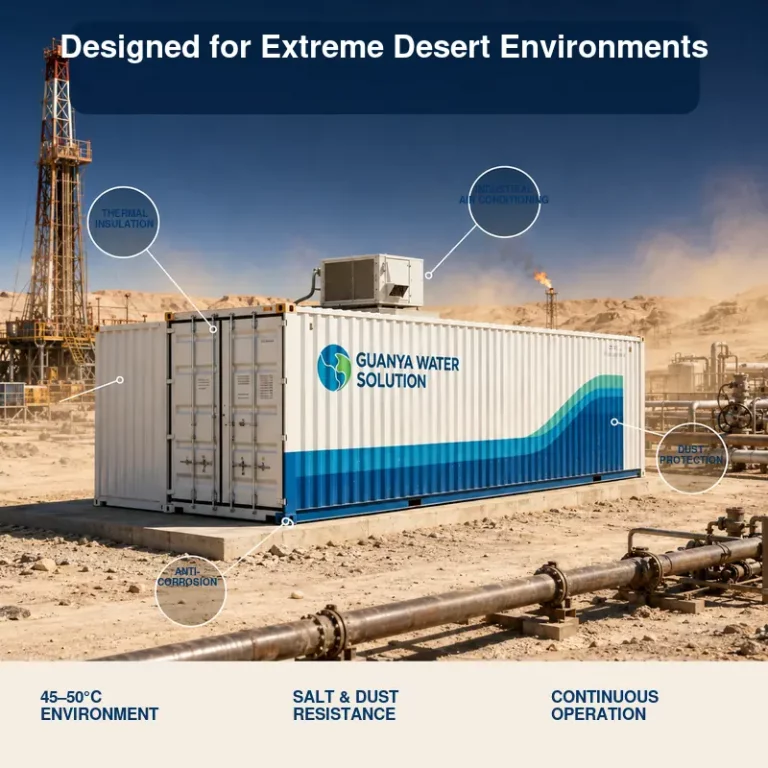
Insulation and cooling support equipment protection
The container includes insulation and industrial air conditioning. Installation planning must allow access to service points and account for enclosure cooling in the electrical load. If water is intended for drinking, food service or ice production, commissioning must verify the applicable chemical and microbiological requirements and any required post-treatment.
Whole-life costs
Initial costs include the equipment, freight and island transfer, lifting, foundations, external connections and commissioning. Running costs include electricity for treatment and enclosure cooling, chemicals, membrane and filter replacement, cleaning, labour, spares and concentrate handling. Estimating cost per cubic metre requires site electricity prices, maintenance assumptions and net water delivered over the same period.
Equipment photos and project status
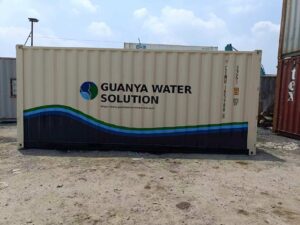
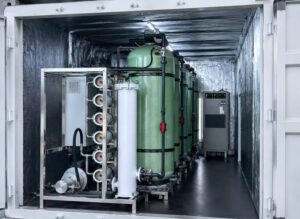
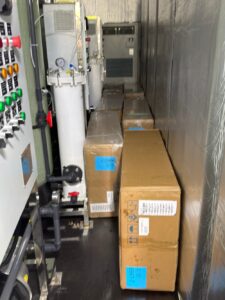
The system has been shipped. Site installation, commissioning and operating results remain to be confirmed.
Frequently asked questions
How much water can this system produce each day
The combined rated output is 3 m³/h. At that rate, 20 hours of operation would produce a theoretical 60 m³ per day, while 24 hours would produce 72 m³. Actual production depends on operating conditions, cleaning and downtime.
Why use three smaller units instead of one larger unit
Three independent units allow production to be adjusted in steps of 1 m³/h and permit one unit to be stopped while the others continue running. With one unit offline, the remaining nominal output is 2 m³/h. Storage and demand determine whether that reduced output is sufficient.
Does containerization eliminate site construction
It reduces internal equipment assembly and provides an enclosure for the treatment system. The site still needs a suitable foundation, intake and discharge connections, a freshwater connection, electrical supply and any associated storage or final treatment facilities.
Does low TDS mean the water is safe to drink
Low TDS alone does not establish drinking water safety. Final suitability requires assessment of the relevant water quality parameters, appropriate treatment and hygienic storage and distribution.
Can the system be expanded later
Expansion can be evaluated, but it depends on the available space and the capacity of the intake, power supply, concentrate discharge and storage. These interfaces should be considered early if increased future demand is expected.
Has the Fiji system started operating at the resort
The system has been shipped. Installation, commissioning and site performance verification are the next project stages.
Discuss your island water supply with our engineers
Share your location, water source and available analysis, daily and peak demand, intended use, power supply and transport access. For an existing system, include its output and any constraints on shutting down the plant.
For an existing plant, see our guide to planning a resort desalination upgrade.