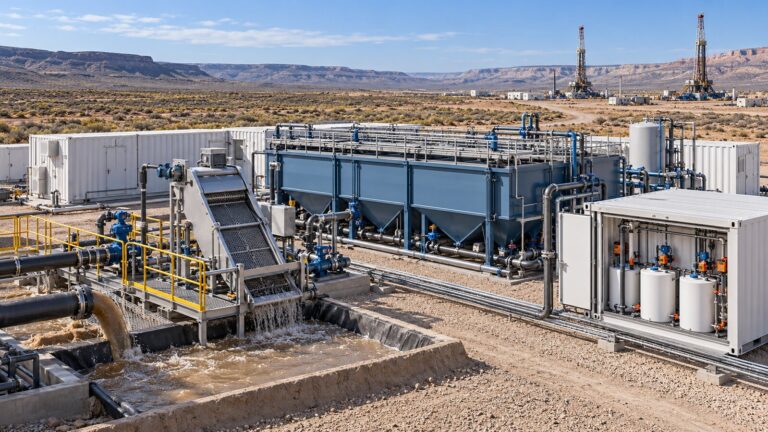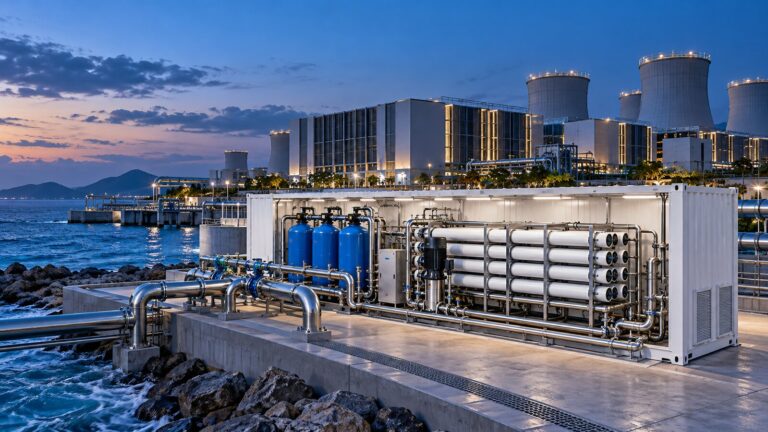
For an island resort, desalination is part of the guest experience even when guests never see the equipment. An aging seawater reverse osmosis (SWRO) system may face falling output, membrane fouling, corrosion, unreliable components or limited access to replacement parts. Peak-season demand and resort expansion can put further pressure on a system that already has little standby capacity.
Upgrading such a plant is both an engineering and an operational decision. Owners need to understand capital expenditure and long-term cost; engineers need a practical design and a manageable transition. Containerized or skid-mounted modules can help reduce site assembly and support phased replacement where suitable. Whether major civil works and prolonged water interruptions can be avoided depends on the existing facilities, storage, redundancy and construction conditions.
1. Understand the water and the existing system
Before selecting a replacement, review current and future daily and peak water demand, product-water quality, operating hours and the available storage. Examine operating logs, cleaning frequency, product flow and conductivity, pressure trends, corrosion and maintenance records. If a complete feed-water analysis is unavailable, representative sampling and further testing may be needed, including consideration of seasonal variation.
Inspect the intake, pretreatment, high-pressure pumps, membranes, controls and distribution interfaces as a connected system. Existing intake pipelines, tanks, discharge arrangements, foundations and electrical distribution may be reusable, but only after checking their condition, capacity, materials, compliance and compatibility with the proposed equipment. Reusing a tank or pipeline does not automatically mean it can support a new duty.
2. Compare the practical upgrade options
- Repair and retain: address identifiable faults if the existing system remains suitable for the required output, reliability and water quality.
- Partial retrofit: replace or upgrade specific components or pretreatment when the remaining equipment has a reasonable service life and compatible interfaces.
- Add a standby module: introduce an additional train where the existing plant can continue operating and the required backup capacity is justified.
- Phase in replacement: install and commission new capacity in stages, then retire old equipment according to an agreed transition plan.
The choice depends on condition, available space, budget, demand and risk. A second RO train does not eliminate shared failures: a common intake, feed pump, power source, distribution line or control system may still interrupt both trains. The right redundancy should address the actual risks and required level of service.
3. Design a module around the island site
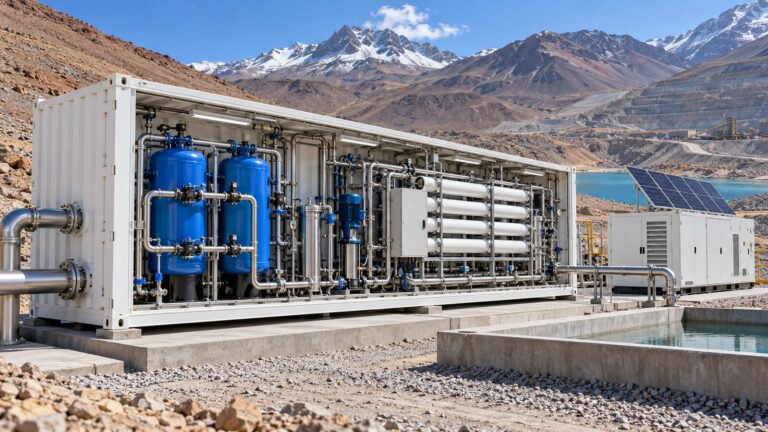
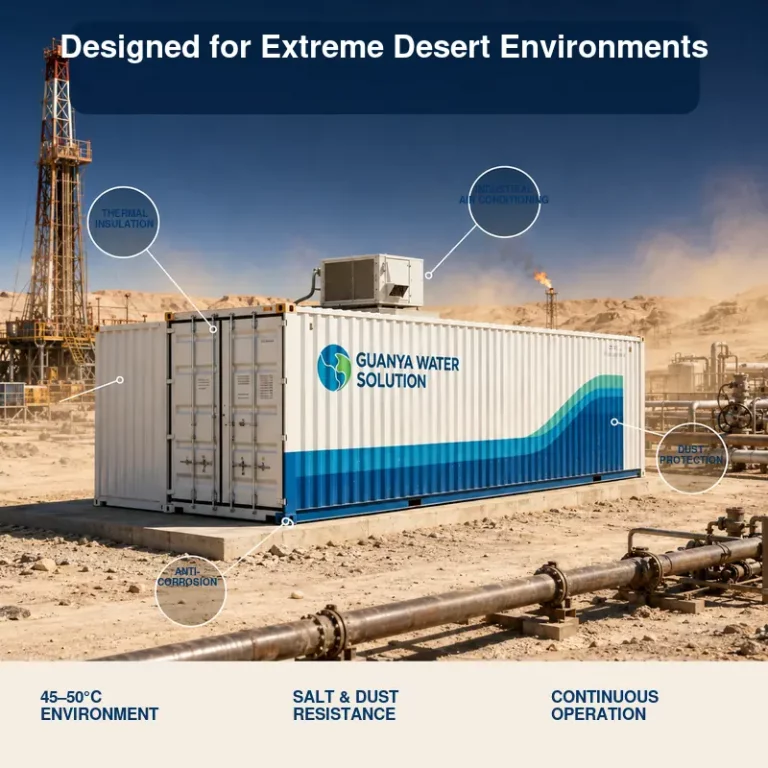
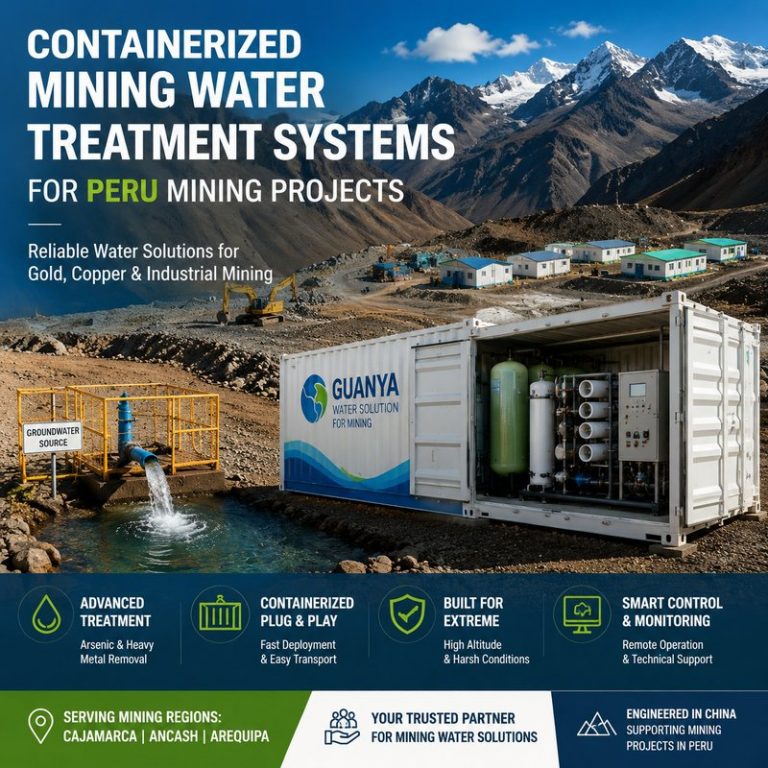
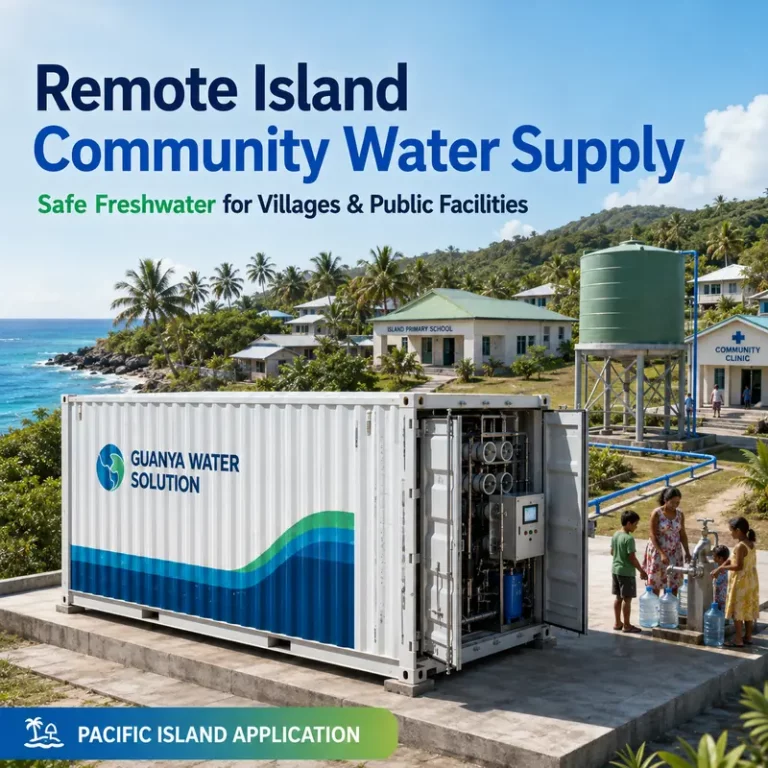
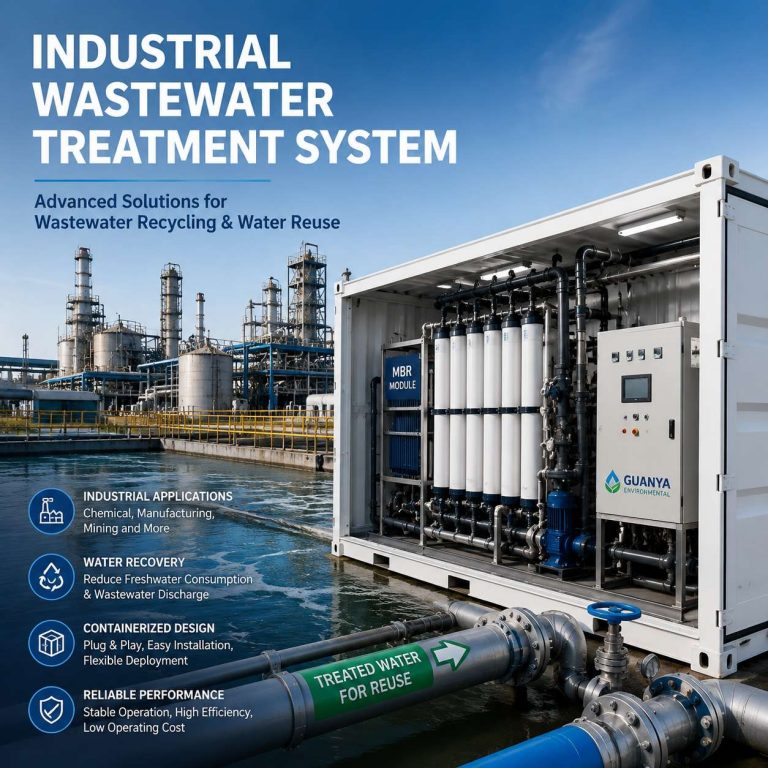
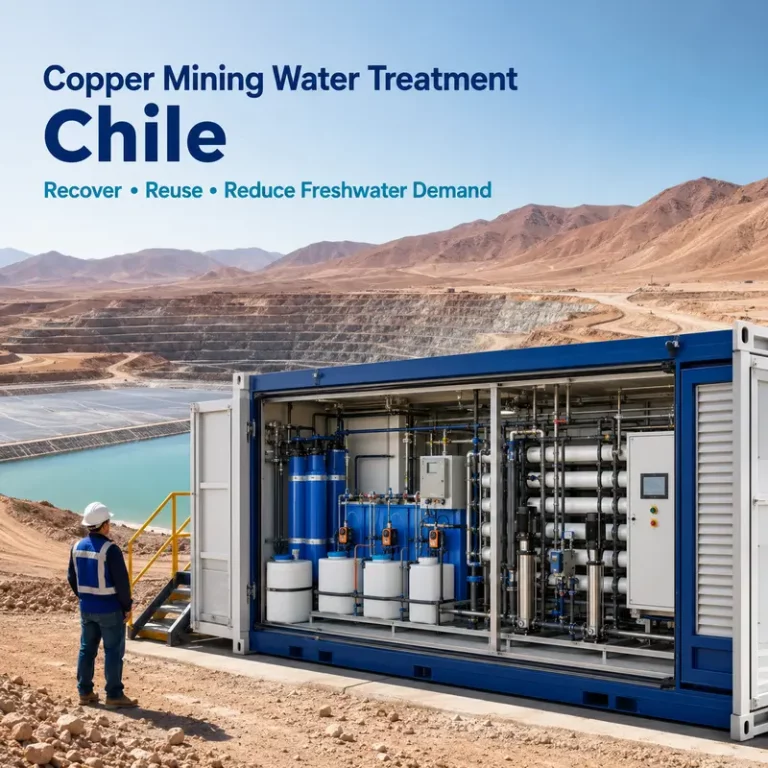
Factory-integrated containerized or skid-mounted equipment can reduce on-site assembly and provide a defined equipment footprint. A modular layout can support staged installation or later expansion when the site and utility capacity allow. The container is only one part of the project: hardstanding or foundations, connections, drainage, safe access and any required permits still need site-specific review.
Early planning should cover vessel and road transport, unloading, crane capacity, lifting points and the route to the installation area. The design should also consider limited space, marine corrosion, ventilation and heat, noise near guest areas, access for membrane removal and servicing, and the available shore power or site electrical supply. Where appropriate, sound treatment or environmental protection can be included in the agreed scope.
Process interfaces, pipe sizes, electrical loads, control signals and any BMS/SCADA integration should be agreed with the resort team and local MEP, EPC or water-service partners. A clear interface list helps define who supplies and installs each connection. Factory inspection and acceptance testing can be planned under the project agreement, with the test medium, checks, acceptance criteria and records defined in advance.
4. Plan the changeover around water continuity
A changeover plan begins with a realistic demand profile and an assessment of usable treated-water storage. Depending on the site, the team can examine whether an old unit and new module can run in parallel during commissioning, whether temporary capacity is needed, and how much storage is available while connections are changed. The quality and integrity of stored water and distribution arrangements should be considered as well.
Identify isolation points, flushing and disinfection requirements, commissioning steps, responsibilities, a suitable low-demand switching window and a contingency plan. A standby module or buffer tank can reduce the impact of an outage when properly sized, but neither guarantees uninterrupted supply if shared intake, power or downstream distribution fails. Actual interruption times must be assessed after site survey and detailed planning; zero shutdown cannot be assumed.
5. Compare investment and total cost of ownership
The lowest equipment purchase price alone does not establish the lowest cost of water. Compare alternatives over a consistent evaluation period and record the assumptions for demand, operating hours, electricity prices, feed-water conditions and equipment life. Include:
- Equipment, engineering, necessary civil works and site utilities.
- Freight, island transfer, lifting, installation and commissioning.
- Planned shutdowns, temporary water supply and the potential operational effect of interruptions.
- Electricity, pretreatment chemicals, cleaning, membrane and filter replacement, waste handling and water-quality monitoring.
- Maintenance labour, training, critical spare parts, service access and future expansion.
Any cost or energy comparison should use verified site data and the proposed operating conditions. Actual savings and payback cannot be determined without them.
6. Make the proposal understandable before ordering
Depending on the agreed project scope, GUANYA WATER SOLUTION can provide process diagrams, equipment layouts and interface information to help owners, consultants, resort engineers and local contractors review the proposed solution. Project-appropriate 3D visualizations can help discuss equipment access and the arrangement; they are illustrations and do not replace approved drawings or site verification. Deliverables, factory tests, training and commissioning support are defined in the project agreement.
For a closer comparison of upgrade options, read when to repair, retrofit or replace an aging SWRO plant. For a broader look at deployment and maintenance, see how we engineer water treatment systems for remote sites.
Discuss your desalination upgrade
Whether you are assessing an aging plant, considering a standby train or planning a staged replacement, share your feed-water source and available water-quality report; existing equipment and operating history; required output and operating hours; available intake, storage, discharge, power and installation space; and your upgrade goals. We can review the information and discuss appropriate next steps.