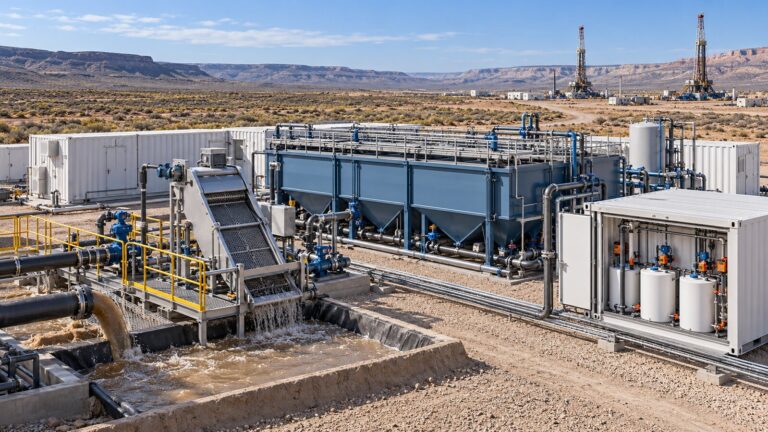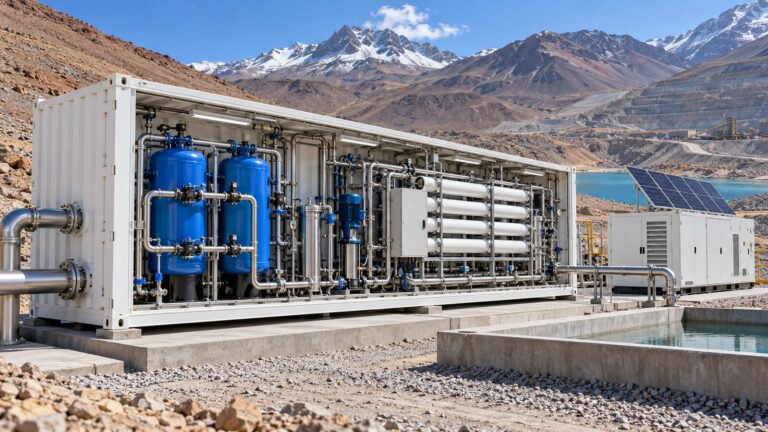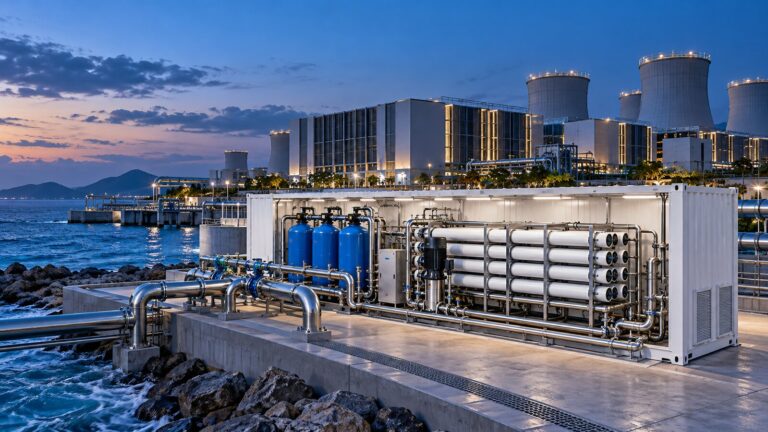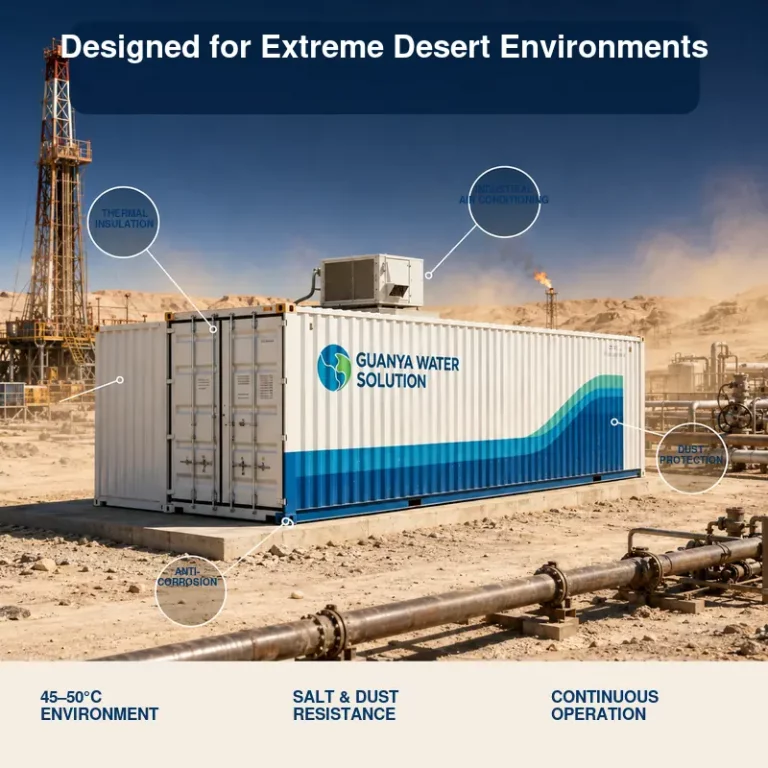
Project stage: Concept evaluation and treatment-route comparison | Application: Municipal drinking water | Design basis: Two independent groundwater treatment plants, 200 m³/h and 120 m³/h.
A water-sector engineering firm in South America is evaluating treatment options to reduce arsenic and fluoride in groundwater used for public water supply. GUANYA compared selective adsorption and filtration with brackish-water reverse osmosis (BWRO), considering water quality, energy, site requirements and residuals management.
Project background and water-quality challenge
The facilities are at separate locations and are assessed as independent plants. The available groundwater samples show moderately mineralized, alkaline water with fluoride above the project target. The design targets supplied for evaluation are arsenic ≤ 0.010 mg/L and fluoride ≤ 1.3 mg/L; the applicable local standards and sampling methods must be confirmed.
Design limitations: the available analyses are single-sample records, arsenic speciation is unknown, and seasonal variation remains unconfirmed. Representative sampling, oxidation assessment and site-specific testing are required before final process selection or performance commitments.
Two routes for the same treatment objective
Route A: Selective adsorption and filtration
The proposed treatment sequence includes pre-oxidation and pH adjustment as required, preliminary filtration, arsenic adsorption, fluoride-removal media, final filtration and disinfection. Its targeted approach can retain much of the water’s natural mineral content and does not produce a continuous RO concentrate stream. Backwash water, spent media and any regeneration waste still require an agreed management route.
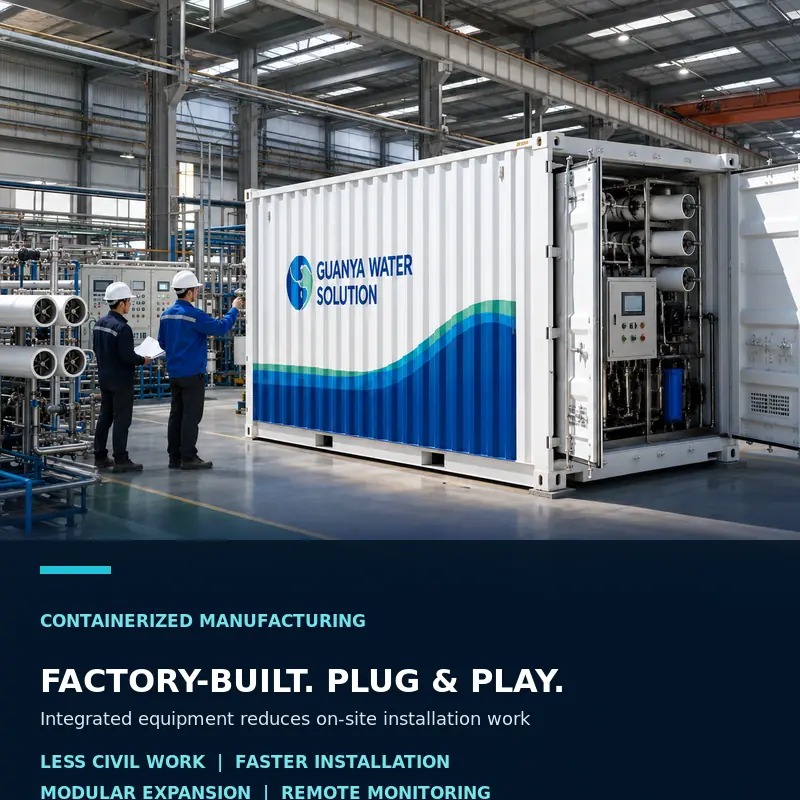
Route B: Brackish-water reverse osmosis
Following suitable pretreatment, dechlorination and antiscalant dosing, BWRO removes a wider range of dissolved constituents. The preliminary design considers a single-pass recovery of 83%, subject to membrane projection and water-quality validation. Product-water conditioning, concentrate handling and cleaning wastewater need to be considered in the final design.
Comparing lifecycle requirements
| Decision factor | Adsorption and filtration | BWRO |
|---|---|---|
| Treatment objective | Target arsenic and fluoride; evaluate media capacity for actual water. | Broader dissolved-salt reduction in addition to targeted contaminants. |
| Electricity | Preliminary comparison indicates lower consumption; calculate per m³ of treated product. | Compare on a permeate-volume basis, including pumps and auxiliaries. |
| Residuals | Intermittent backwash, spent media and possible regeneration waste. | Continuous concentrate plus cleaning waste; confirm disposal capacity. |
| Operating inputs | Media replacement, chemicals, backwashing and maintenance. | Membrane replacement, antiscalant, cleaning, energy and maintenance. |
| Capital comparison | Compare quotations only after both routes are aligned to the same net product-water output, availability and supply boundaries for each plant. | |
In the preliminary assessment, selective treatment is the base route for the stated removal objective, subject to media testing and residuals management. BWRO remains an option where broader salinity reduction is needed or the owner prefers a modular membrane system. Actual lifecycle costs depend on local electricity, chemicals, media life, labour and disposal rates.
Verification before final design
- Collect representative raw-water samples and determine arsenic species, competing ions and seasonal variation.
- Validate arsenic and fluoride media performance, regeneration assumptions and usable life through suitable testing.
- Confirm each plant’s required net output, operating hours and redundancy independently.
- Agree on safe handling and disposal routes for all residuals, including any BWRO concentrate.
- Confirm drinking-water quality, disinfection, permits, installation interfaces and local requirements.
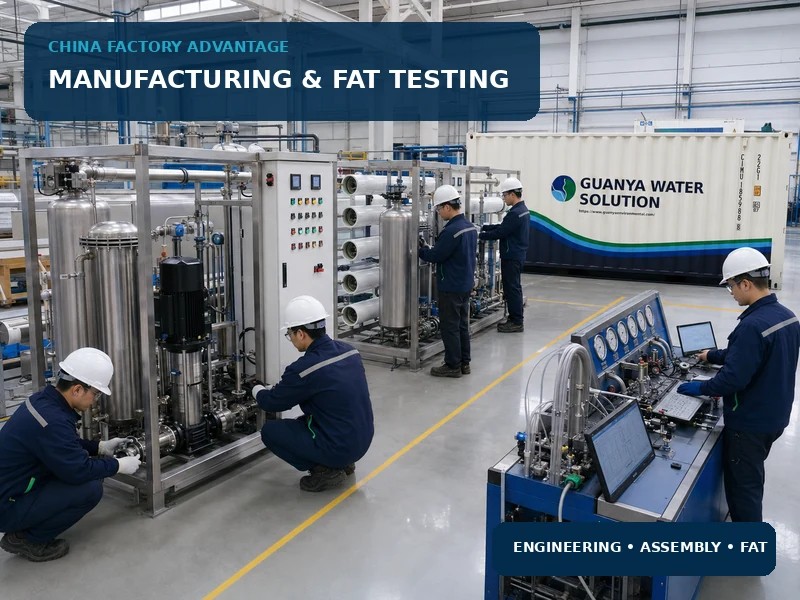
Engineering support from concept to delivery
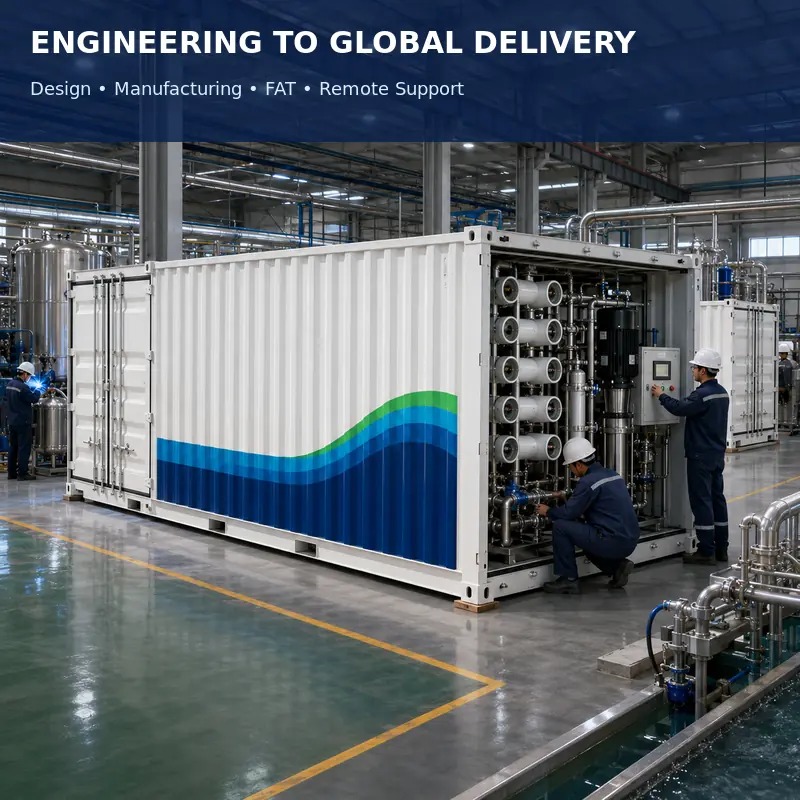
GUANYA develops project-specific water-treatment designs, equipment layouts, utility schedules and factory testing plans. The final scope, performance, equipment selection and delivery schedule are subject to an agreed design basis and technical confirmation.
Discuss your drinking-water project
Share your source-water analysis, required net flow, operating schedule and target water quality. Our engineers can compare treatment options and identify the project information needed for a reliable proposal.
Confidential concept-stage reference: client and end-user identities are withheld. Treatment performance and operating figures require project-specific verification.