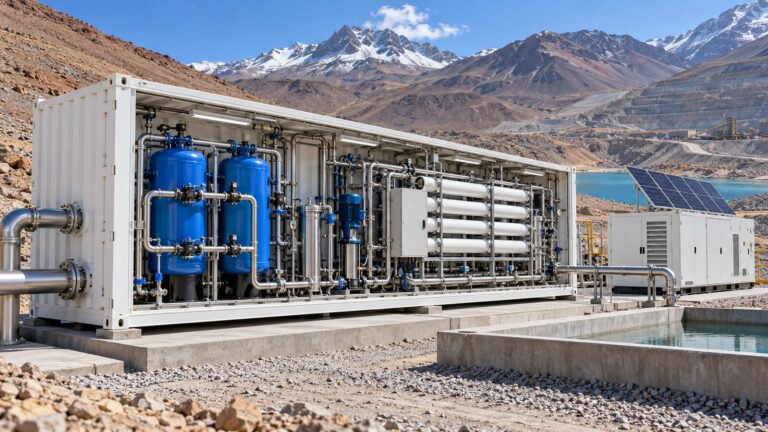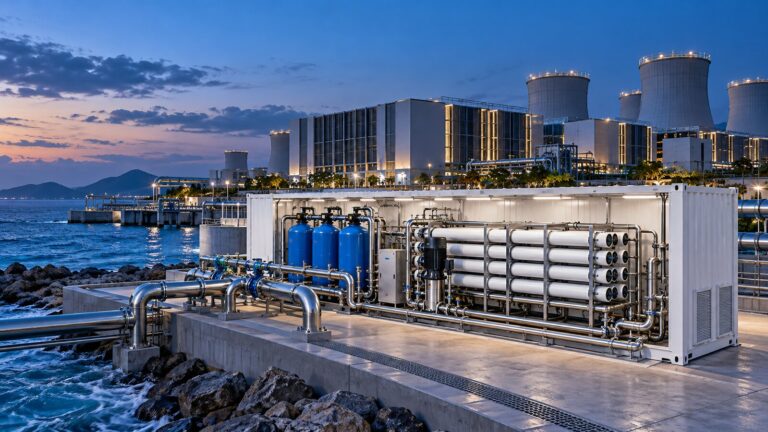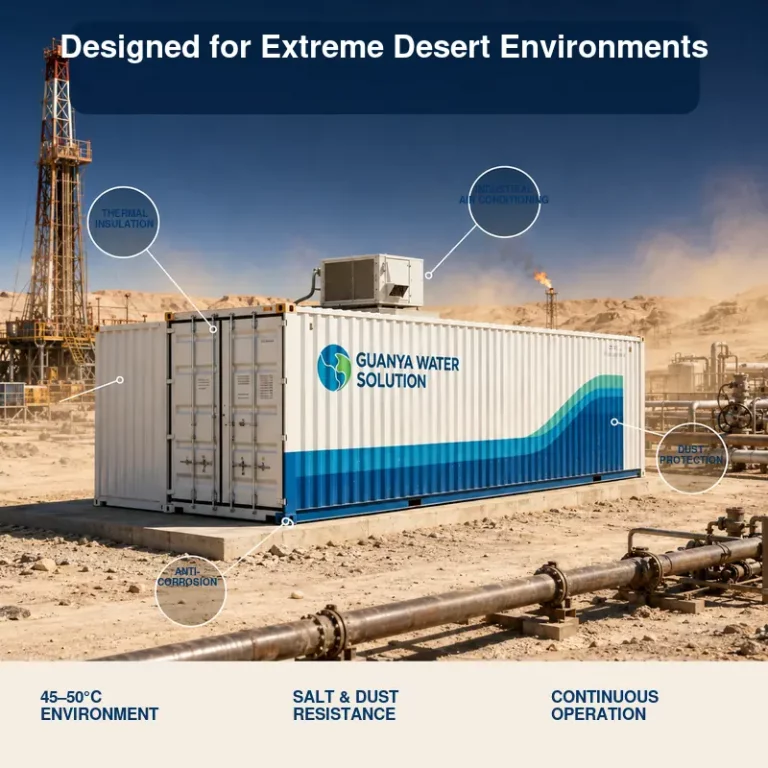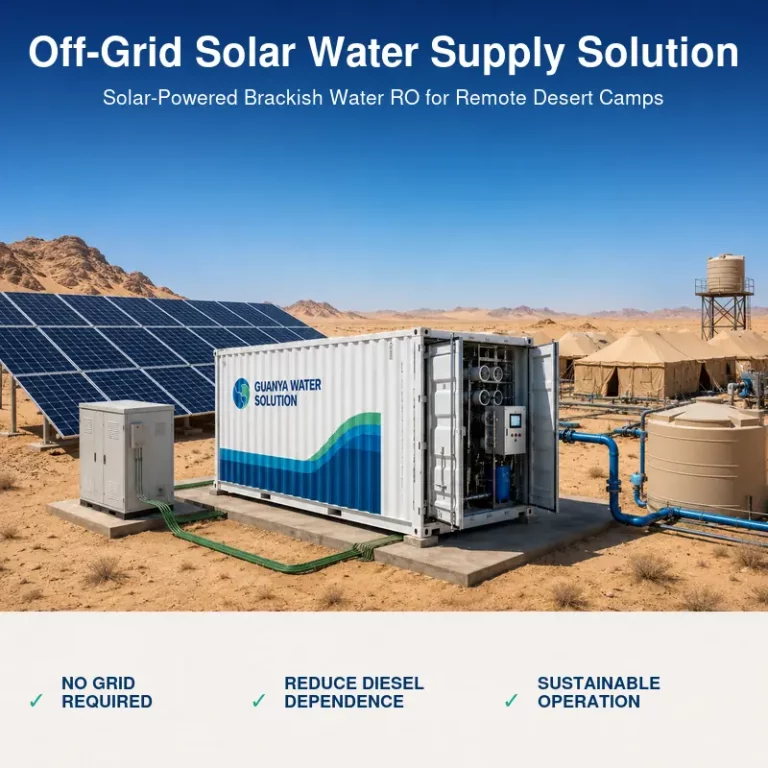
GUANYA WATER SOLUTION has prepared a skid-mounted brackish-water reverse-osmosis (BWRO) design for a site in Yemen. The design permeate capacity is 9 m³/h. The design feed TDS is 1,891.5 mg/L. The site name is withheld.
Country: Yemen | Duty: Brackish-water desalination | Design flow: 9 m³/h
The problem
A site in Yemen needed drinking-quality water from brackish feed, not from seawater. The design feed TDS is 1,891.5 mg/L, so a high-pressure seawater RO train would be the wrong process family. Country only is given; no city or camp name is published.
How the scheme solves it
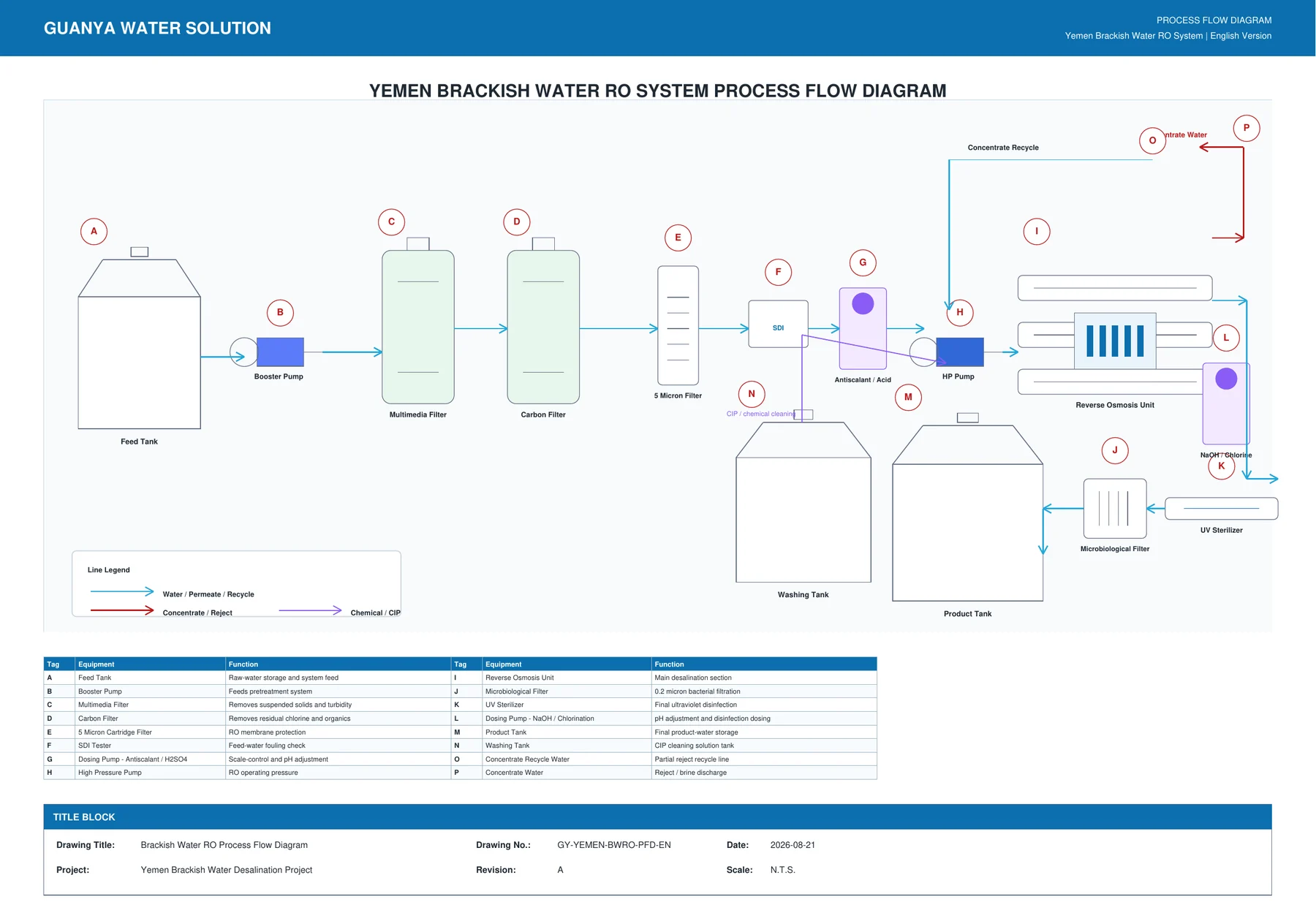
GUANYA prepared a 9 m³/h skid-mounted brackish-water RO treatment scheme with a design recovery of 60–65%. The process flow is feed tank → booster pump → multimedia filter → carbon filter → 5 µm cartridge filter → antiscalant dosing → high-pressure pump and RO array → pH adjustment → microbiological filter and UV disinfection → product tank, with a CIP/washing tank and a concentrate recycle line as shown on the process drawing. The skid layout places the raw-water pump, sand and carbon filters, cartridge filters, high-pressure pump, membrane housings (FR12-8040 as marked on the layout), CIP tank and ultraviolet sterilizer on one frame. The unit is factory-assembled and factory-tested; time to first water depends on well or feed supply, power and site hook-up.
Design drawings
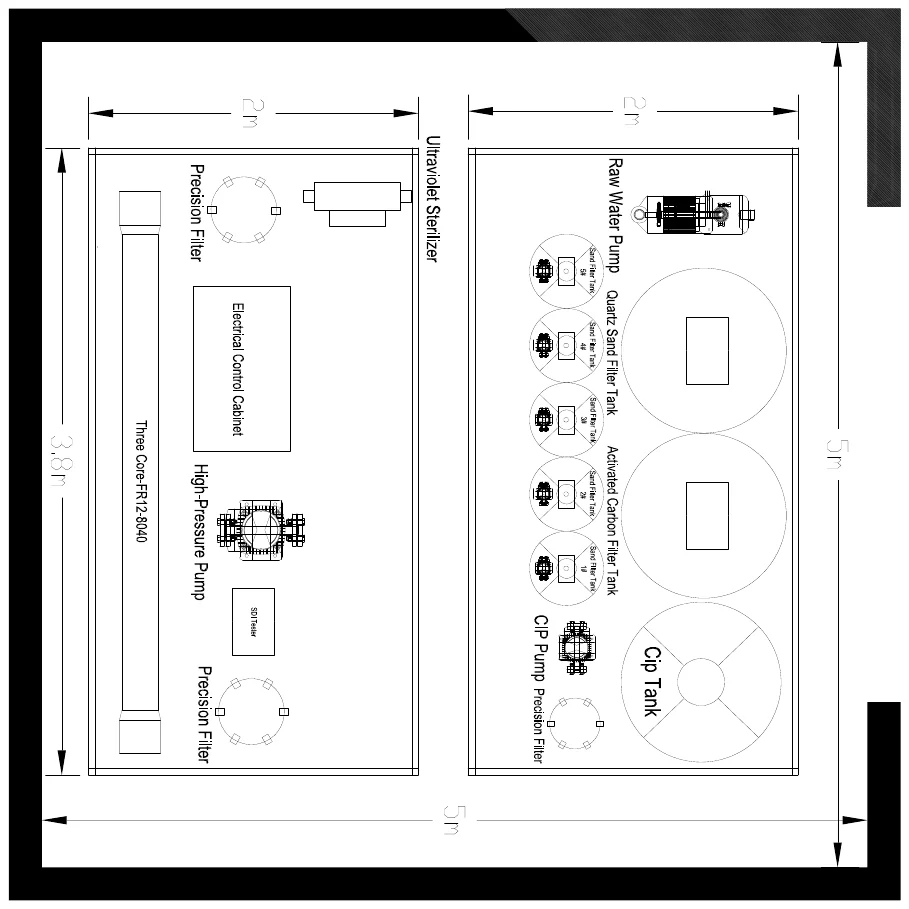
Design basis
| Item | Design-basis value |
|---|---|
| Country / setting | Yemen (site identity withheld) |
| Design permeate capacity | 9 m³/h |
| Design feed TDS | 1,891.5 mg/L |
| Design RO recovery | 60–65% |
| Proposed process | Raw water → feed tank → booster pump → multimedia filter → activated-carbon filter → 5 µm cartridge → antiscalant / acid dosing → high-pressure pump → brackish-water RO, with a concentrate-recycle line in the design to support recovery → UV disinfection |
| Integration | Pretreatment, RO, post-treatment, instruments, CIP and a stainless-steel skid frame, sized for an equipment room in the design documents |
The design documents also describe monitoring of TDS, pH, turbidity, flow, pressure and temperature. Performance in the field depends on a current water analysis and commissioning. Figures on this page are design values, not operating results.
Related reading
- Argentina coastal SWRO, 250 m³/day (seawater duty, different from this brackish design)
- Mine camp water supply
Frequently Asked Questions
How is the 9 m³/h figure derived?
It is the design permeate capacity. Actual output depends on feed quality, recovery, cleaning and operating hours.
Why is this not a seawater RO plant?
The design feed TDS is 1,891.5 mg/L, which is brackish water. The proposed membrane and recovery range are those of a brackish-water RO train, not a high-pressure seawater plant.