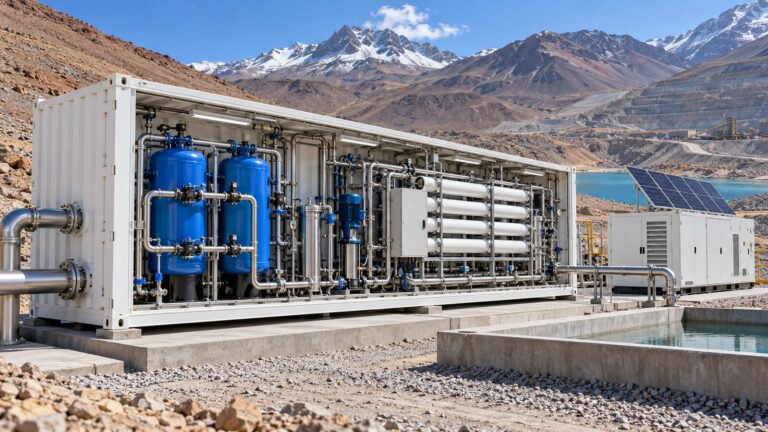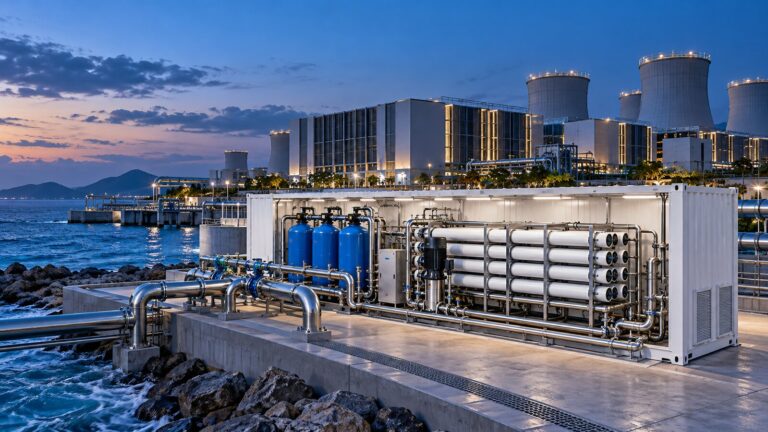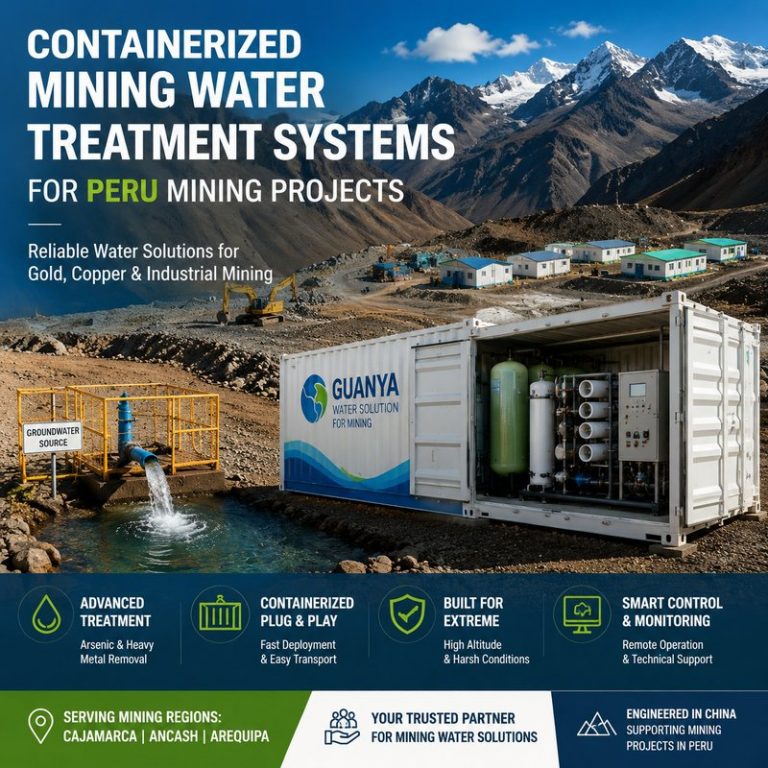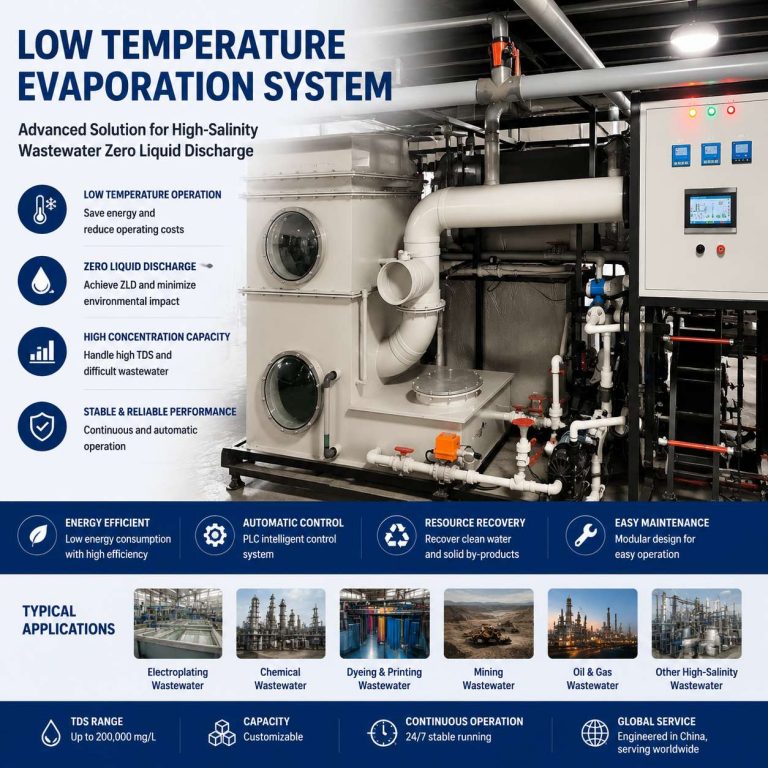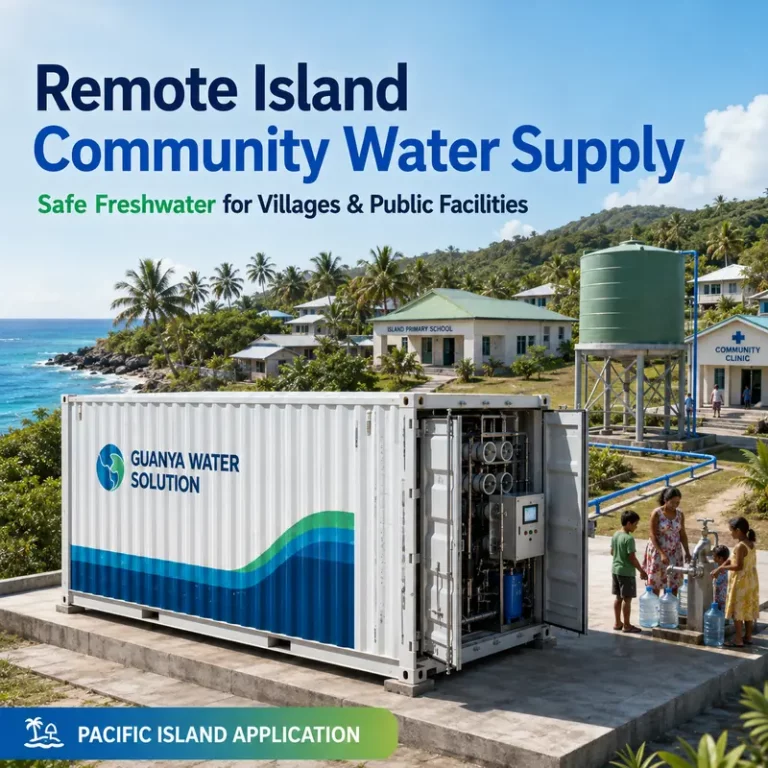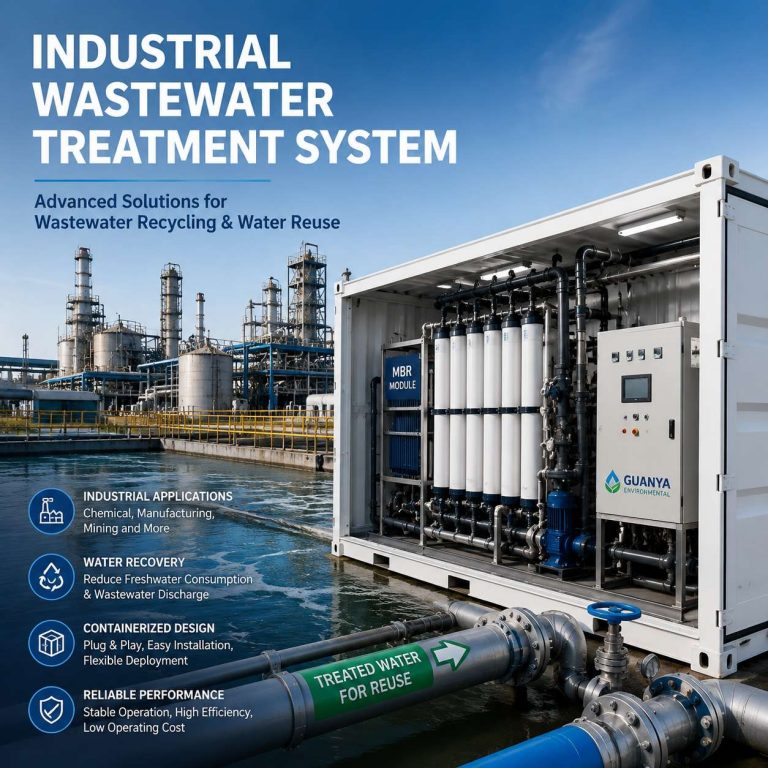
GUANYA WATER SOLUTION has prepared a 40 ft high-cube, containerized seawater reverse-osmosis (SWRO) design for a coastal site in Argentina. The design product flow is 12.5 m³/h, or 250 m³/day. The intended use is drinking water. The site and client names are withheld.
Country: Argentina | Duty: Coastal drinking-water SWRO, feed from a seawater intake or infiltration well | Design flow: 12.5 m³/h (250 m³/day)
The problem
A coastal site in Argentina needed a containerized seawater RO plant producing 12.5 m³/h of permeate, or 250 m³/day as a daily planning figure, with seawater taken from an intake or an infiltration well. Grid-tied photovoltaic power was considered as an option, not as the base plant.
How the scheme solves it
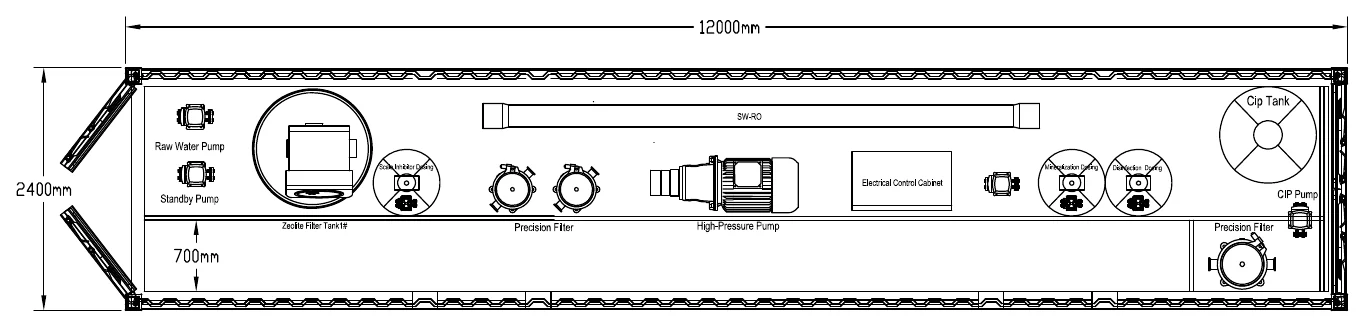
GUANYA prepared a 40 ft high-cube seawater RO treatment scheme for that duty. The process equipment is arranged inside the container as shown on the layout drawing: raw-water and standby pumps, sand filtration, cartridge filtration, a high-pressure pump and membrane array, electrical control, CIP and product-side filtration. The container outline is 12,000 mm by 2,400 mm. Hook-up of intake or infiltration-well water, power, product storage and concentrate discharge is done on site; the unit is factory-assembled and factory-tested, and time to first water depends on site conditions. Photovoltaic supply, if used, is grid-tied and is not required for the base process design.
Design drawings
Design basis
| Item | Design-basis value |
|---|---|
| Country / setting | Argentina, coastal site (identity withheld) |
| Design product flow | 12.5 m³/h (250 m³/day) |
| Design feed | Seawater from an excavated or infiltration intake well, TDS about 36,000 mg/L (35,984 mg/L in the WAVE calculation), 25 °C |
| Design recovery | 40% |
| Net feed flow (design) | 31.2 m³/h |
| Design permeate TDS | 147.6 mg/L (WAVE calculation, not a field measurement) |
| Integration | Main process equipment in a 40HQ container, assembled and factory-tested before shipment. A seawater intake well, raw-water tank (storage of not less than 20 m³ is recommended in the memorandum) and external pipework are described as complementary works outside the container. |
| Power | The base design is a stable grid supply. A grid-tied photovoltaic system is described as an optional addition, not as the standard plant. |
The process inside the container includes multimedia filtration, cartridge filtration and seawater RO, with product remineralization and disinfection in the design. Figures above are taken from the design memorandum and the DuPont WAVE calculation. They are not operating results.
Related reading
Frequently Asked Questions
Is this a solar desalination plant?
No. The base design uses a stable electrical supply. A grid-tied photovoltaic system is an optional annex, with the grid remaining the main source.
Where does the seawater come from in this design?
The memorandum takes seawater from an excavated or infiltration intake well, not from an unnamed open-coast intake as a fixed choice. The well, storage and external piping are complementary works outside the container.