Status: Design proposal and quotation issued | Water source: Acid mine drainage (AMD) | Intended use: Treatment designed against client-specified national mining-effluent limits | Reference capacity: 2.5 m³/h peak (operating range 1.2–2.5 m³/h)
Project summary: A polymetallic mine in the Andes region of South America needed compact treatment for acid mine drainage at pH 2.4 with 4,700 mg/L total acidity, 180 mg/L iron, plus zinc, copper, lead and arsenic. GUANYA designed a five-compartment integrated unit — two-stage neutralization, flocculation, lamella settling — with closed-loop sludge dewatering, sized against the mine’s stated discharge limits. No membrane desalination was included for the stated discharge target; this remains subject to confirmation of the design basis.
Project background
The mine sits in the Andean highlands of South America. The drainage to be treated fluctuates between 1.2 and 2.5 m³/h, and the client asked for a compact (“compacta”) plant; the site can be adapted to the equipment, and local power is available. The designated discharge standard is the national regulation for liquid effluents from mining and metallurgical activities — the stricter of the two regimes the client provided.
The raw water analysis told the story plainly:
| Parameter | Raw water | Discharge limit (instantaneous) | Required removal |
|---|---|---|---|
| pH | 2.40 | 6–9 | Neutralization |
| Total acidity (as CaCO₃) | 4,700 mg/L | — | Drives reagent consumption |
| Total iron | 180 mg/L | ≤ 2.0 (dissolved) | ≈ 99% |
| Zinc | 22 mg/L | ≤ 1.5 | ≈ 93% |
| Copper | 2.5 mg/L | ≤ 0.5 | ≈ 80% |
| Lead | 0.20 mg/L | ≤ 0.2 | Borderline — needs polishing margin |
| Arsenic | 0.150 mg/L | ≤ 0.1 | Targeted by iron co-precipitation; testing required |
| TSS | 600 mg/L | ≤ 50 | ≈ 92% |
Client-specified design targets, not verified discharge results. Total iron in the feed and a dissolved-iron outlet limit are different analytical measures; the approximate reduction shown is illustrative and is not a compliance calculation. Confirm sampling methods and the applicable limits before performance commitments.
The challenge
- Acidity far beyond passive treatment. At 4,700 mg/L total acidity, active chemical neutralization was selected for this compact design rather than passive options such as constructed wetlands or anoxic limestone drains. Final selection requires validation against representative water samples.
- Two metals regimes, one vessel. The proposal uses pH 3.5–4.5 for the first iron/arsenic treatment stage and pH 8.2–8.8 for the subsequent zinc, copper and lead stage. These are proposed operating setpoints, not universal removal guarantees; oxidation, precipitation and separation performance require testing.
- Lead sits exactly at the limit. With raw lead at the discharge limit’s edge, the design needs margin, not optimism.
- The operating cost is reagents, not electricity. For AMD, the chemical bill dominates lifecycle cost — so reagent selection is an engineering decision, not a purchasing detail.
Our engineering approach
Two-stage neutralization in one compact unit
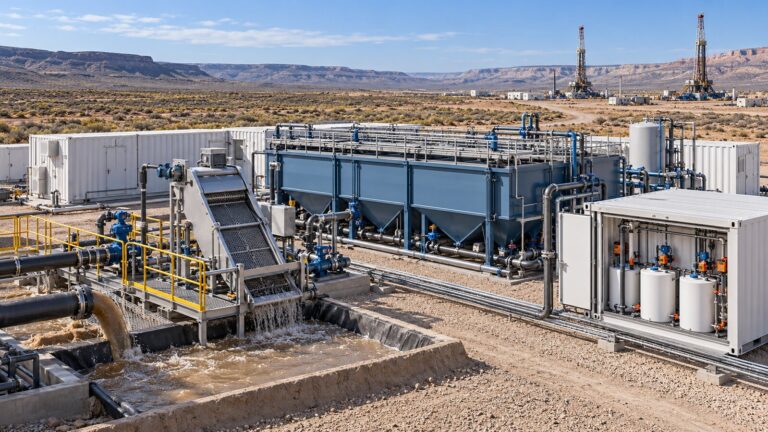
The integrated carbon-steel unit (4 × 1.5 × 2 m, FRP-lined) is divided into five compartments: first-stage neutralization with aeration (pH 3.5–4.5 — ferrous iron is oxidized and precipitated as ferric hydroxide, intended to support arsenic co-precipitation), second-stage neutralization (pH 8.2–8.8 — zinc, copper and lead hydroxides precipitate), flocculation with anionic PAM, lamella settling (≈ 65 minutes retention), and a clear-water compartment. Both pH stages are closed-loop controlled by online meters linked to the dosing pumps.
Settled sludge is transferred by pneumatic diaphragm pump to an automatic filter press; the design returns the filtrate to the head of the plant, avoiding a separate filtrate discharge in the proposed sludge circuit; this does not describe plant-wide zero liquid discharge — and dewatered cake (estimated at ≈ 2.1 t/day wet at design flow) is assigned to an authorized disposal route, subject to waste characterization and local requirements.
What we deliberately did not include
The client’s question could have been answered with a membrane plant. It was not: TDS (5,250 mg/L) is not regulated by the discharge standard, and the proposed neutralization–precipitation–filtration train was selected to target the specified discharge parameters, subject to sample testing and confirmed guarantees. Adding RO would have multiplied cost and complexity to treat a parameter nobody required. Should the mine later want water reuse rather than discharge, the clear-water outlet is the correct tie-in point for a future RO/NF stage — the design notes say so explicitly.
Reagent choice as an operating-cost decision
The dosing system accepts both NaOH and hydrated lime. On design estimates at peak flow, neutralization reagent cost differs by roughly a factor of seven between the two routes (the lime route’s total estimated operating cost is about 55% lower once identical power, sludge disposal and labour are added back in). We recommended evaluating lime first wherever site handling permits — and stated that all reagent figures are theoretical-plus-safety-factor estimates to be calibrated against the first 7–14 days of operating data.
Site-interface items were flagged just as explicitly: the local 440 V/60 Hz grid versus the equipment’s 380 V rating (a transformer or supply confirmation is required before order), compressed-air availability for the diaphragm pump (an electric alternative exists at higher cost), and chemical storage with segregation for caustic.
Cost and project delivery
The operating-cost model covers reagents, electricity (≈ 124 kWh/day), sludge disposal, and one operator — with every unit price listed as a replaceable assumption in the client’s local currency, and excluding depreciation and major overhauls. Equipment is delivered as integrated units for a prepared flat foundation; performance guarantees are defined against the confirmed discharge standard and an actual water sample.
See the system and discuss your project
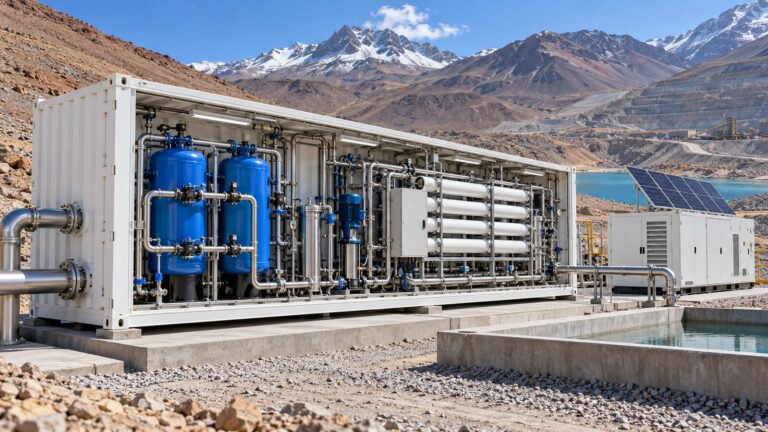
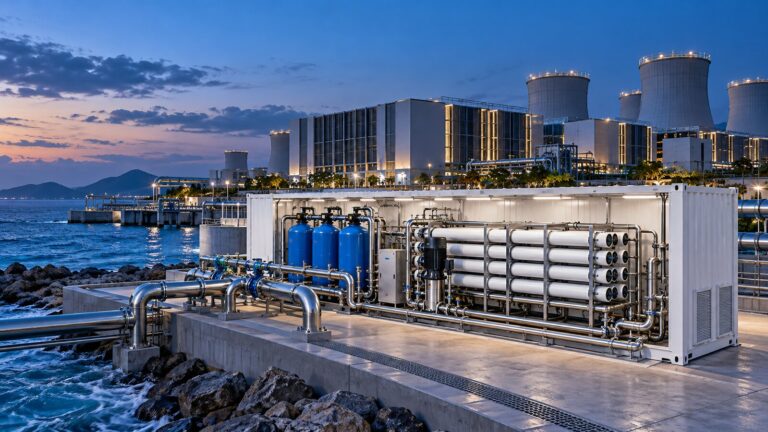
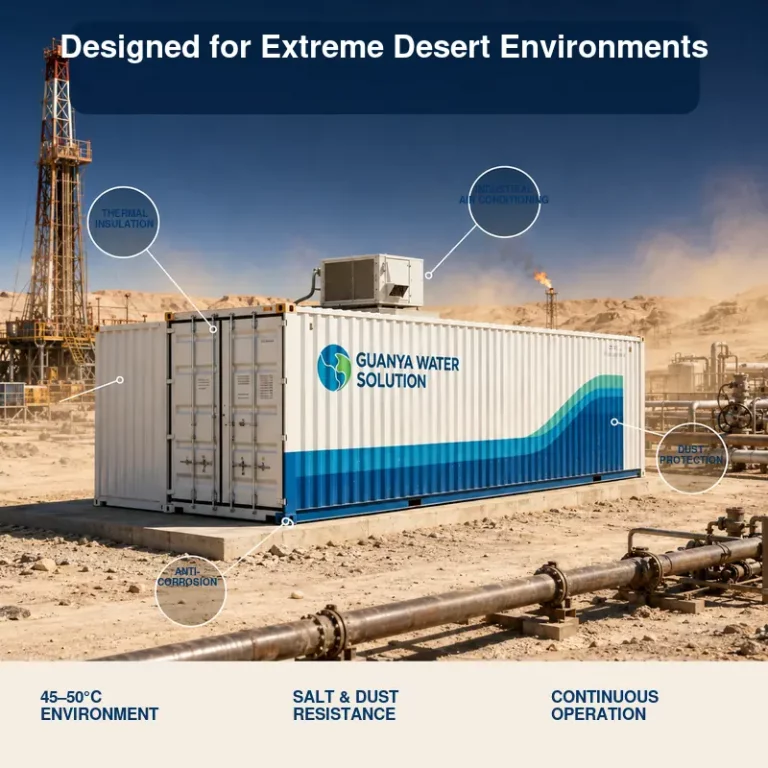
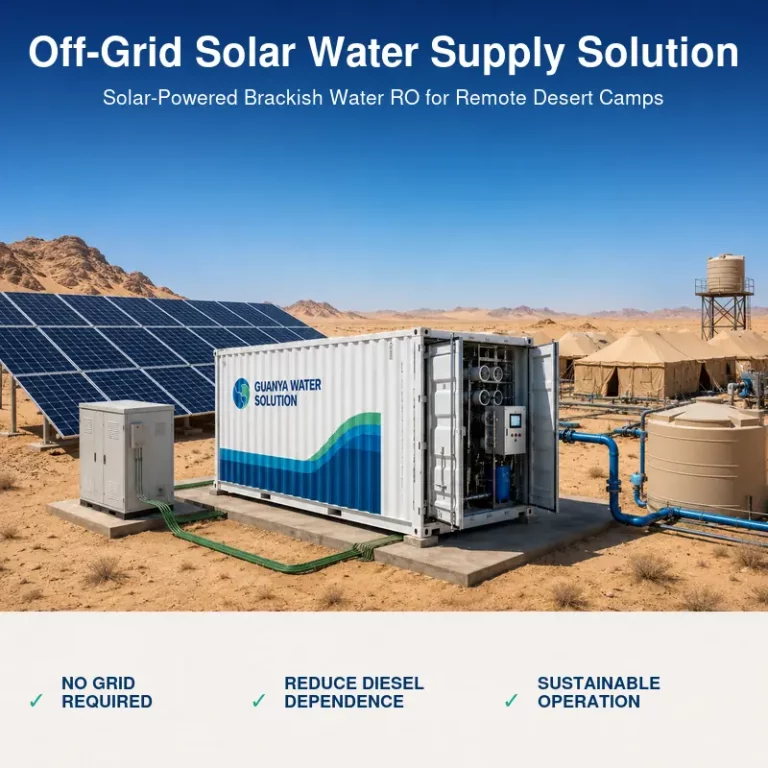
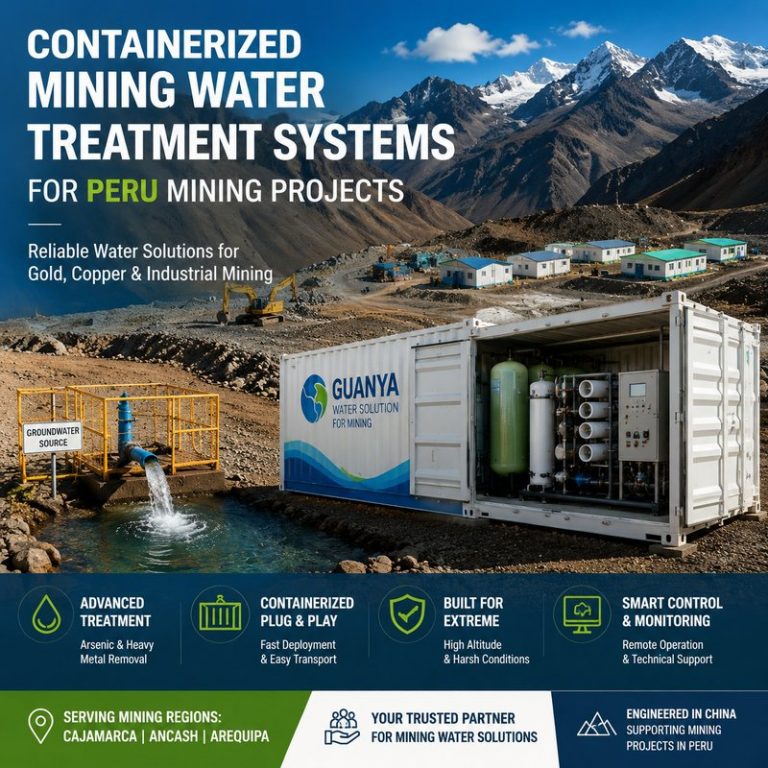
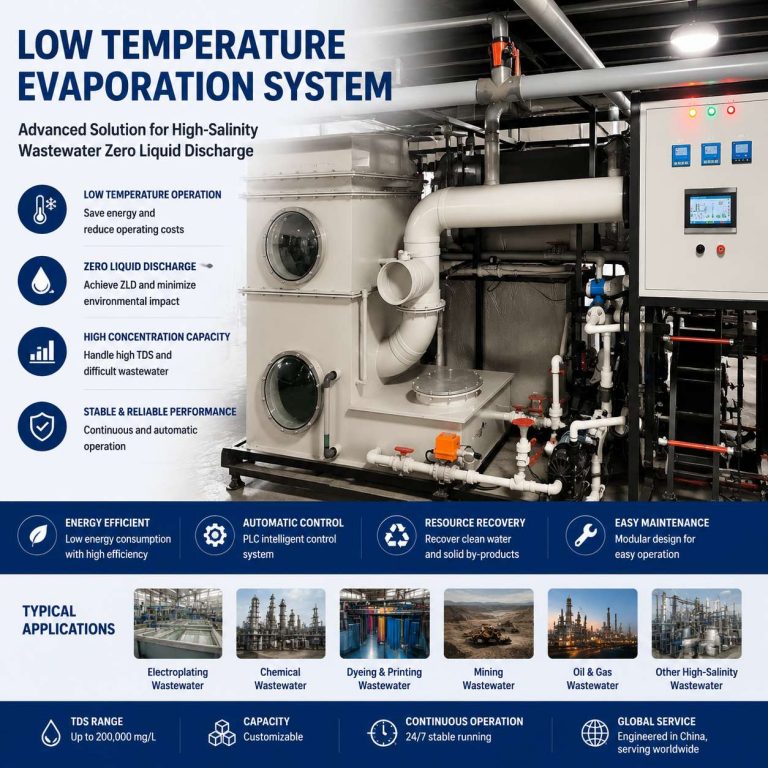
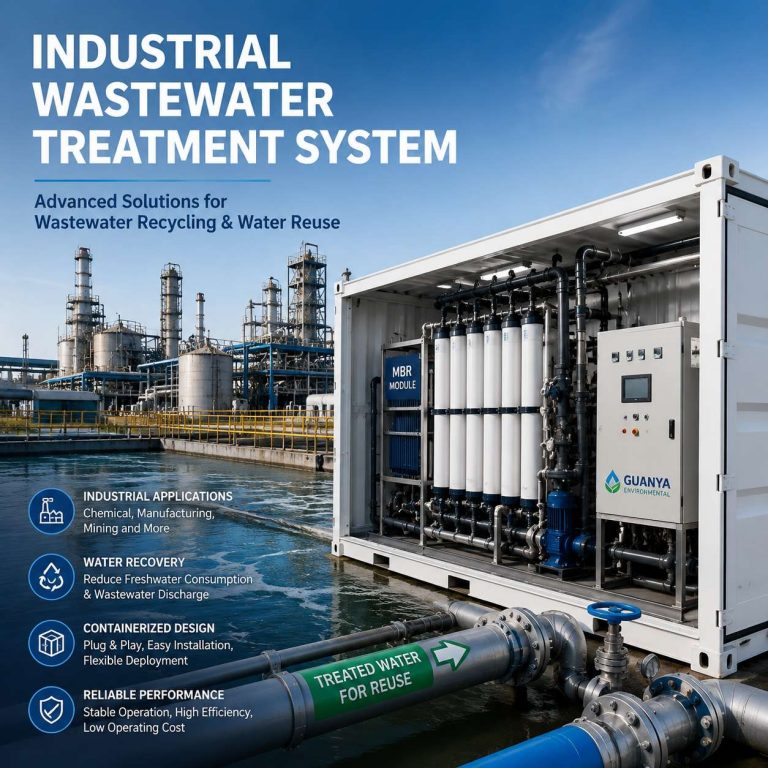
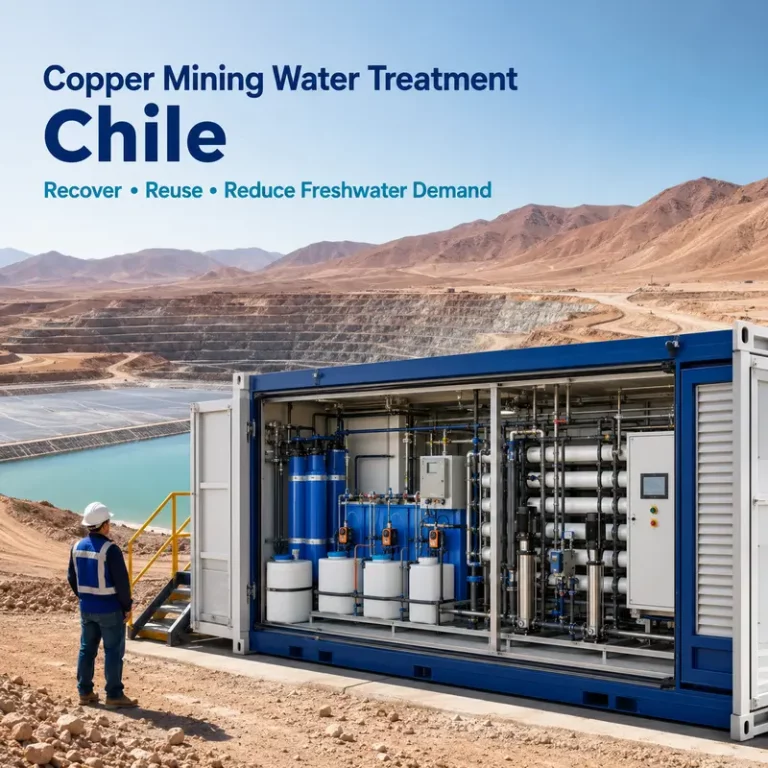
The proposal covers a five-stage process and a closed sludge-filtrate return loop. Equipment illustrations, when provided, are references to the proposed equipment classes, not evidence that this design-stage project has been manufactured, installed or commissioned.
If your mine faces acidic or metal-bearing drainage, tell us your water analysis, flow range, discharge or reuse target, and location. The analysis — not a catalogue — determines whether you need neutralization, membranes, or both. Contact our engineers →
This article describes a project at design and quotation stage. Water-quality figures are from the client-provided analysis; cost figures are design estimates on stated assumptions. The mine’s identity is withheld; equipment reference images do not establish project delivery or operating performance.