How oil risk, feedwater quality and capacity matching inform a practical seawater desalination design for a data center.
GUANYA WATER SOLUTION Engineering Team · Project under technical evaluation
Project background
A coastal AI data-center project in Southeast Asia is evaluating seawater reverse osmosis (SWRO) to supply process and utility water. The reference design considers a nominal 30 m³/h SWRO unit. At an assumed recovery of 42%, the RO feed demand is approximately 71.4 m³/h per operating unit; actual demand depends on the approved design and operating conditions.
Water from a near-shore or port intake can be affected by vessel activity, oil, suspended solids, algae and changing weather. A robust design must account for the measured intake risks rather than selecting pretreatment on membrane pore size alone.
Why DAF and UF are not interchangeable
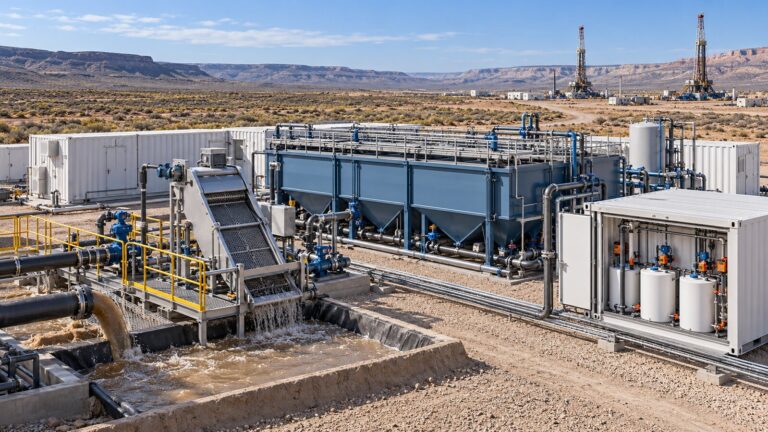
DAF can be selected to separate oil droplets and suspended material, with chemical conditioning where required by the water and design. Multimedia filtration provides a further particulate barrier. A final cartridge filter protects the RO system from particles released upstream.
UF provides a fine physical barrier against suspended particles, colloids, algae and many microorganisms. Depending on feed limits and the nature of the oil, however, it should not be assumed to replace a dedicated upstream oil-removal stage. Oil exposure can foul UF membranes and increase cleaning requirements. Where oil and fine-particle risks are both significant, the technologies can be used in sequence.
| Engineering question | DAF + multimedia filtration | UF after appropriate pretreatment |
|---|---|---|
| Main duty | Oil/floc separation followed by particulate filtration. | Removal of fine suspended particles, colloids and biological material. |
| Oil-risk management | DAF can be designed for the specific oil and solids challenge. | Confirm supplier feed limits and any required upstream oil removal. |
| Operation | Conditioning, backwash and cartridge changes depend on the design. | Typically includes backwash, possible air scour and periodic chemical cleaning. |
| Key verification | Demonstrate that treated water meets the RO feed specification through expected variation. | Confirm net output, integrity, cleaning requirements and agreed RO feed quality. |
Capacity must match the operating plan
The reviewed proposal described a combined UF output rating of 166 m³/h. The table below is a preliminary comparison with RO feed demand at 42% recovery; it is not a final sizing or availability calculation. Supplier confirmation is needed on whether the UF rating is net of backwash, relaxation and cleaning losses.
| Simultaneous SWRO operation | Indicative RO feed demand | Comparison with UF rating |
|---|---|---|
| One 30 m³/h unit | ≈ 71.4 m³/h | 166 m³/h is about 2.3 times the calculated demand, before considering operating losses and redundancy. |
| Two 30 m³/h units | ≈ 142.9 m³/h | The difference from the stated rating is about 23.1 m³/h, before deducting any losses or checking standby needs. |
The appropriate capacity depends on the number of trains running together, cleaning and backwash losses, standby philosophy and expansion schedule. Compare suppliers on the same net output and supply boundary.
Reference process options
Base option: DAF, multimedia filtration and cartridge protection
Seawater intake → DAF / oil-risk control → multimedia filtration → 5 μm cartridge filter → high-pressure pump → SWRO.
This option can be considered where testing and the agreed design demonstrate that it will meet the RO feed requirements under the expected range of raw-water conditions.
Optional UF upgrade
Seawater intake → DAF / oil-risk control → multimedia filtration → UF → 5 μm guard filter → high-pressure pump → SWRO.
UF may add value when site data show significant algae, colloids or seasonal variation, or when the project requires a more stringent and demonstrable RO feed quality. The final process, cleaning arrangements and any performance commitments must be verified for the site.
Explore a scalable containerized SWRO concept
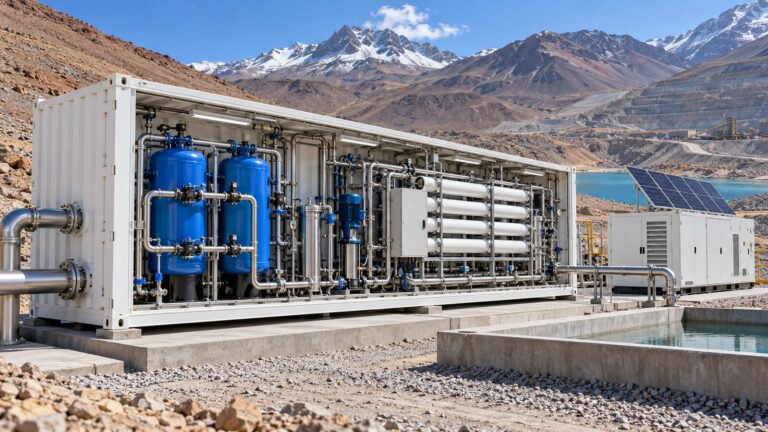
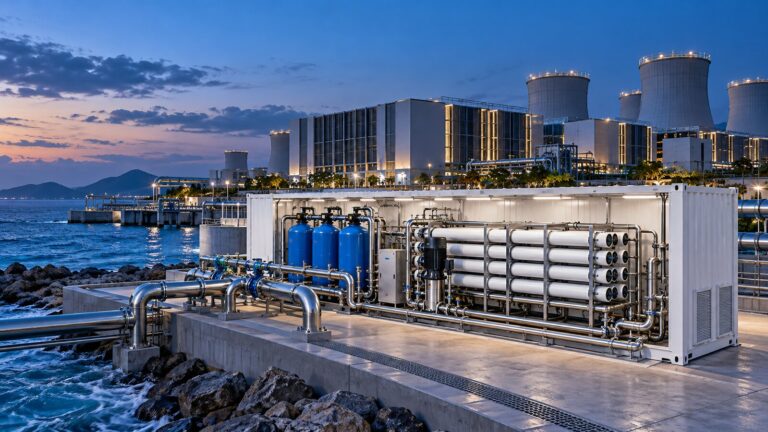
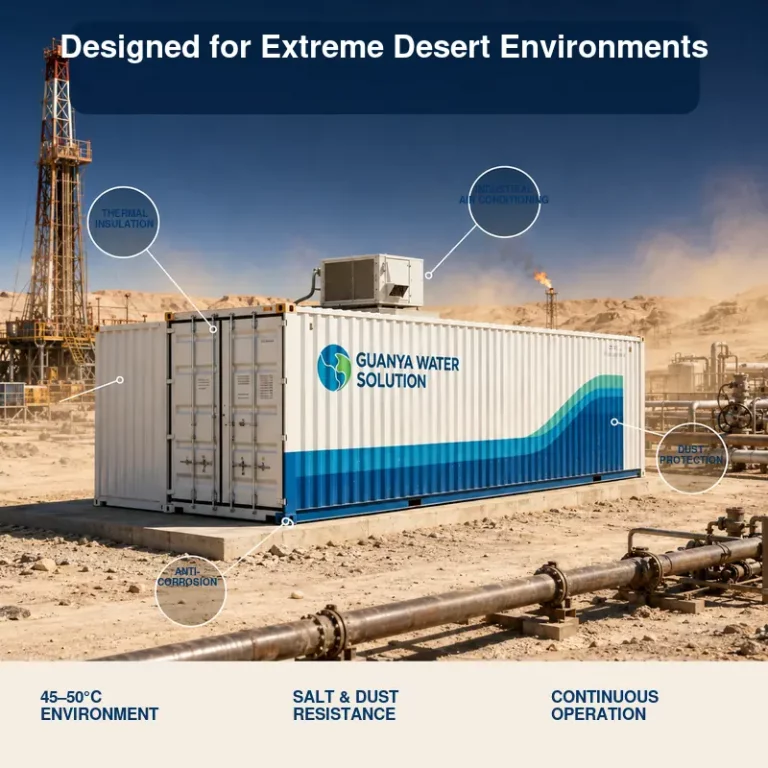
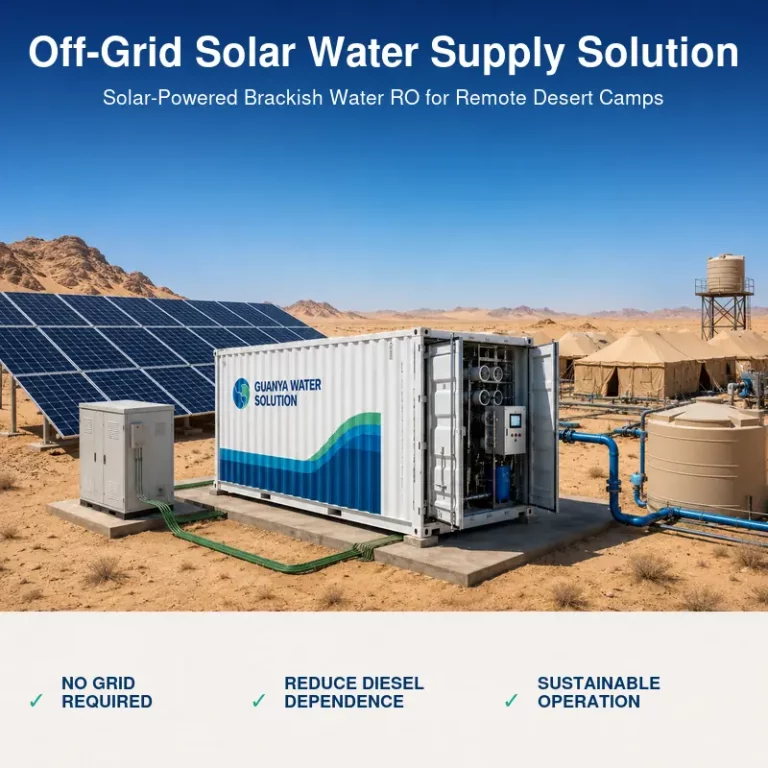
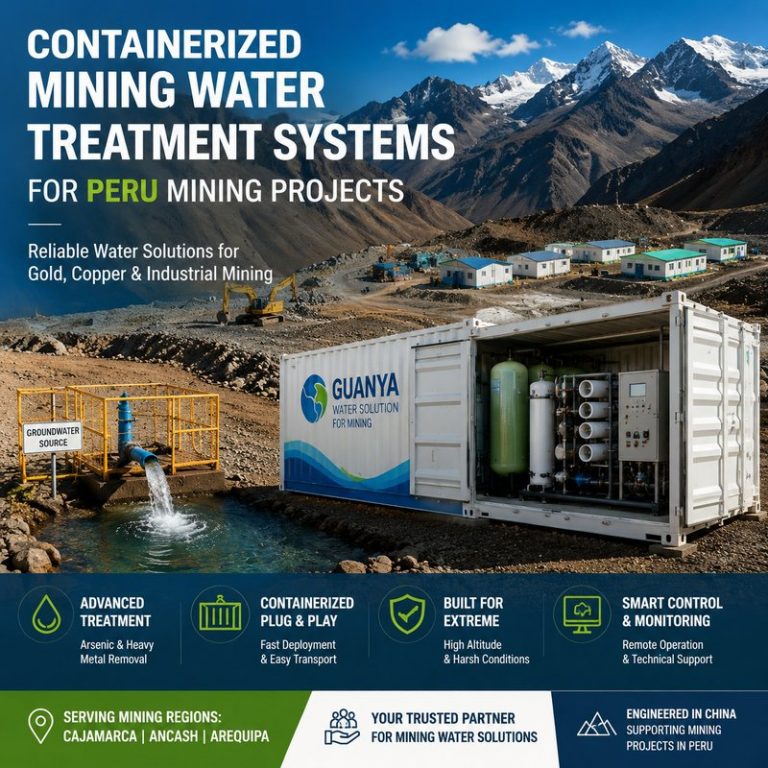
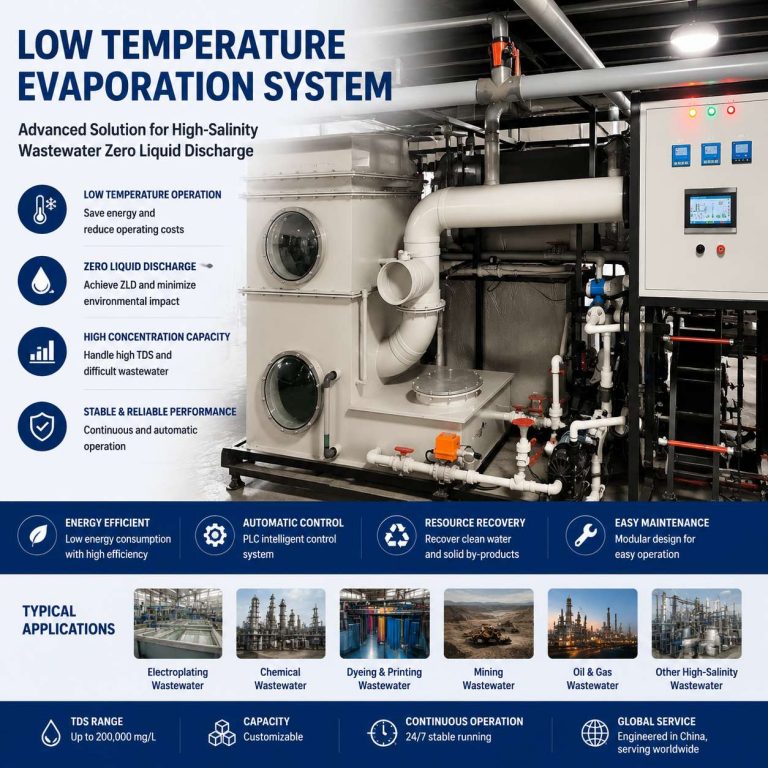
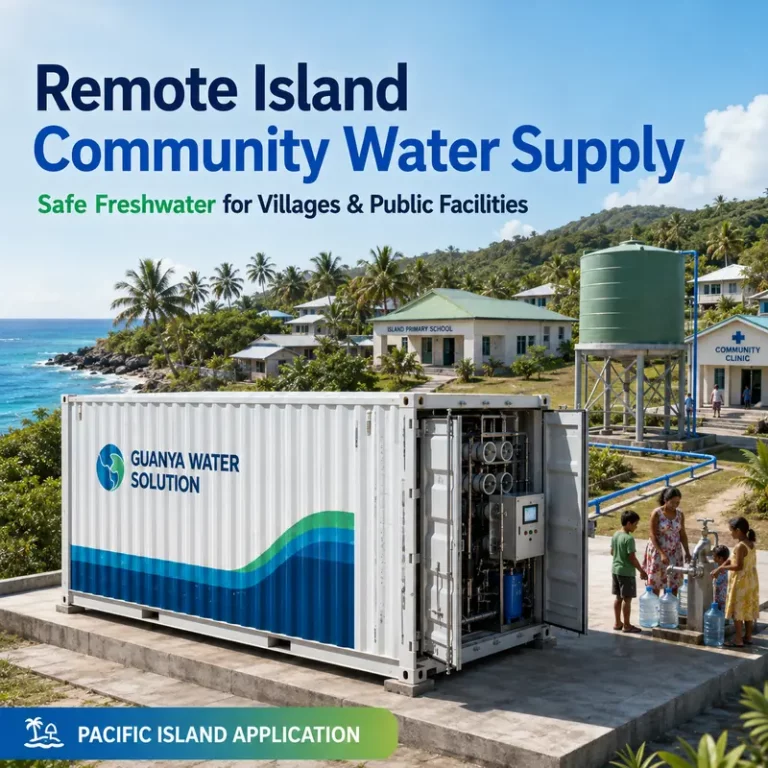
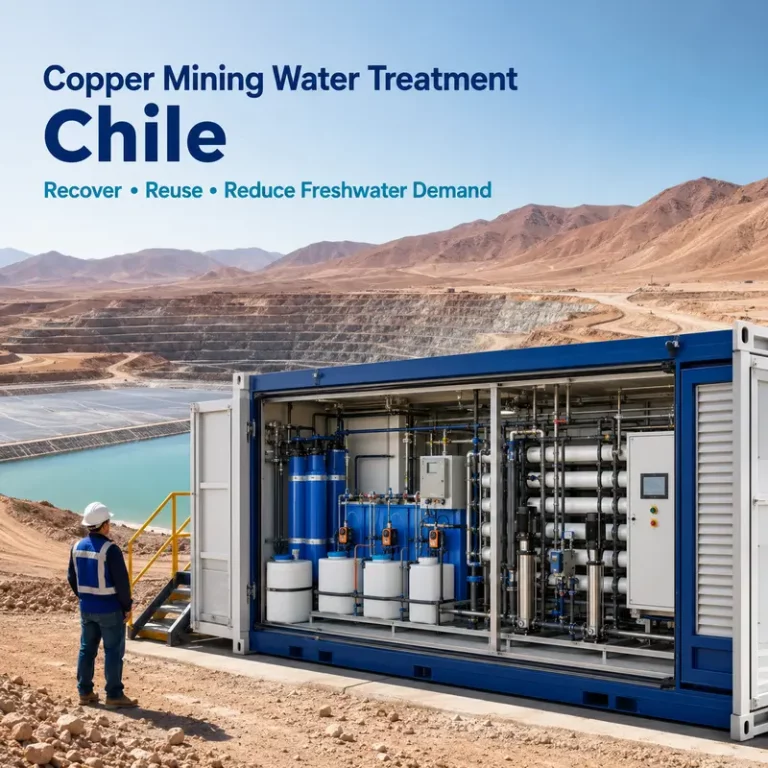
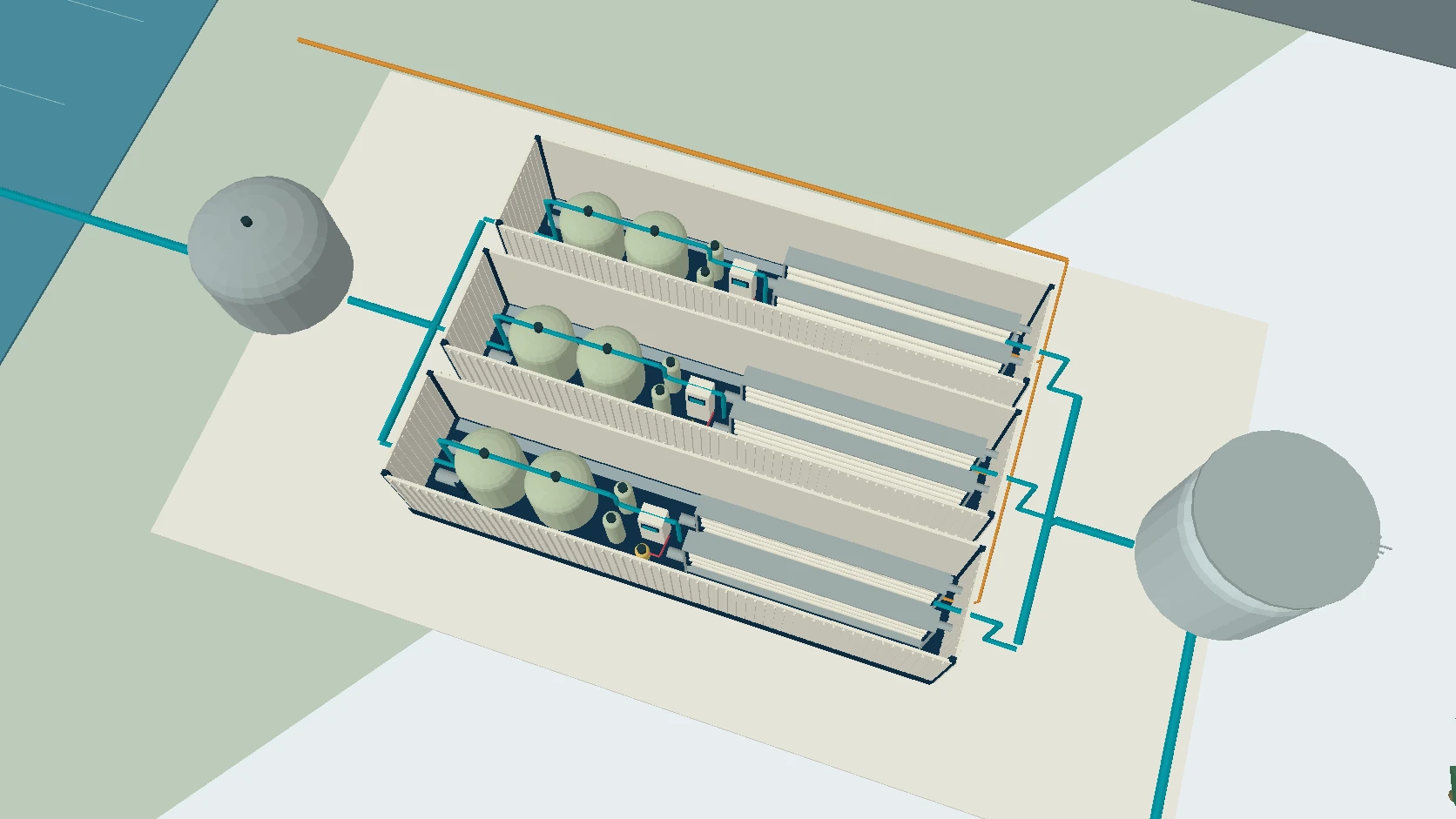
The following illustrations and 3D model show a separately developed 90–180 m³/h modular concept. They are not photographs or the final layout of the 30 m³/h reference case. The model illustrates containerized SWRO arrangements; it does not depict this case’s complete DAF or UF pretreatment system.
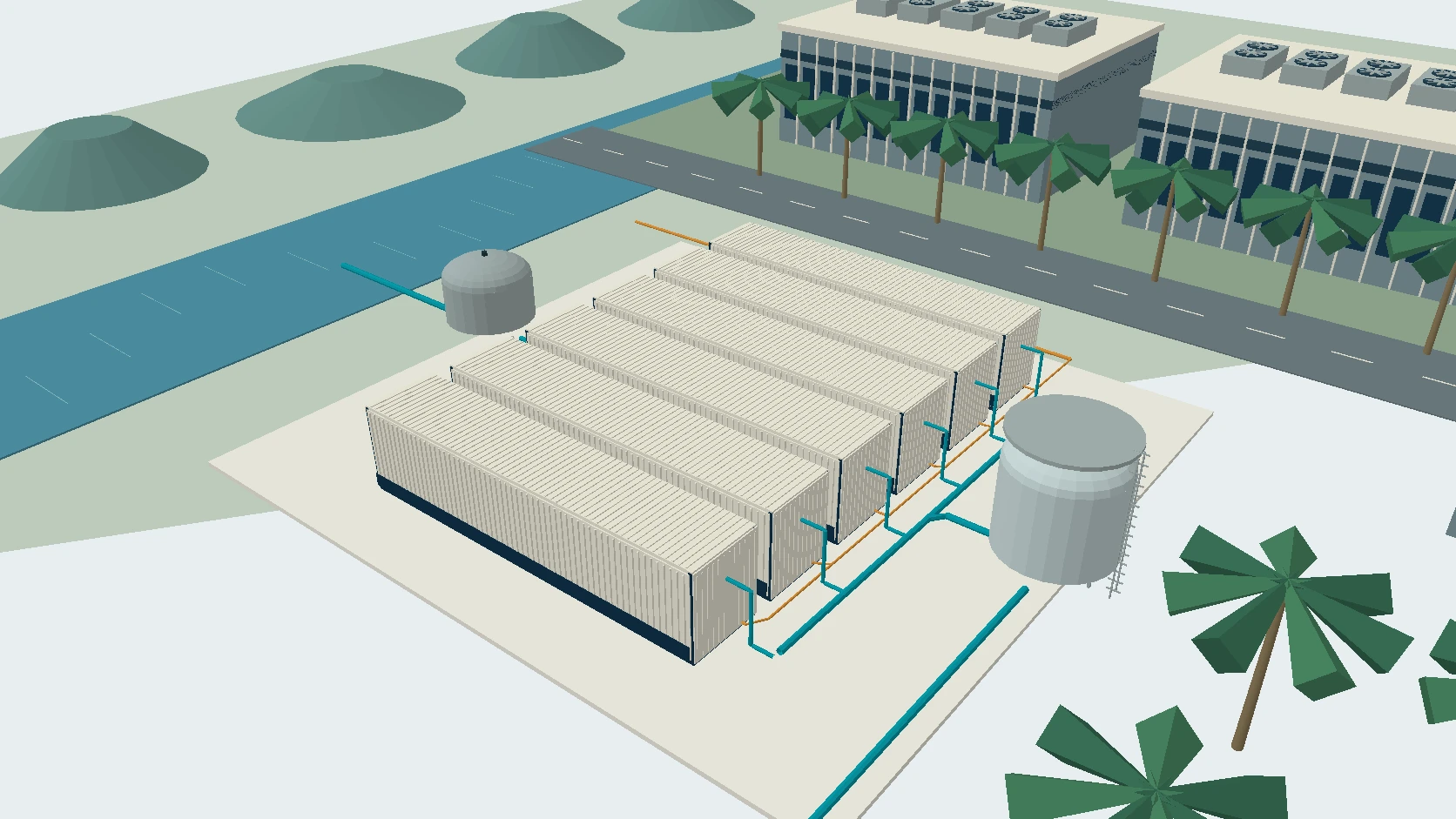
The interactive model requires a compatible browser and graphics support. Capacities, energy figures, equipment details and water-quality values in the model are illustrative design references and must be confirmed for each project.
Questions to answer before procurement
- What are the seasonal oil, suspended-solids, algae and turbidity risks at the intake?
- What RO feed quality, SDI test method and operating conditions are guaranteed?
- What is the UF net output after backwash and cleaning, and what standby capacity is required?
- Does the energy estimate include pumps, blowers and cleaning auxiliaries over a representative cycle?
- Which tanks, dosing equipment, cleaning facilities, wastewater handling and site works are included?
- How do the proposed layouts accommodate maintenance access and future expansion?
Frequently asked questions
Is UF always necessary before seawater RO?
No. UF may be appropriate for challenging algae, colloid or turbidity conditions, but the selection should follow site data and the required RO feed specification. An alternative pretreatment train may be suitable when its performance is demonstrated.
Can UF replace oil removal?
Do not assume it can. Check the UF supplier’s oil tolerance and select upstream oil control appropriate to the intake and project design.
Is UF chemical-free?
Routine filtration may use little continuous dosing in some designs, but chemically enhanced backwash and periodic cleaning may require chemicals and wastewater management.
Why retain a cartridge guard filter?
It can provide a final barrier against particles introduced by upstream components or piping. The filter specification should follow the selected membrane and system design.
Discuss your seawater treatment project
GUANYA designs and manufactures modular and containerized seawater desalination and water-treatment equipment. For an engineering review, share the source-water analysis, required product flow, operating hours, location, power supply and intended water use.
Request a technical proposal
Explore containerized SWRO
Email: [email protected]