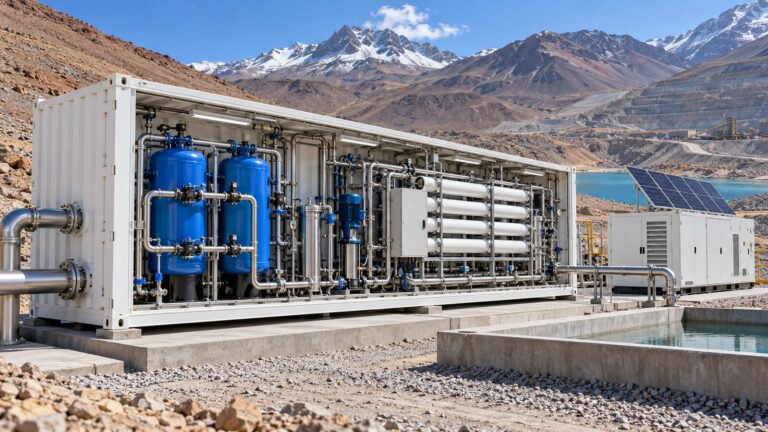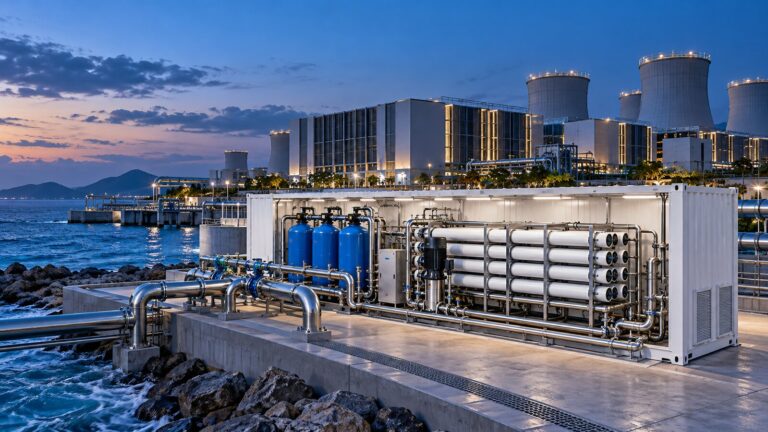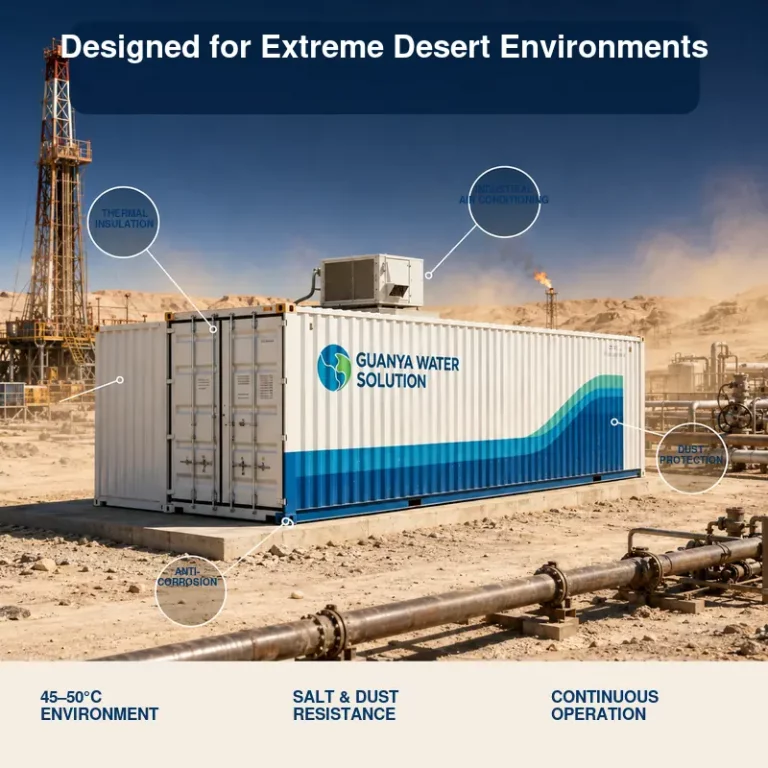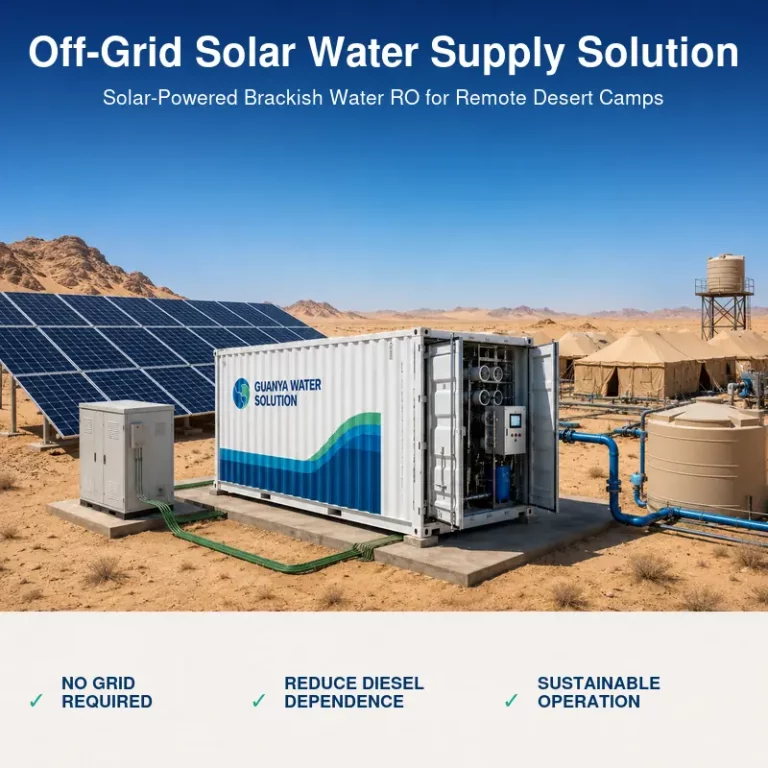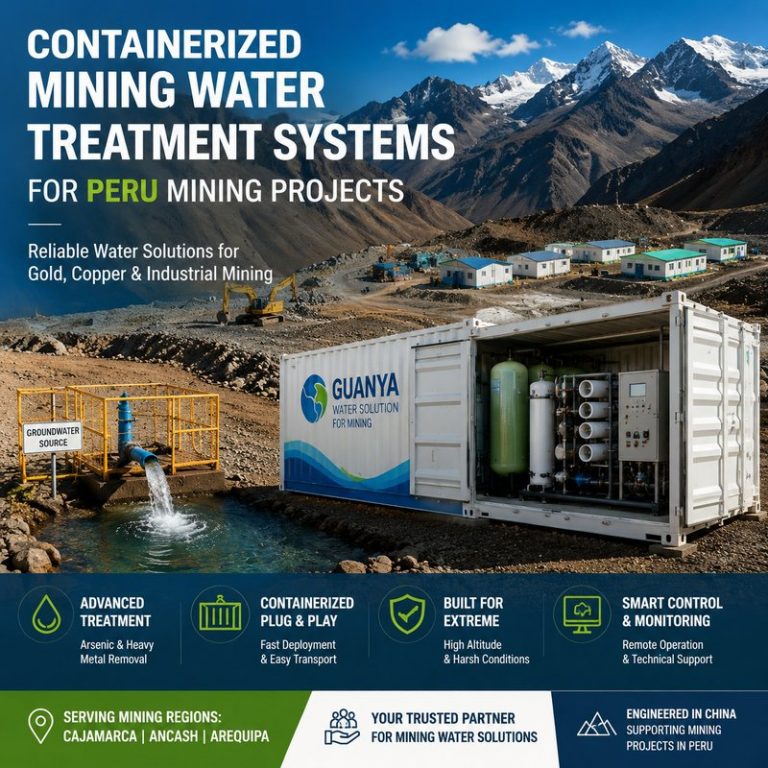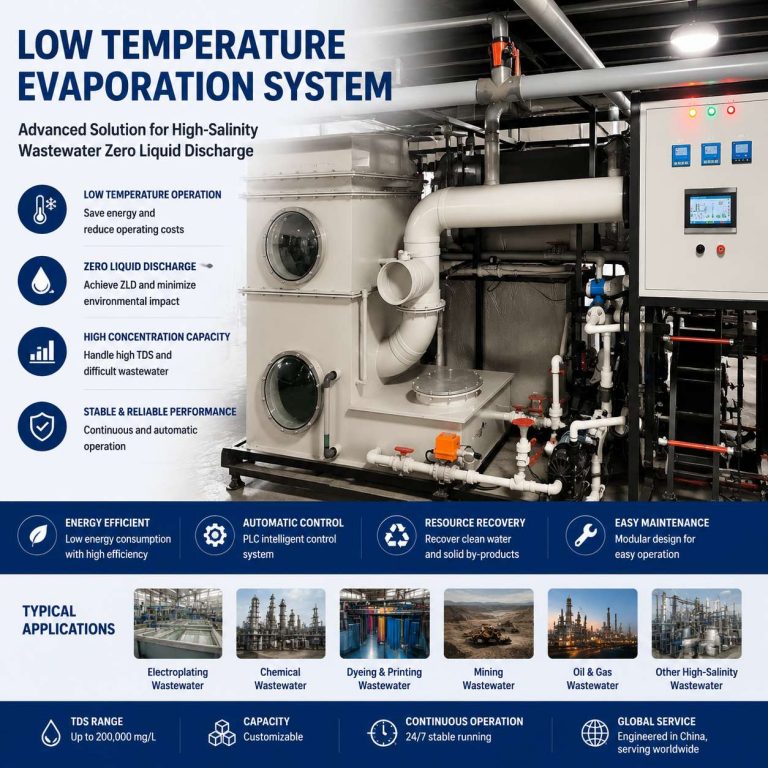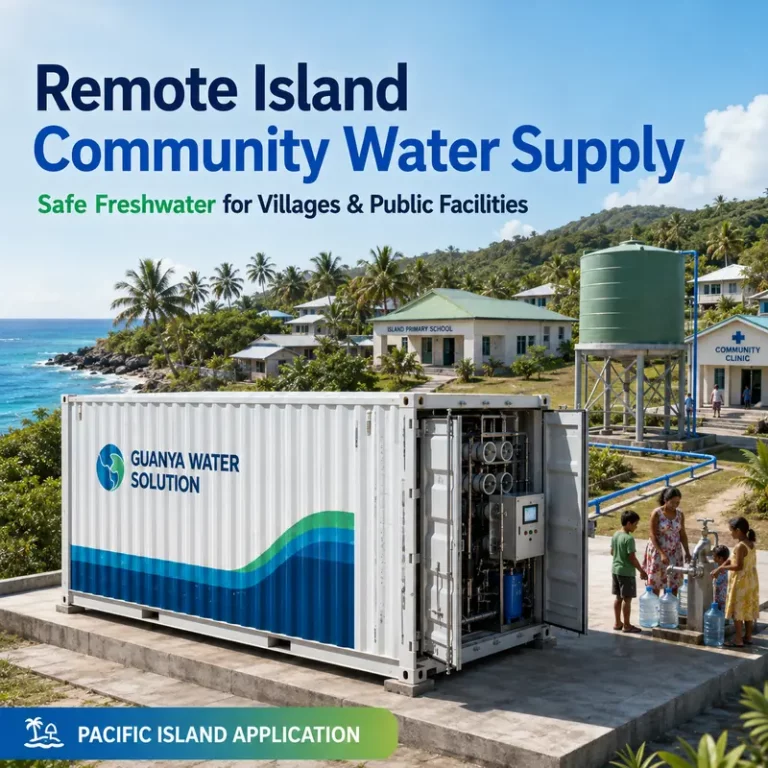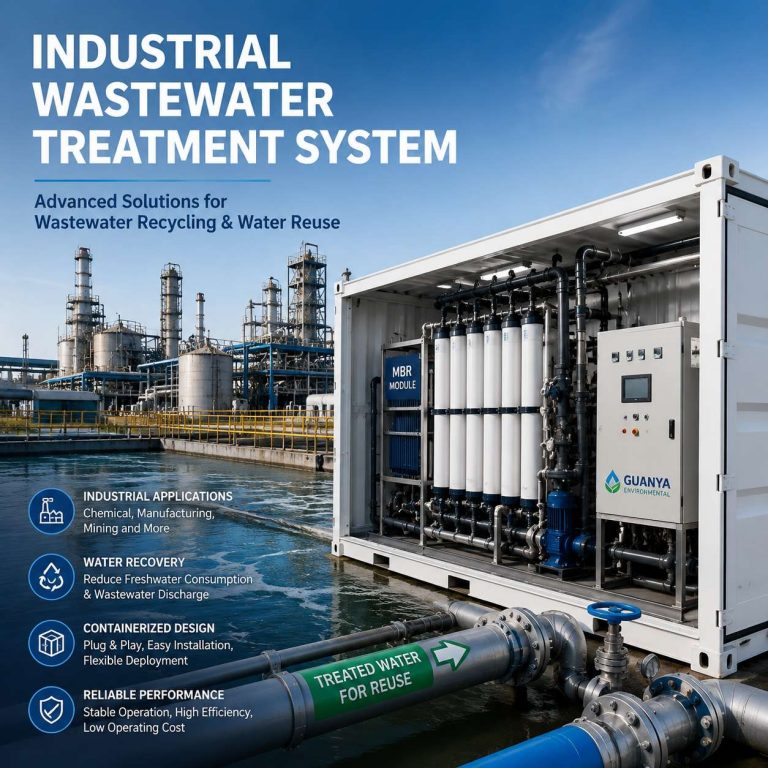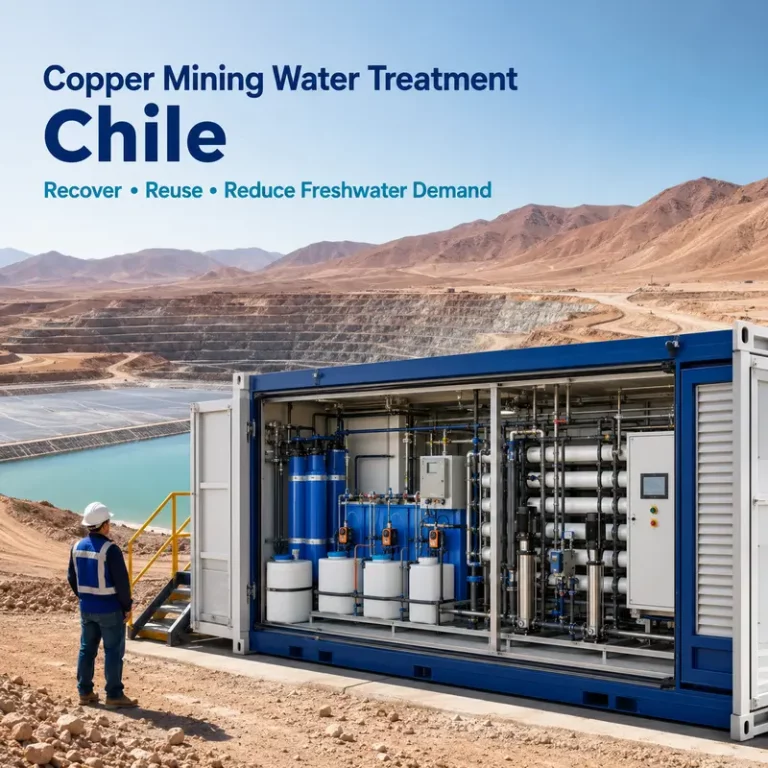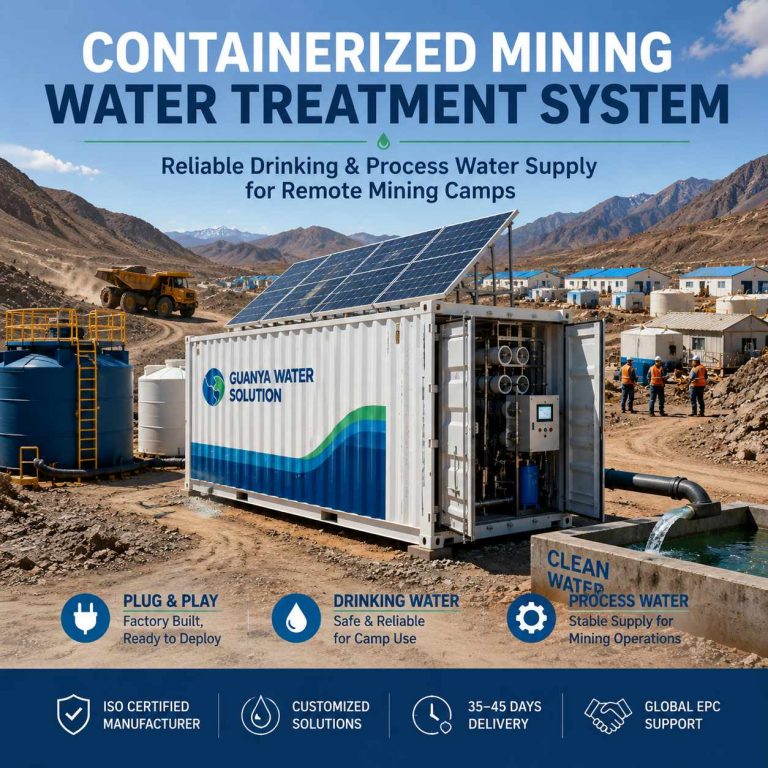
At high altitude, the same reverse-osmosis or filtration skid that works at sea level can run short of cooling, motor power or transport clearance if those conditions are not designed in. This article sets out the engineering factors GUANYA WATER SOLUTION checks for mine-site water treatment above 4,000 m. It is a technical article. It does not publish a new operating case, and it does not add measured performance figures for any confidential project.
GUANYA has already published engineering considerations for a containerized BWRO system at a mine site above 4,000 m. Client identity and measured performance data for that work remain confidential, so that page is not a citeable operating result. A separate page, Solar Hybrid Reverse Osmosis for High Altitude Mining in Northern Chile, is a technical design article that uses public energy and water-demand statistics. It is not an installation record.
What changes above 4,000 m
- Air density and cooling. Motors, VFDs, panel cooling and any air-cooled chiller or air-conditioner have less mass of air to reject heat. Derating, a larger cooling margin, or a shelter with a specified ventilation or air-conditioning duty should be confirmed against the site elevation and the highest expected ambient temperature.
- Motors and electrical equipment. Nameplate power and insulation class are checked against altitude derating guidance from the equipment manufacturers. The supply voltage and frequency at the mine, and whether a transformer is required, are confirmed before manufacture — not after the container arrives.
- Pumps and NPSH. Suction conditions, tank elevations and boiling point change with altitude. The raw-water and product pumps are selected against the confirmed static head, friction losses and the site elevation, not only against a sea-level catalogue curve.
- Process water. RO design still starts from feed TDS, temperature and chemistry. Temperature at a high Andean or Atacama site can be low at night and high by day; that range belongs in the design basis. Recovery, antiscalant and pretreatment are not copied from a low-altitude twin plant without that check.
- Transport and installation. A 20 ft or 40 ft container must be movable on the actual access road, at the actual axle limits, and placeable on a prepared, level foundation. Factory acceptance testing is done at the works so that field work stays limited to lifting, hook-up and start-up. Time to first water still depends on those site interfaces.
What this article does not claim
No country, capacity, energy consumption or operating result is added here for the confidential high-altitude page. No fixed number of hours to first water is promised. Published mining pages on this site remain labelled by status: design, quotation, technical article, or confidential engineering.
Related reading
- Mine camp water supply: containerized treatment for remote sites
- Solar hybrid RO for high-altitude mining in northern Chile (technical design article)
- Containerized BWRO above 4,000 m (confidential engineering note, not an operating reference)
Frequently Asked Questions
Is the 4,000 m page an operating case?
No. It publishes engineering considerations for containerized BWRO at a mine site above 4,000 m. Client identity and measured performance remain confidential. It should not be cited as an operating result.
Does high altitude always mean a different process?
Not necessarily. The process is still chosen from the water source and the use (camp drinking water, process water, or reuse). What usually changes is mechanical and electrical derating, cooling, transport and the temperature range used in the RO or pumping calculation.
Can first water be promised as a fixed number of hours?
No. The plant can be factory-tested at the works. Start-up on site still depends on lifting, foundation, power, tanks and the confirmed hook-up. The calendar depends on site conditions.