Why Titanium Is the Ideal Material for High-End Yacht and Ship Watermaker Applications
Marine seawater desalination equipment operates in one of the most challenging environments on earth.
Continuous exposure to seawater, salt spray, humidity and marine microorganisms creates significant challenges for equipment materials. For yachts, commercial vessels and offshore platforms, material selection directly affects:
Equipment reliability/Maintenance frequency/Service life/Installation weight/Long-term operating cost
Traditional marine desalination systems commonly use stainless steel or other metal materials. However, for premium marine applications requiring higher durability and lighter structures, titanium alloy has become an advanced material choice due to its outstanding corrosion resistance and excellent strength-to-weight ratio.
Guanya integrates titanium alloy material options into customized marine seawater desalination systems to provide reliable freshwater solutions for luxury yachts, commercial ships and offshore applications.
Why Titanium Alloy Is Suitable for Marine Desalination Equipment
1. Superior Seawater Corrosion Resistance
Seawater contains high concentrations of chloride ions, which can accelerate corrosion of traditional metal materials.
Marine desalination equipment is exposed to:
High salinity seawater/Continuous water circulation/Salt spray environment/Long-term offshore operation/Titanium Alloy Advantage
Titanium naturally forms a stable oxide layer on its surface, providing excellent resistance against seawater corrosion.
Benefits:
✔ Excellent chloride corrosion resistance✔ Reduced risk of pitting corrosion✔ Stable performance in marine environments✔ Longer service life under continuous seawater exposure
Compared with conventional stainless steel materials, titanium alloy provides stronger protection for critical seawater-contact components.
Titanium Alloy vs Traditional Marine Materials
Performance Titanium Alloy Stainless Steel (304/316) Traditional Metal Materials
Seawater Corrosion Resistance Excellent Good Moderate
Chloride Resistance Excellent Limited under harsh conditions Lower
Weight Lightweight Heavier Heavy
Service Life Long-term durability Requires maintenance Higher replacement risk
Marine Application Premium choice Standard application Limited
2. Lightweight Design for Yacht and Ship Applications
Weight is a critical factor in marine engineering.
For yachts and vessels, reducing equipment weight can provide advantages in:
Space utilization/Installation flexibility/Vessel efficiency/Transportation/Titanium Alloy Advantage
Titanium provides a much higher strength-to-weight ratio compared with many traditional materials.
Advantages:
✔ Strong mechanical performance✔ Reduced equipment weight✔ Compact equipment structure✔ Easier onboard installation
This makes titanium especially suitable for:
Luxury yachts/Super yachts/High-performance vessels/Offshore equipment
3. Longer Equipment Lifetime and Lower Maintenance
Marine equipment maintenance is often expensive because vessels operate in remote offshore environments.
Corrosion-related problems may lead to:
Equipment downtime/Replacement costs/Maintenance difficulties/Titanium Alloy Advantage
Titanium components help reduce:
Corrosion damage/Maintenance frequency/Unexpected repairs
For shipowners and yacht operators, this means:
✔ Higher equipment availability✔ Lower lifecycle cost✔ More reliable freshwater production
4. Better Adaptation to Harsh Marine Conditions
Marine desalination systems must operate reliably under changing environmental conditions.
Typical challenges include:
Tropical seawater/High humidity/Long navigation periods/Offshore operation
Titanium alloy provides stable performance in demanding marine environments, making it suitable for:
Yacht watermakers/Ship freshwater systems/Offshore desalination equipment
5. Premium Material Choice for High-End Marine Engineering
Luxury yachts and advanced marine projects focus not only on performance but also on:
Reliability/Lightweight design/Equipment quality/Long-term value
Titanium alloy represents a premium engineering solution for customers requiring higher standards than conventional marine equipment.
It is especially suitable for:
Luxury yacht manufacturers/Shipyards/Marine engineering companies/Offshore operators
Titanium Alloy Application in Guanya Marine Desalination Systems
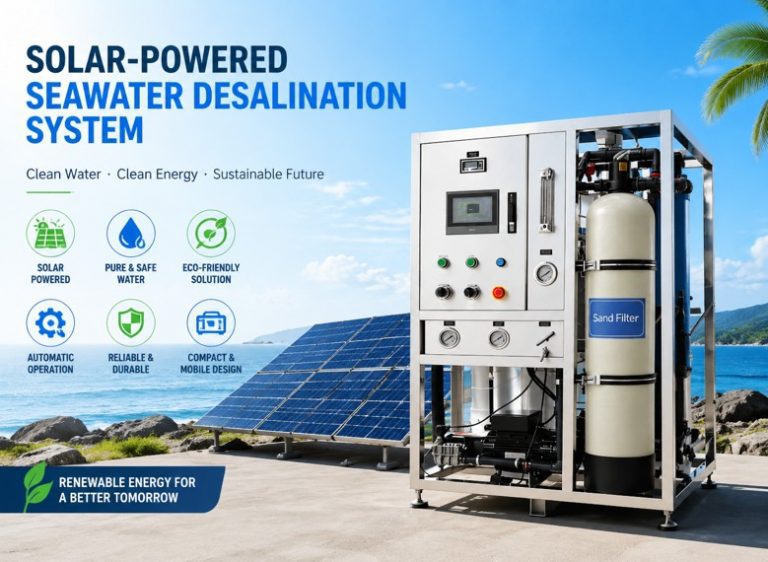
Guanya combines titanium alloy options with advanced seawater reverse osmosis technology.
A complete marine desalination system includes:
Seawater Pretreatment
Removes:
Suspended solids/Marine particles/Organic contaminantsHigh-Pressure Pump
Provides stable pressure for RO operation./Seawater RO Membrane
Removes:
Salt/Dissolved minerals
Freshwater Production
Provides reliable freshwater supply onboard.
Guanya Engineering Advantage
Titanium material selection is only one part of a successful marine desalination project.
Guanya provides complete engineering support:
1. Technical Analysis
Our engineers evaluate:
Vessel type/Seawater conditions/Freshwater demand/Installation limitations
2. Customized Design
Develop solutions according to:
Capacity requirements/Material selection/Space limitations/Power conditions
3. Factory Manufacturing
Complete production includes:
Equipment assembly/Piping integration/Electrical control installation
4. FAT Testing
Before shipment:
Equipment performance verification/Control system testing//Operational checks
5. Global Delivery
Provide:
Export packaging/Technical documents/Remote support
Conclusion
For marine seawater desalination applications, material selection determines equipment reliability and long-term performance.
Compared with conventional materials, titanium alloy provides superior seawater corrosion resistance, lightweight design and longer service life, making it an ideal choice for premium yacht watermakers, ship desalination systems and offshore marine applications.
Through advanced material selection, professional engineering design and China factory manufacturing capability, Guanya delivers customized marine desalination solutions that combine performance, reliability and cost efficiency.