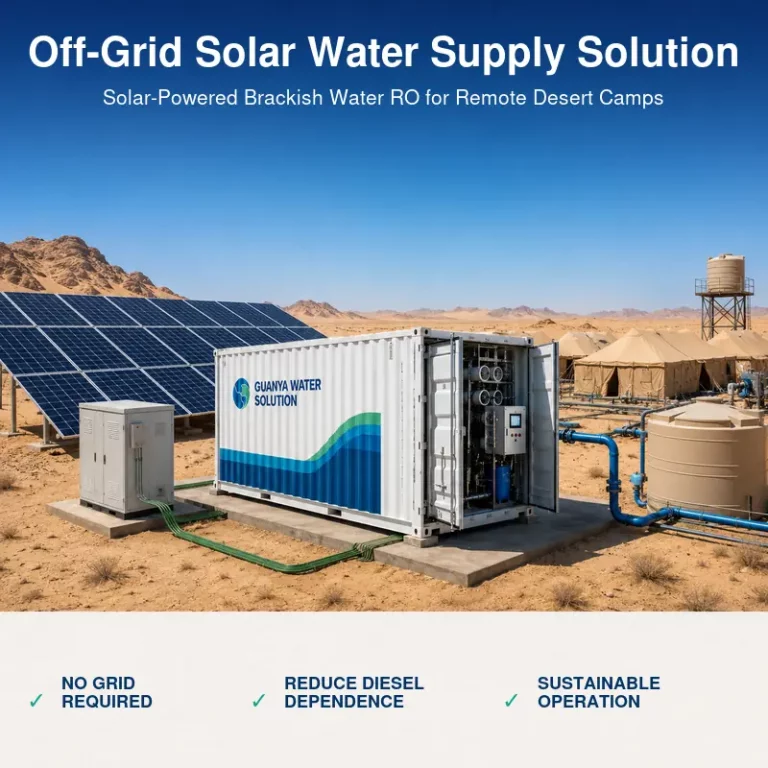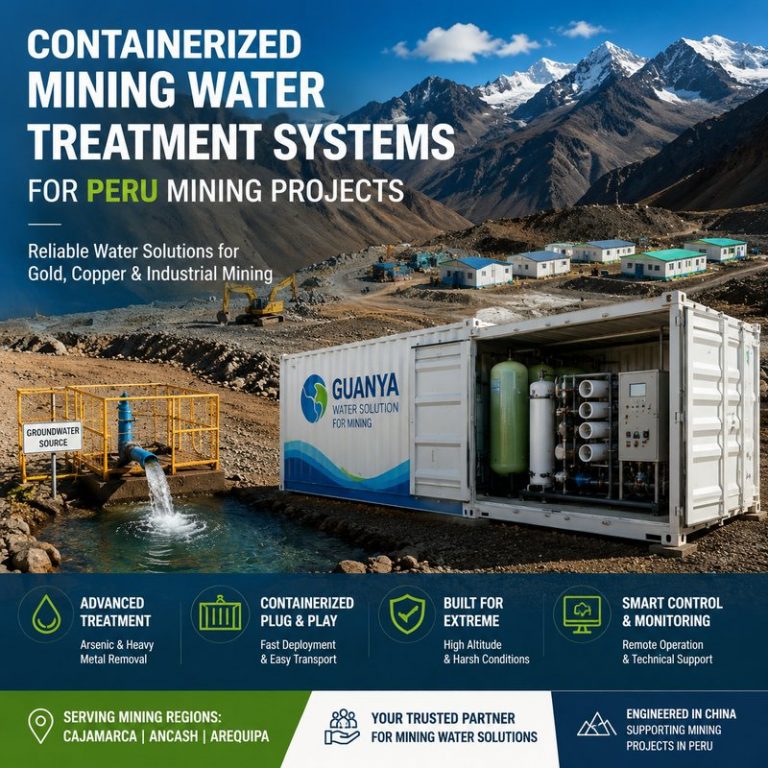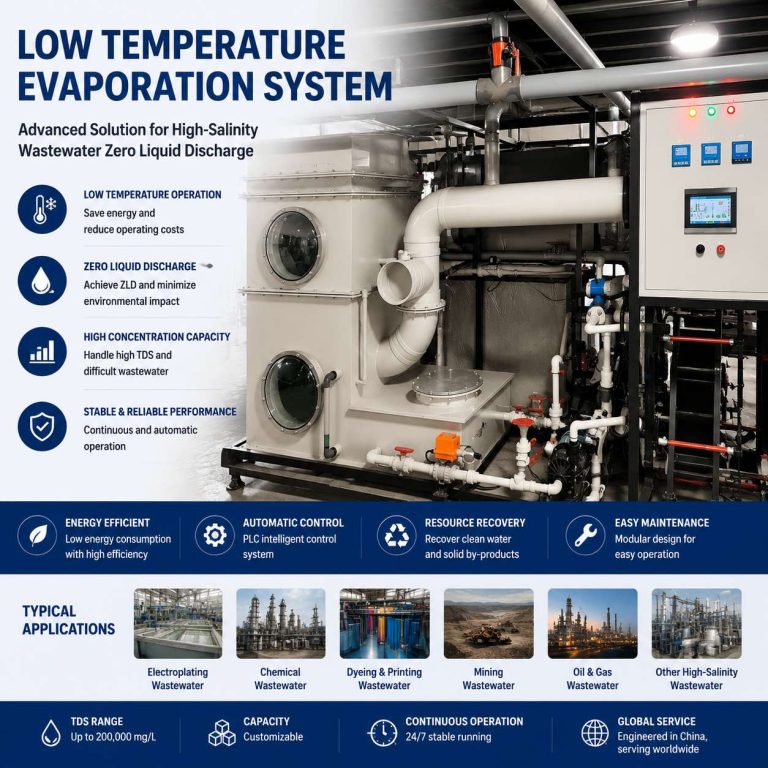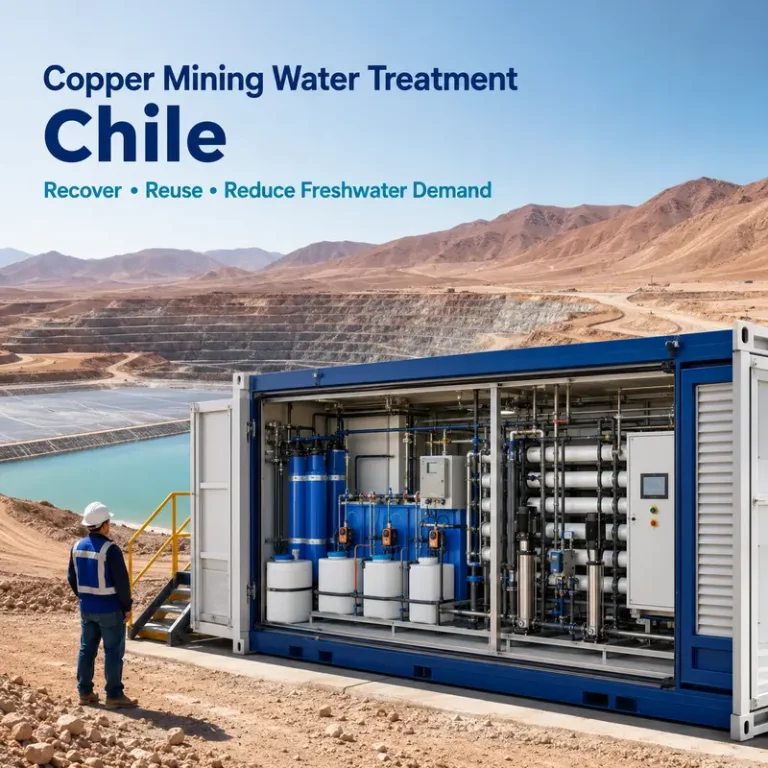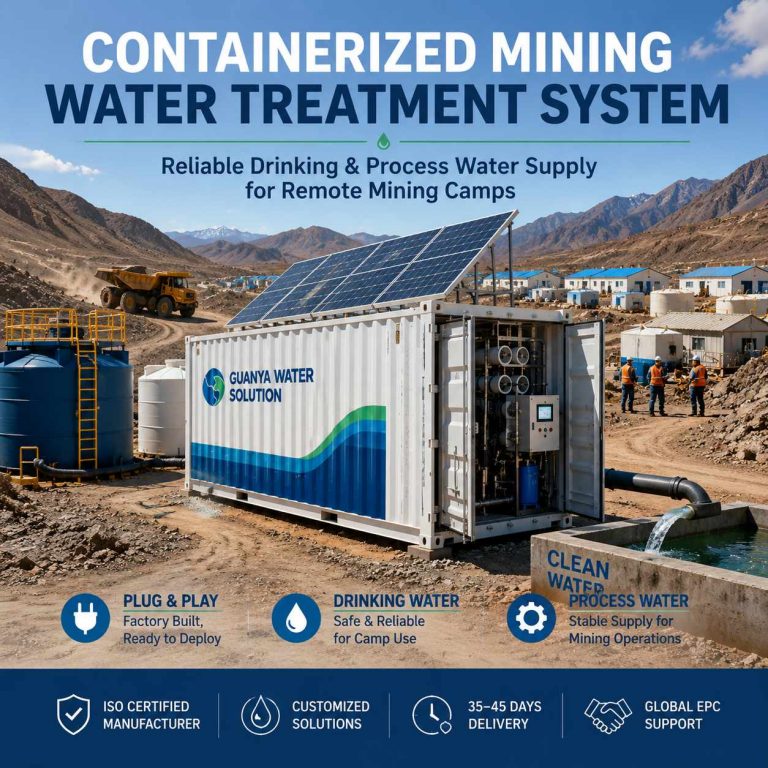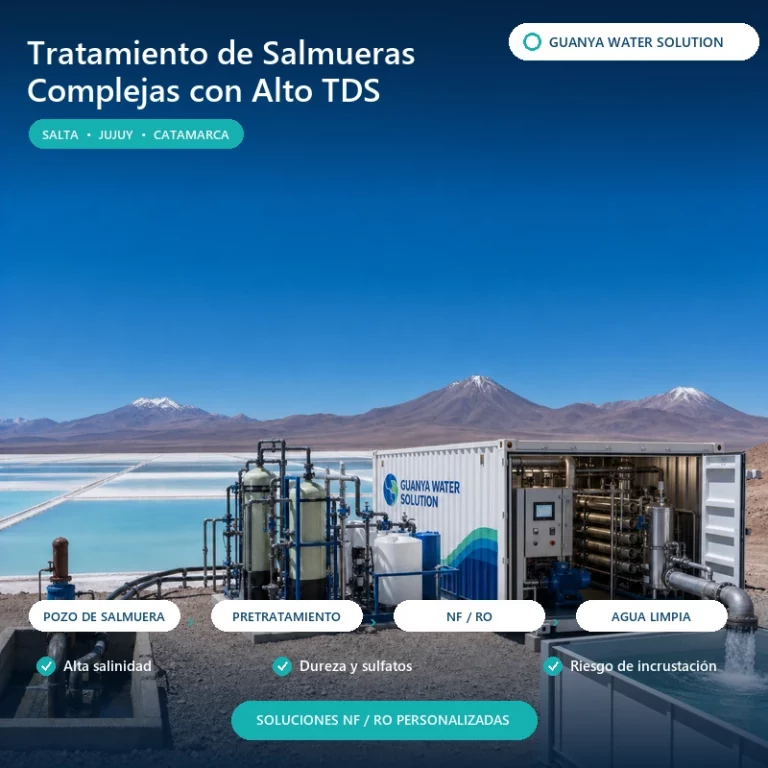
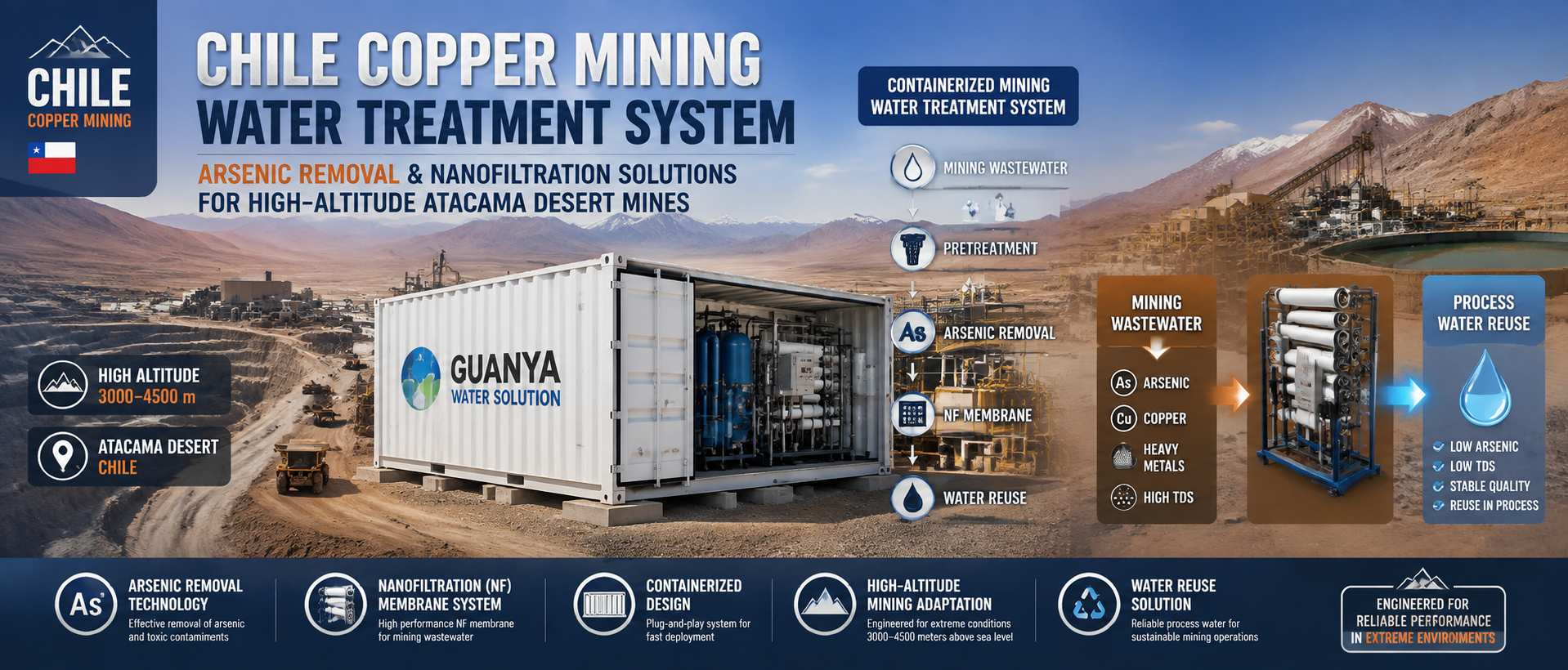
Chilean copper mines face a water crisis that is both environmental and operational. In the Atacama Desert, where annual rainfall is near zero, and in the Andes at elevations exceeding 3,000 meters, mining operations must treat brackish groundwater and process water contaminated with arsenic, heavy metals, and high TDS. Guanya Environmental is currently engaged in engineering consultation with copper mining operations in Chile, designing containerized water treatment systems that integrate SY02-P granular iron oxide adsorption for arsenic removal and NF membrane selective filtration for heavy metal retention — all pre-tested in factory and shipped ready for rapid deployment at remote mining sites.
Engineering a water treatment system for a Chilean mining operation?
Contact Guanya for a site-specific consultation on arsenic removal, NF membrane configuration, and high-altitude deployment.
Why is arsenic removal critical for Chilean copper mining water treatment?
Arsenic is a naturally occurring contaminant in Chilean mining groundwater, frequently exceeding WHO limits of 10 μg/L. Without treatment, arsenic-laden water cannot be used for potable supply, process flotation, or environmental discharge. Traditional chemical precipitation produces hazardous sludge that remote mining sites cannot easily dispose of. Guanya’s SY02-P adsorption system removes arsenic without sludge generation, producing water compliant with Chilean environmental regulations.
Atacama Desert — zero rainfall, high-TDS groundwater
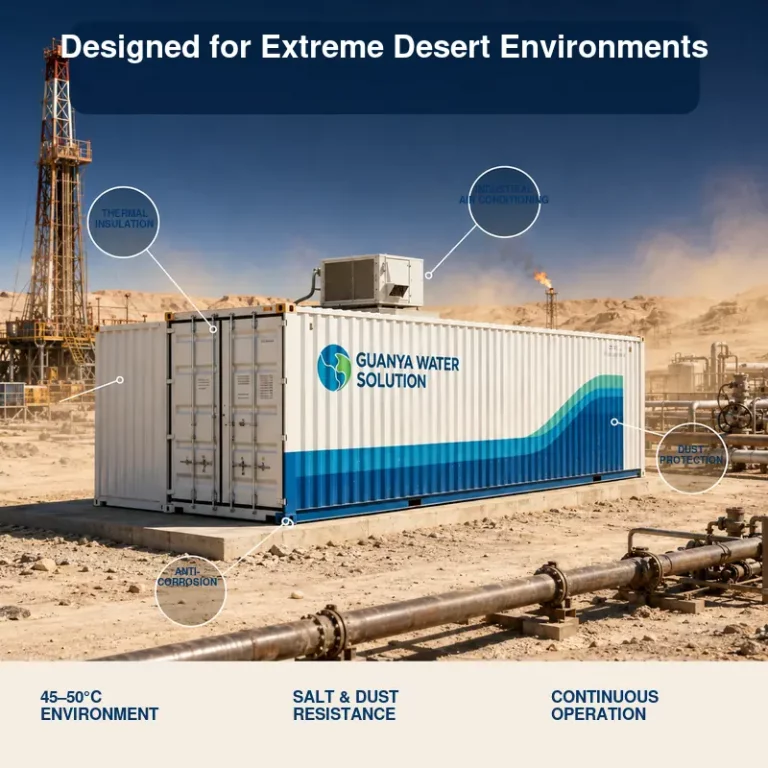
Northern Chile’s Atacama Desert is the driest non-polar desert on Earth. Mining operations in this region rely entirely on brackish groundwater or seawater desalination. Groundwater TDS levels often range from 2,000 to 10,000 mg/L, with elevated levels of arsenic, boron, and sulfate. Standard treatment systems designed for temperate climates cannot operate reliably in this environment without thermal protection and corrosion-resistant materials.
Andes high altitude — low pressure, extreme temperature swings
Major copper deposits in the Chilean Andes lie at 3,000–4,500 meters elevation. At these altitudes, atmospheric pressure drops to 70% of sea level, directly affecting pump NPSH (net positive suction head) calculations. Diurnal temperature swings of 30°C+ stress seals, gaskets, and non-metallic components. UV radiation is approximately twice sea-level intensity, accelerating material degradation.
How do containerized systems solve Chile’s unique mining water challenges?
Guanya’s containerized approach integrates three core technologies into a single factory-tested unit: SY02-P iron oxide adsorption for arsenic removal, NF membrane selective filtration for heavy metal retention, and industrial-grade thermal/HVAC protection for high-altitude desert operation.
SY02-P granular iron oxide adsorbent for arsenic removal
SY02-P is a granular iron oxide (Fe(OH)₃/β-FeOOH) adsorption material with a specific surface area of 300 m²/g. Key performance parameters:
- Adsorption capacity: 4–14 g/kg arsenic (As+3/As+5)
- Optimal pH range: 6.0–7.2 for maximum capacity
- Operating flow rate: 8–20 BV/h
- Bed height: >800 mm for adequate contact time
- Regeneration: 1–5% NaOH rinse for phosphate-loaded media
Unlike chemical coagulation-precipitation, SY02-P adsorption does not produce hazardous sludge. This is critical for remote mining camps where waste transport and disposal costs are prohibitive. The spent media can be handled as non-hazardous solid waste under most jurisdictions.
NF membrane selective filtration — heavy metals out, minerals in
Nanofiltration (NF) membranes operate at a pore scale of approximately 0.001 μm — one order of magnitude larger than RO (0.0001 μm). This selectivity provides unique advantages for Chilean mining water:
- Retains: Heavy metals (arsenic, lead, copper, zinc), colloids, divalent salts (sulfate, carbonate)
- Preserves: Monovalent ions and beneficial minerals (calcium, magnesium)
- Lower operating pressure: 30–40% less than seawater RO, reducing energy consumption
- Extended membrane life: Higher anti-fouling potential in high-TDS mining water
For mining camps where water is used for both potable supply and light industrial processes, NF produces water with adequate mineral content without the full demineralization of RO — reducing post-treatment remineralization costs.
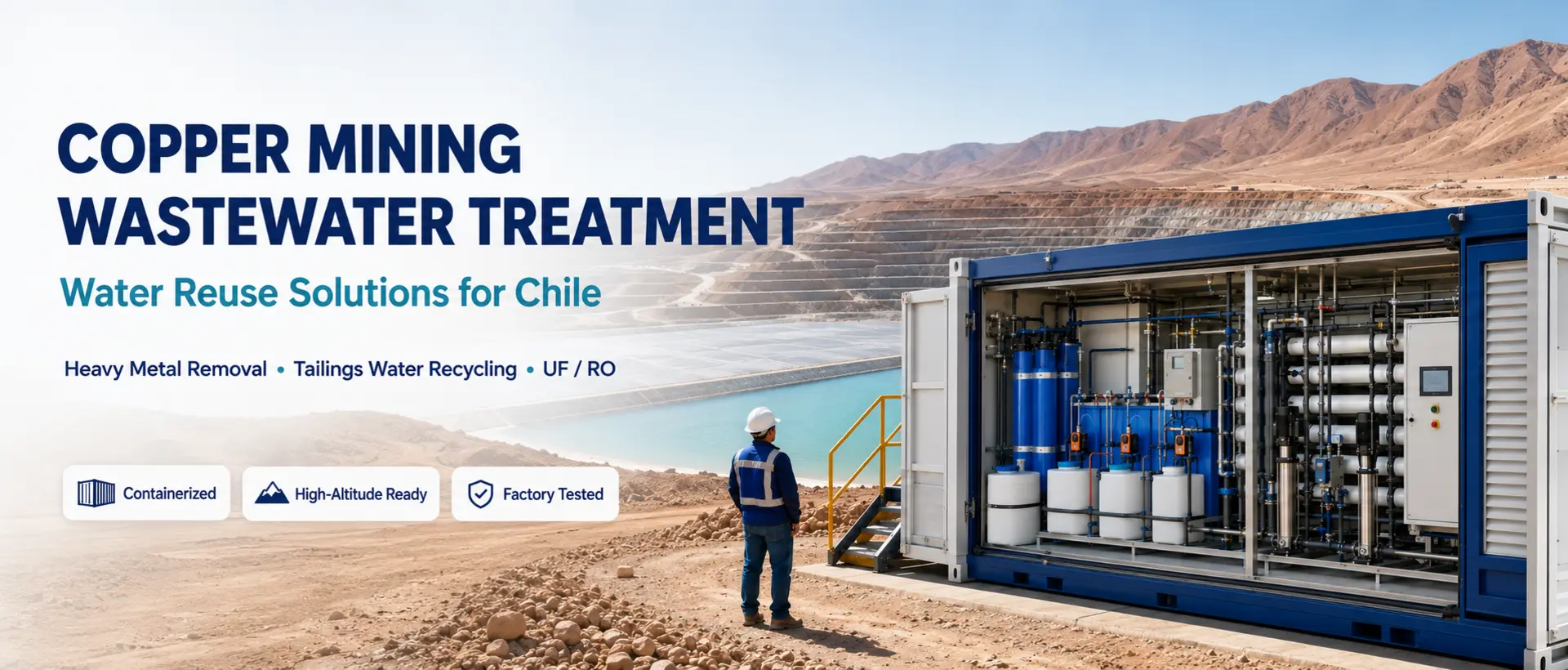
Containerized deployment — factory-tested, rapid site installation
The entire treatment train — pre-treatment filtration, SY02-P adsorption vessel, NF membrane skid, and post-treatment disinfection — is housed in standard 20 ft or 40 ft ISO containers. Before shipment, Guanya performs:
- Mechanical inspection and pressure testing
- Electrical and control logic verification
- Performance validation against design specifications
- Altitude-adjusted pump calibration for high-elevation sites
Site installation requires only a level foundation and utility connections. Commissioning takes 2–4 days, minimizing on-site labor in remote locations.
Technical specifications for Chilean mining applications
| Parameter | Specification |
|---|---|
| Design ambient temperature | -15°C to +45°C (Atacama/Andes) |
| Elevation rating | Up to 4,500m (altitude-adjusted pumps) |
| Arsenic removal capacity (SY02-P) | 4–14 g/kg As (pH 6.0–7.2) |
| NF membrane pore scale | ~0.001 μm |
| NF operating pressure | 5–20 bar (vs 55–70 bar for SWRO) |
| Feedwater TDS range | 1,000–15,000 mg/L |
| Production capacity | 10–1,000 m³/day (modular) |
| Container specification | 20 ft / 40 ft ISO standard |
| Control system | PLC with remote monitoring |
| Factory testing | FAT including arsenic removal validation |
Frequently asked questions
How does SY02-P remove arsenic from mining groundwater?
SY02-P is a granular iron oxide adsorption material with a specific surface area of 300 m²/g. It adsorbs inorganic arsenic ions (As+3/As+5) through surface complexation at pH 6.0–7.2, achieving an adsorption capacity of 4–14 g/kg. The material is housed in a pressurized filtration vessel with a bed height exceeding 800 mm and empty bed contact time of 3–6 minutes. Unlike chemical precipitation, SY02-P does not produce hazardous sludge, making it suitable for remote mining sites with limited waste disposal infrastructure.
Why use NF membranes instead of RO for Chilean mining water?
NF membranes (0.001 μm pore scale) provide selective filtration that RO (0.0001 μm) cannot. NF retains heavy metals, colloids, and divalent salts including arsenic, while preserving beneficial minerals such as calcium and magnesium. This reduces operating pressure by 30–40% compared to seawater RO, extends membrane life in high-fouling mining water, and produces water suitable for both potable supply and process reuse without full demineralization.
What is the delivery timeline for systems shipped to Chile?
Standard delivery is 25–35 days including factory acceptance testing (FAT). Systems are shipped in standard 20 ft or 40 ft ISO containers via maritime freight to Valparaíso or Antofagasta. Site installation requires only a level foundation and utility connections. Commissioning typically takes 2–4 days. For high-altitude Andes sites, Guanya provides pre-commissioning technical support including NPSH verification and altitude-adjusted pump calibration.
Supporting Chile’s copper industry with reliable water solutions
Chilean copper mining operations cannot afford water treatment failures. In the Atacama Desert and the Chilean Andes, every liter of treated water supports production, worker health, and environmental compliance. Guanya Environmental’s containerized systems — integrating SY02-P arsenic adsorption, NF selective filtration, and altitude-proven deployment — are engineered for these exact conditions.
From pilot-scale 1 m³/h units to 1,000 m³/day multi-container deployments, Guanya provides factory-tested, rapidly deployable water treatment solutions for the world’s most demanding mining environments.
Planning a water treatment project at a Chilean mining site?
Contact the Guanya engineering team for arsenic removal assessment, NF membrane sizing, and high-altitude deployment planning.