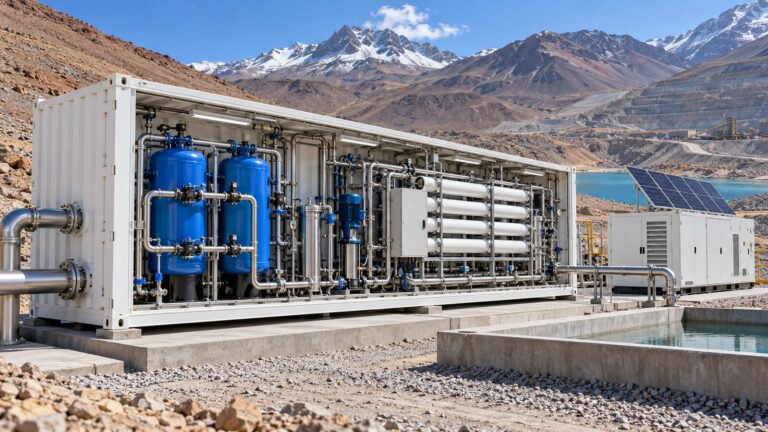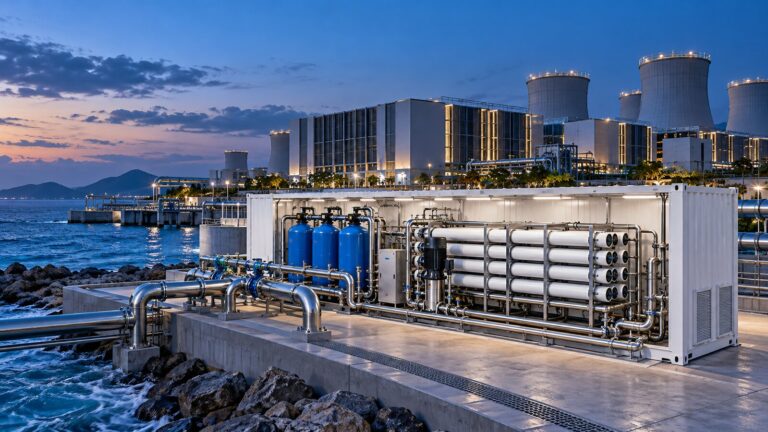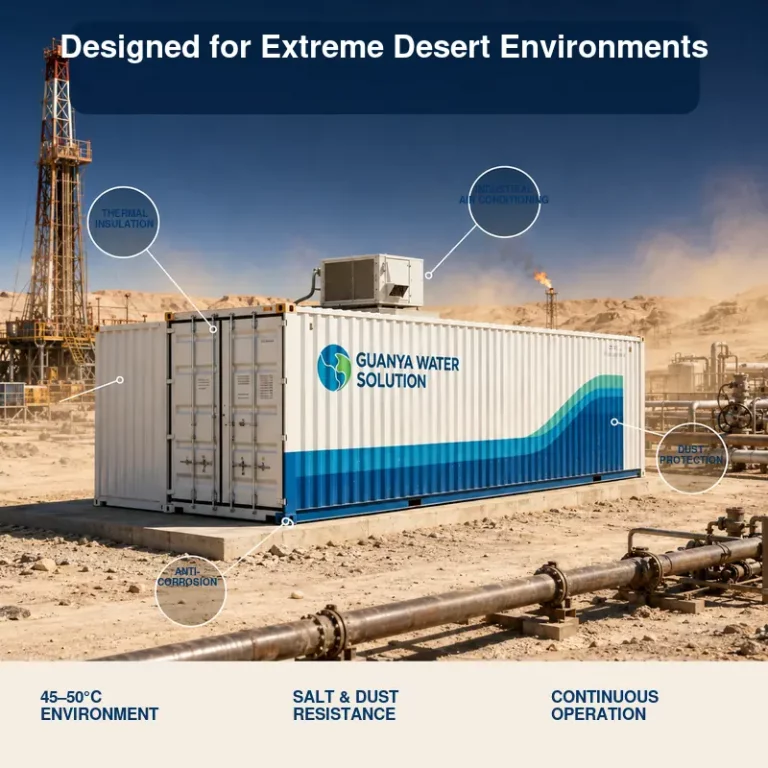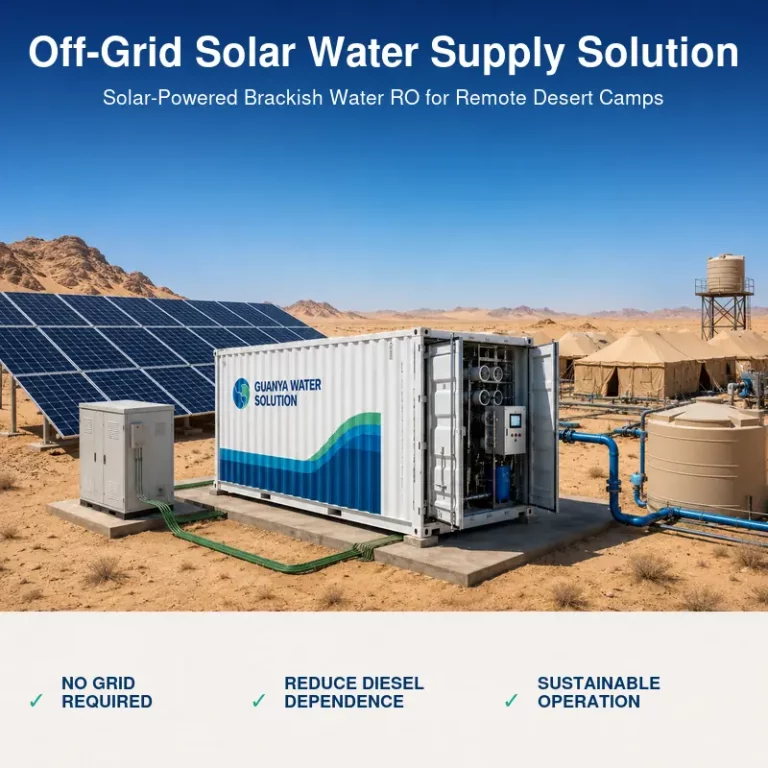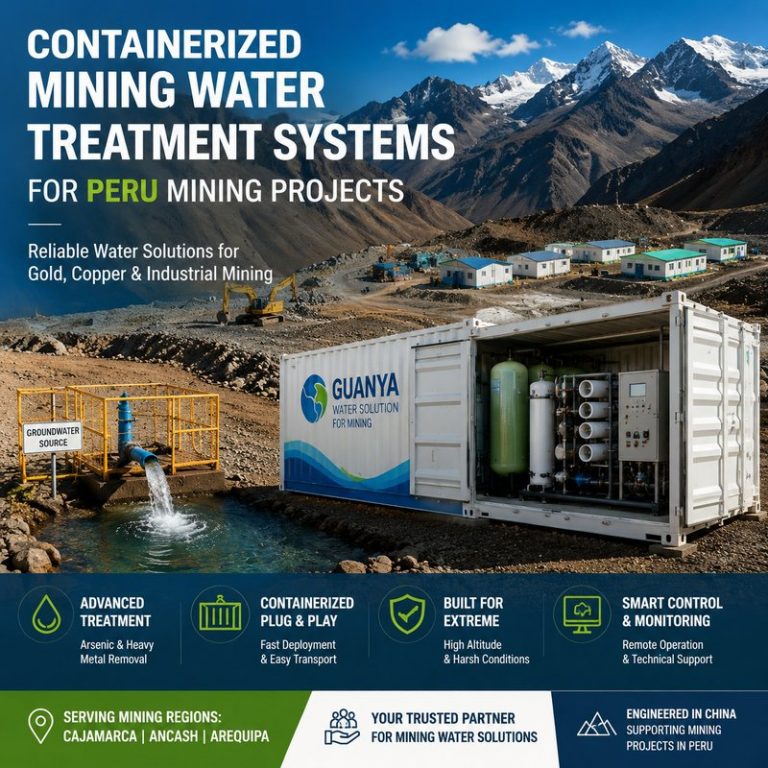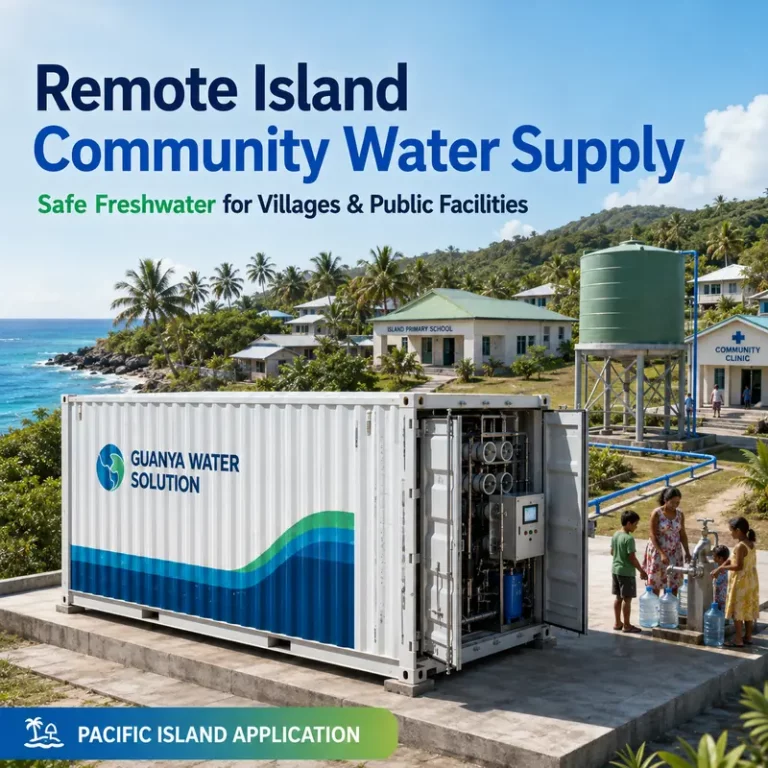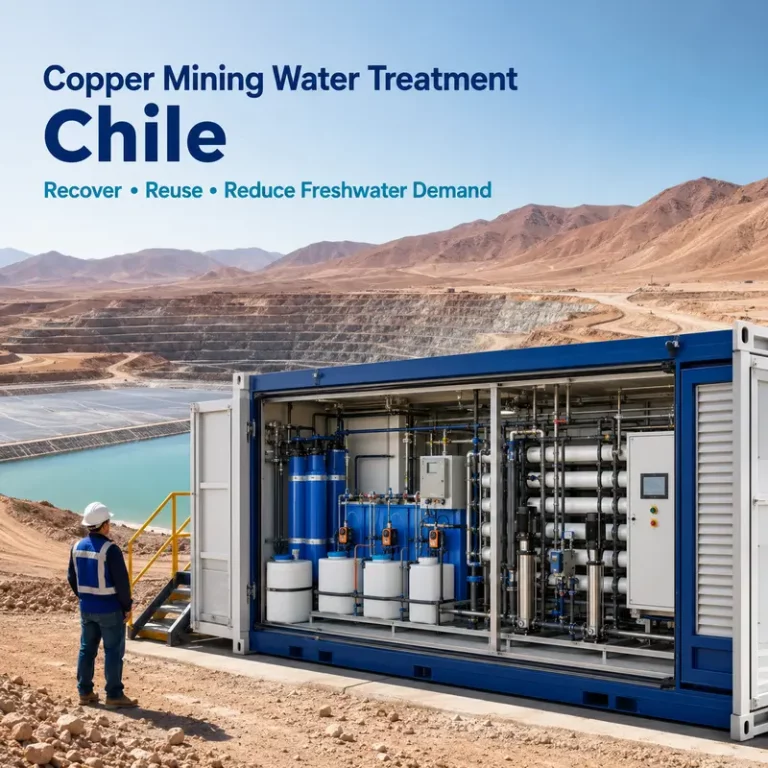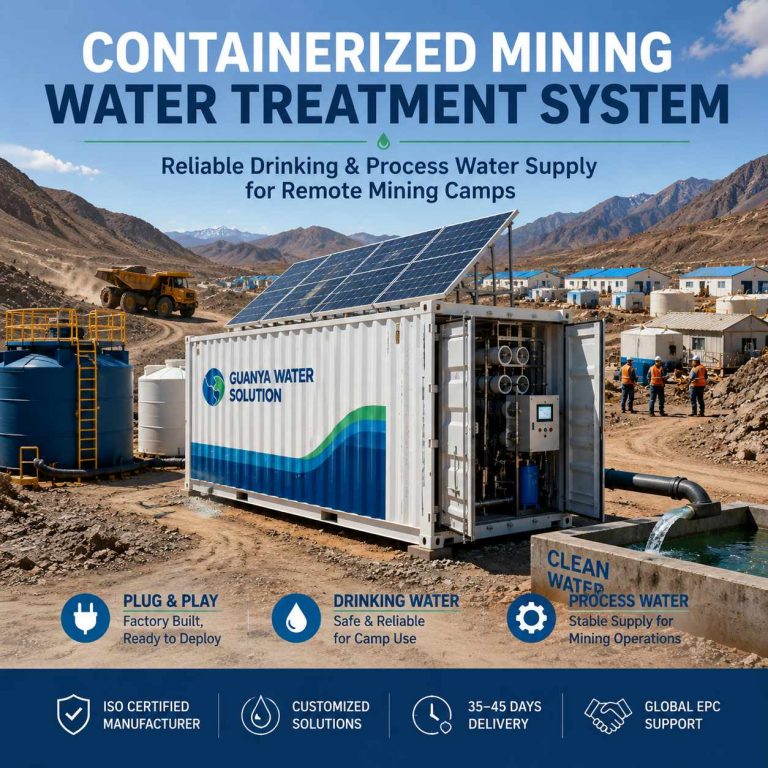
A mine camp needs reliable drinking water, wash water and often a defined process-water make-up, usually far from a municipal network. This article explains how GUANYA WATER SOLUTION approaches that duty with factory-integrated, containerized or skid-mounted treatment. It is a technical article. It is not a shipped or operating mining-camp case, and it does not promise a fixed number of hours from arrival to first water.
Status of GUANYA’s current mining-camp work: design, inquiry and quotation in markets such as Chile and Peru, plus published engineering notes. There is not yet a separately verified, public “shipped or operating” mining-camp reference on this site. Product pages describe equipment platforms. Project pages are labelled by status.
First confirm what the camp water is for
Camp water is not one problem. The treatment train follows the source and the use:
- Drinking and domestic water — the design target is a drinking-water standard agreed for the site (for example a national potable standard). Disinfection and a residual in the camp network usually sit at the end of the train.
- Process or wash water — the target may be lower than potable quality, but still has limits for TDS, hardness, silica or solids.
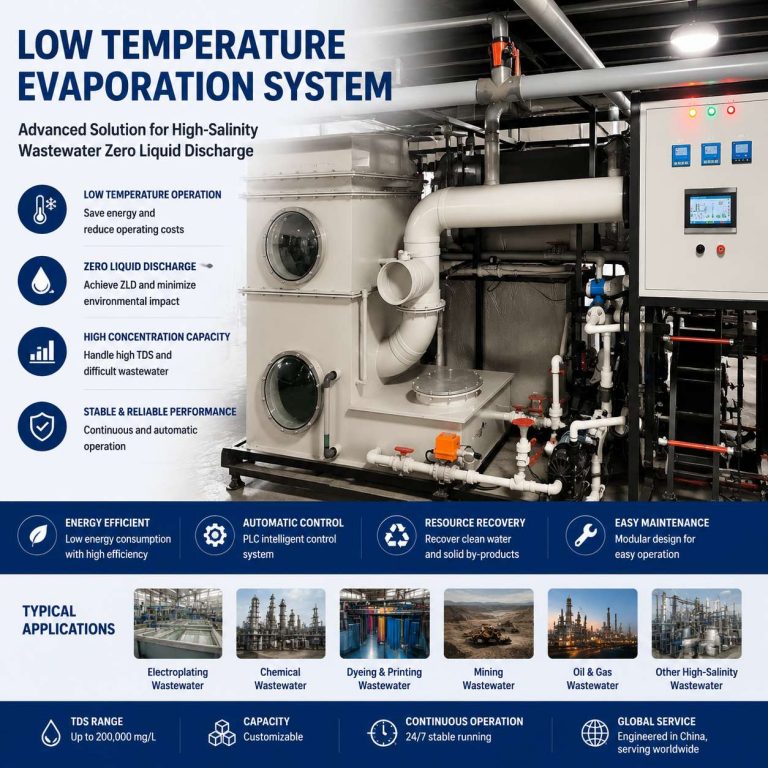
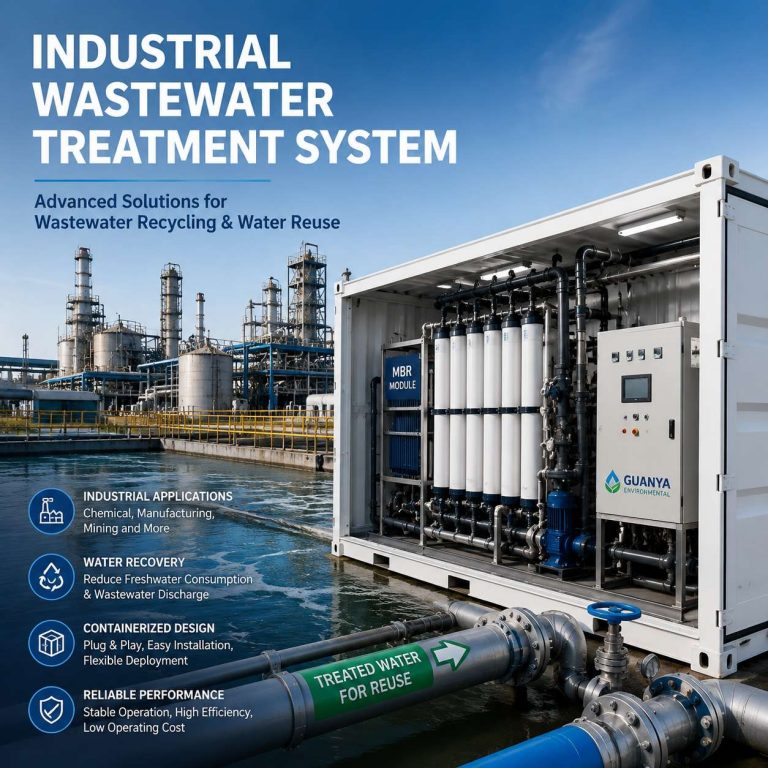
- Reuse of treated wastewater or mine drainage — this is a different duty from camp drinking water and is covered in a companion article on mine drainage treatment and water reuse.
Typical sources at a remote camp are brackish groundwater, a well that needs contaminant removal (for example arsenic), trucked water as a temporary feed, or, where the camp is on the coast, seawater. The right process is chosen from a current water analysis, not from a catalogue label.
Why camps usually use a container or a skid
A factory-assembled module limits field work to hook-up: feed inlet, product outlet, drain or concentrate line, and power. The plant is assembled and factory-tested before shipment. That shortens work inside the container. It does not replace a prepared foundation, a live power supply, filled tanks, or a lawful place to send concentrate or waste. Time to first water therefore depends on site conditions.
Peak camp demand is often much higher than the treatment flow. A practical design treats at a steady rated flow into a product tank, and lets a booster set and the tank absorb short peaks (showers, kitchen, shift change). The treatment train is not sized to follow every peak in real time.
What has to be confirmed before manufacture
- A recent raw-water analysis (as a minimum: TDS or conductivity, pH, temperature, turbidity, iron, manganese, hardness, and, where relevant, arsenic, silica, nitrate or microbiological results).
- Hourly and daily demand, operating hours, and whether drinking water and process water are the same stream.
- Elevation, ambient temperature range, and transport limits, especially for high-altitude sites — see high-altitude design factors.
- Available power (voltage, frequency, generator or grid) and any solar-hybrid interface.
- Who supplies raw and product tanks, civil works, and the discharge or drain path.
Related reading
- Containerized mining-camp water treatment system (product platform)
- Containerized BWRO for a mine site above 4,000 m — published engineering considerations; client identity and measured performance remain confidential; not a citeable operating result
- Well-water arsenic removal for a worksite in Chile, 2 m³/h, design to NCh 409/1 — design and quotation, not shipped
Frequently Asked Questions
Does GUANYA have a public shipped mining-camp case?
Not at the time this article was published. Current mining-camp and mine-site work that can be discussed publicly is at design, inquiry or quotation stage, or is a confidential engineering note. This article should not be read as an installed-camp reference.
Is a fixed hook-up time promised?
No. Equipment is factory pre-assembled and pre-tested. After feed, product, drain and power connections are made, start-up follows the documented sequence. The calendar depends on site conditions. No fixed number of hours to first water is promised.
How is peak camp demand handled?
The treatment unit is usually sized for a steady design flow. Short peaks are taken by product storage and a booster set, not by oversizing the treatment train to the instantaneous peak.