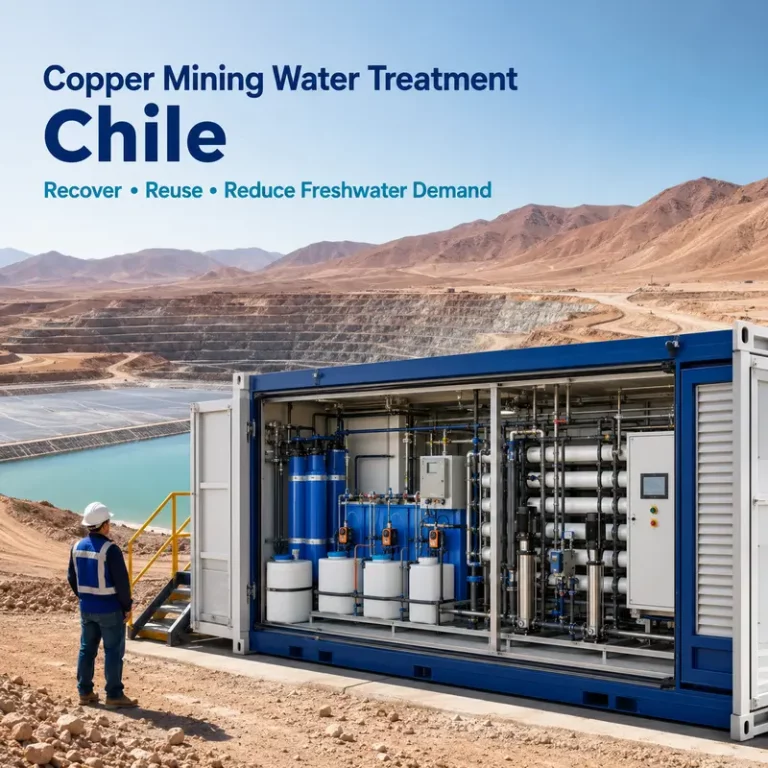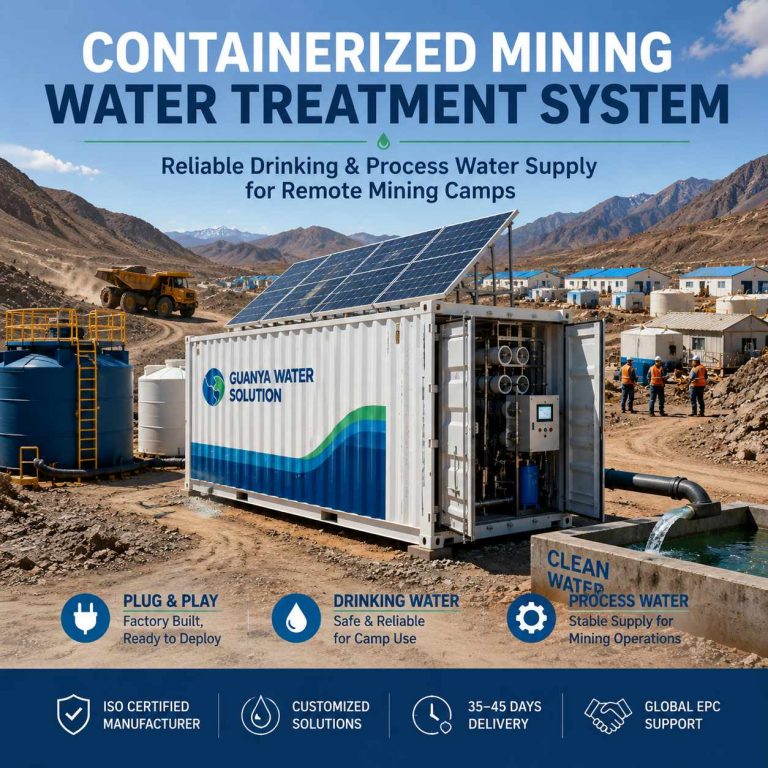
GUANYA WATER SOLUTION has prepared a 40 ft high-cube, containerized seawater reverse-osmosis (SWRO) design for a coastal site in Brazil. The rated permeate flow is 18 m³/h. At 20 operating hours per day, that is a planning figure of 360 m³/day. The site and client names are withheld.
Country: Brazil | Duty: Coastal seawater desalination | Design flow: 18 m³/h (360 m³/day at 20 h)
The problem
A coastal site in Brazil needed a compact seawater desalination plant to produce drinking-quality permeate at 18 m³/h (a planning figure of 360 m³/day at 20 operating hours). The design had to fit in a 40 ft high-cube container and offer a way to compare energy-recovery and non-recovery layouts against the site power supply.
How the scheme solves it
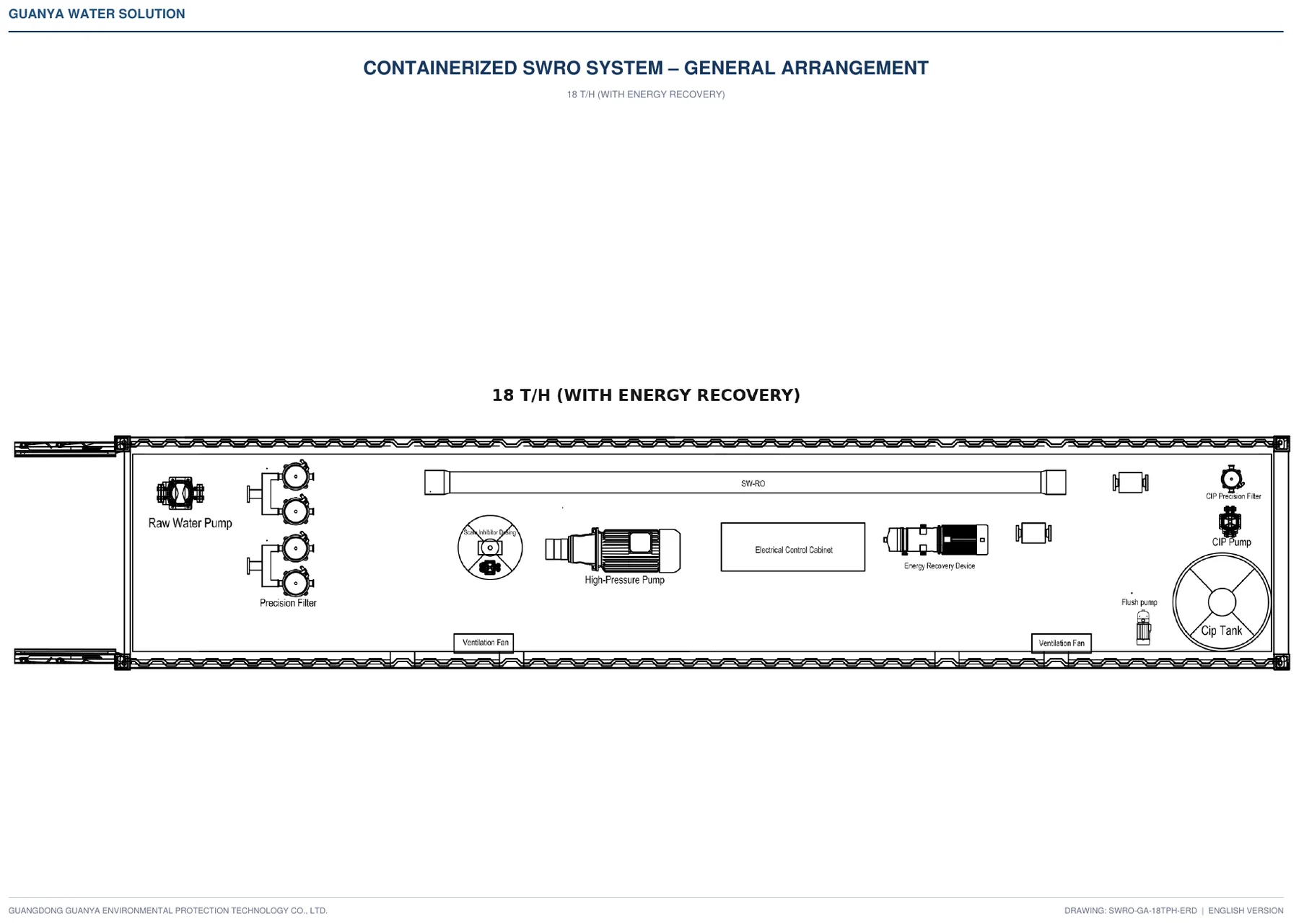
GUANYA prepared a containerized seawater RO treatment scheme with two design options. Option 1 is a single 18 m³/h train with an energy-recovery device. Option 2 is two parallel 9 m³/h trains, with permeate combined in the container, without an energy-recovery device. Design feed is seawater at a TDS of 35,004 mg/L, 25 °C, pH 8.0. Design recovery is 40%–45%, depending on the selected case. Design product TDS is not higher than 200 mg/L (membrane-calculation figures in the description are 147–158 mg/L). Membrane calculations use DuPont WAVE with SW30HRLE-400 elements; they are design tools and depend on a confirmed seawater analysis.
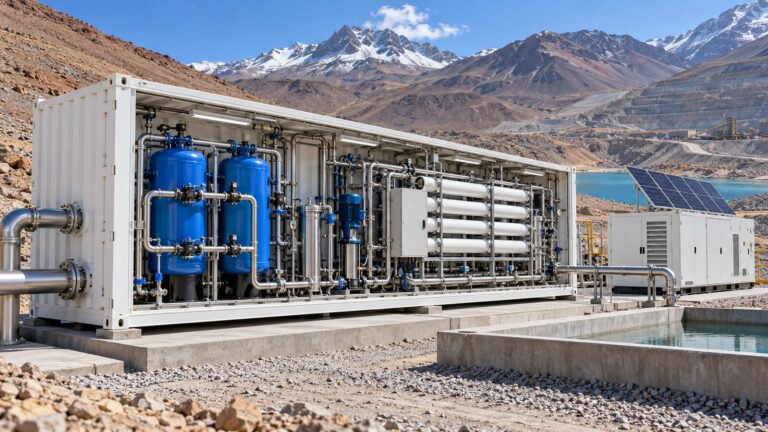
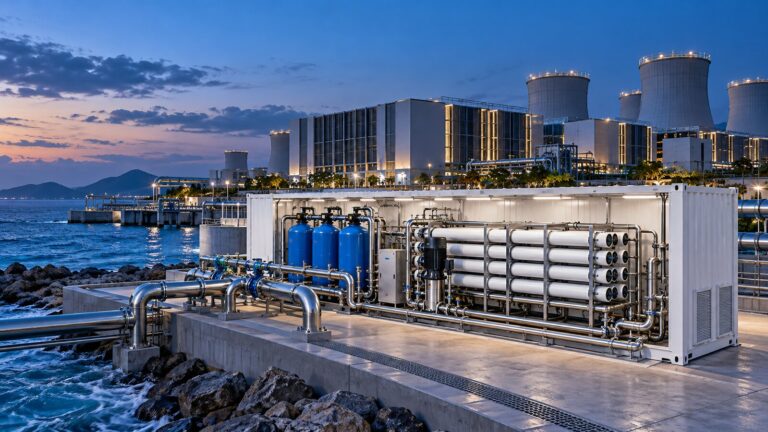
All process equipment is integrated in a 40HQ container, with CIP and disinfection in the design scope, factory-assembled and factory-tested. Seawater intake, raw-water transfer, product storage, concentrate discharge and any photovoltaic array are outside the module unless a later contract says otherwise. Design supply is 380 V line-to-line, 220 V line-to-neutral. Time to first water depends on intake, power, tanks and site hook-up.
Design drawings
Design basis
| Item | Design-basis value |
|---|---|
| Country / setting | Brazil, coastal site (identity withheld) |
| Design permeate flow | 18 m³/h; 360 m³/day at 20 operating hours |
| Design feed | Seawater, TDS 35,004 mg/L, 25 °C, pH 8.0 |
| Design recovery | 40%–45%, depending on the selected case |
| Design product TDS | ≤ 200 mg/L (membrane-calculation figures in the description are 147–158 mg/L). Actual performance depends on site water quality and operating conditions. |
| Two design options | Option 1: a single 18 m³/h train with an energy-recovery device. Option 2: two parallel 9 m³/h trains, permeate combined in the container, without an energy-recovery device. |
| Integration | All process equipment is integrated in a 40HQ container, with CIP and disinfection in the design scope. Seawater intake, raw-water transfer, product storage, concentrate discharge and any photovoltaic array are outside the module unless a later contract says otherwise. |
| Power (design) | 380 V line-to-line, 220 V line-to-neutral, as stated for the customer’s supply |
Membrane calculations in the description use DuPont WAVE with SW30HRLE-400 elements. Those calculations are design tools, not measured operating results and not a substitute for a confirmed performance guarantee against a current seawater analysis.
Related reading
- Seawater intake and brine discharge
- Factory acceptance and commissioning
- Cambodia island-hotel SWRO upgrade, 5 m³/h
Frequently Asked Questions
Why are there two design options?
The description presents a single 18 m³/h train with energy recovery, and a dual 9 m³/h arrangement without energy recovery, so that power demand and layout can be compared against the site supply. The option is selected in project engineering, not assumed from this page.
How is the 360 m³/day figure derived?
It is 18 m³/h multiplied by 20 operating hours. Actual daily output depends on operating hours, feed quality, cleaning and downtime.