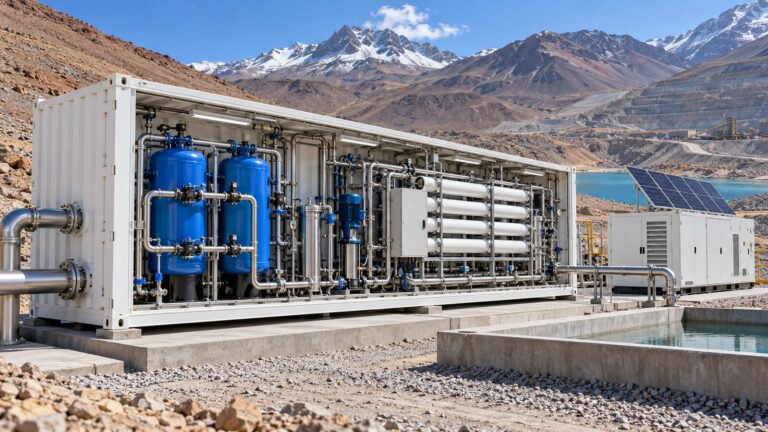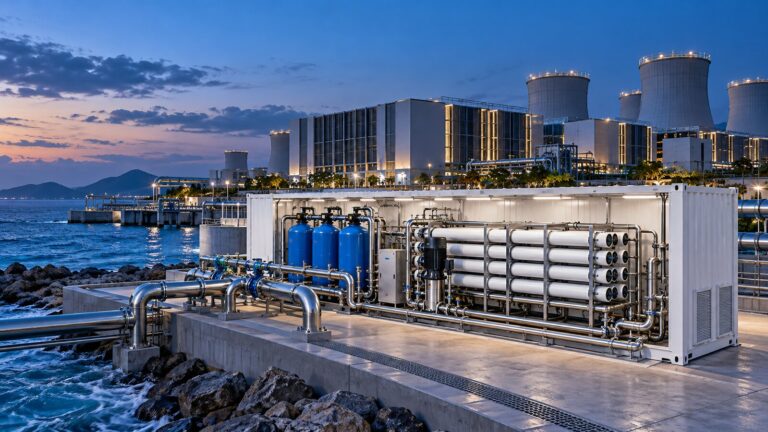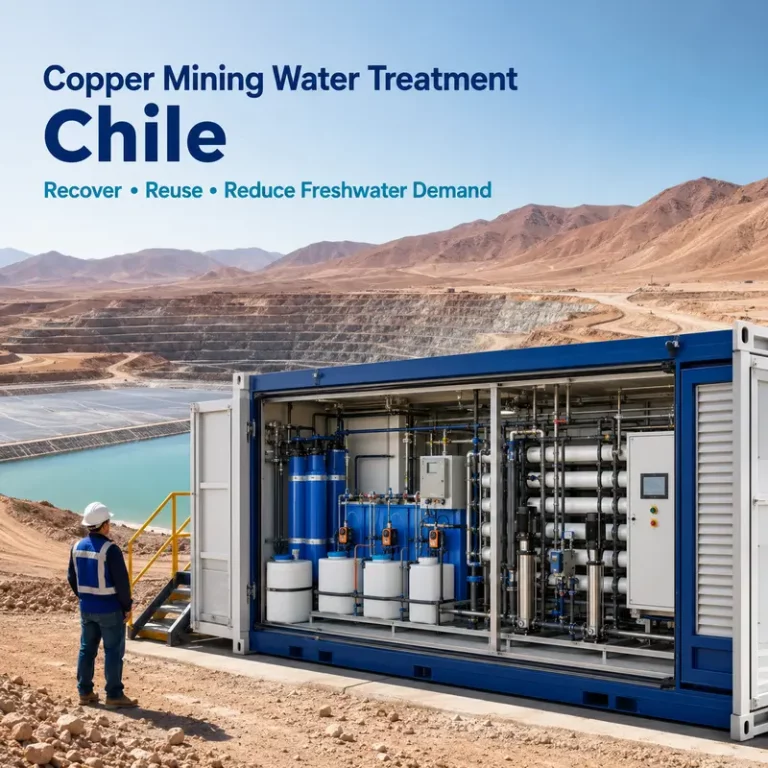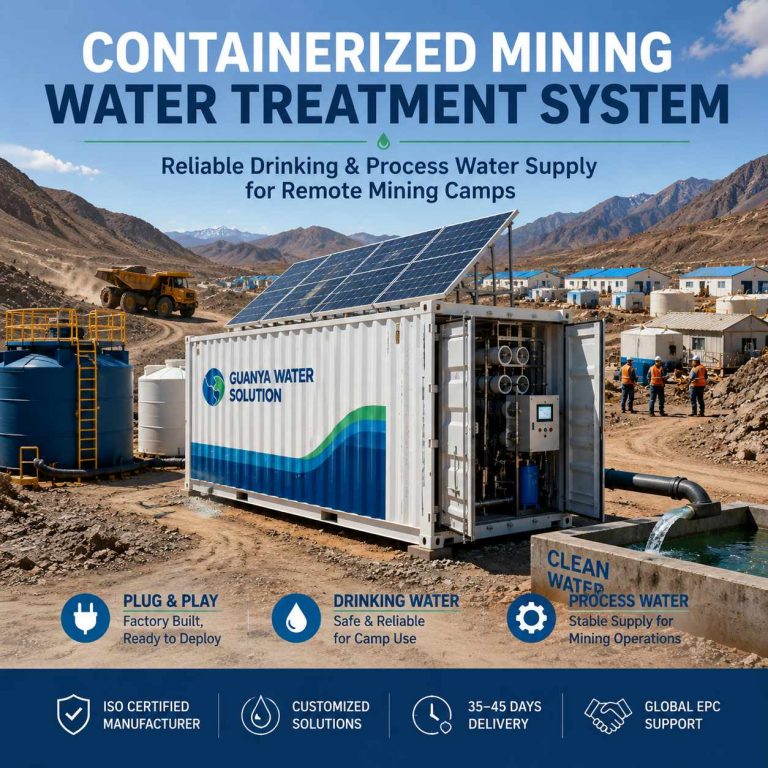
GUANYA WATER SOLUTION has prepared a containerized seawater reverse-osmosis (SWRO) design to replace an aging desalination plant at a remote island hotel in Cambodia. The current design is two trains of 2.5 m³/h, or 5.0 m³/h together. At 20 operating hours per day, that is a planning figure of 100 m³/day of drinking water. The hotel and site names are withheld.
Country: Cambodia | Duty: Island-hotel drinking water, replacement of an end-of-life SWRO plant | Design flow: 5.0 m³/h (100 m³/day at 20 h)
The problem
A remote island hotel in Cambodia needed a reliable drinking-water supply of about 80–100 m³/day to replace an aging seawater RO plant. The existing unit was described as aged, short of capacity, and affected by dissolved organic matter and biological slime that fouled cartridges and RO membranes. Existing ultrafiltration and RO equipment were not to be reused. The drinking-water target is the WHO Guidelines for Drinking-water Quality and Cambodia’s national drinking-water standard. The hotel and site names are withheld.
How the scheme solves it
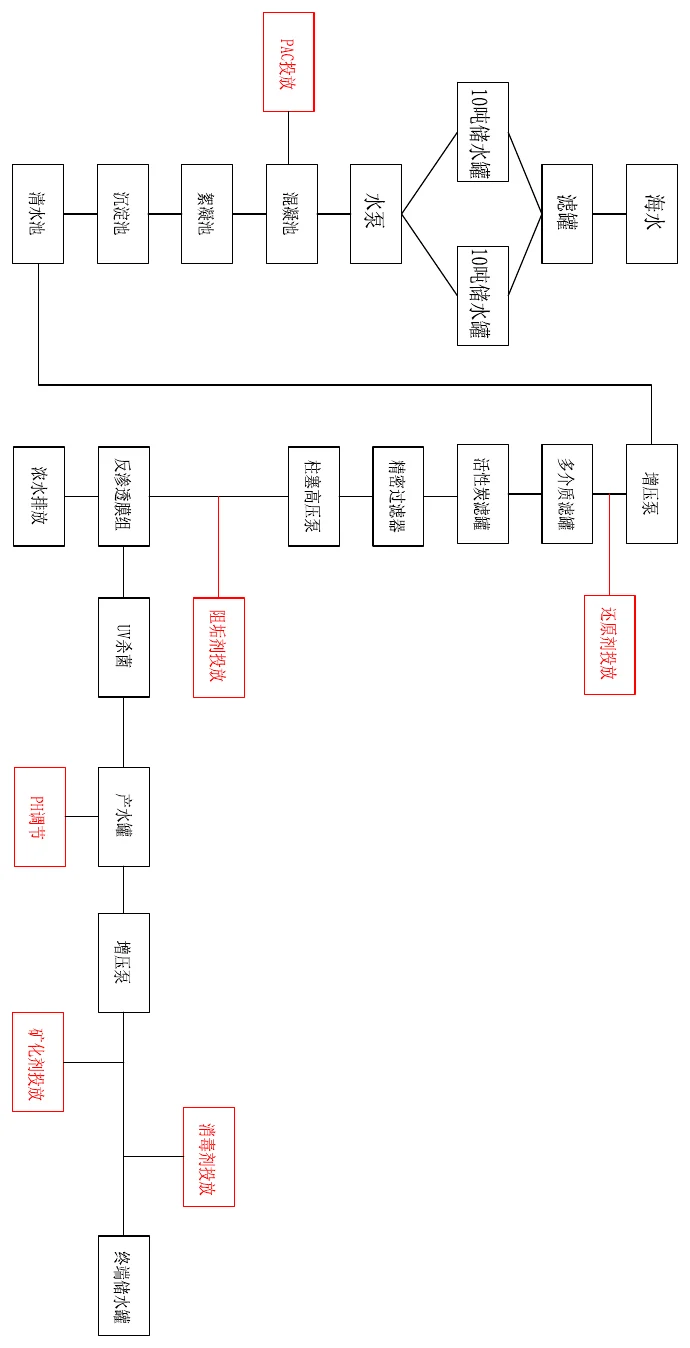
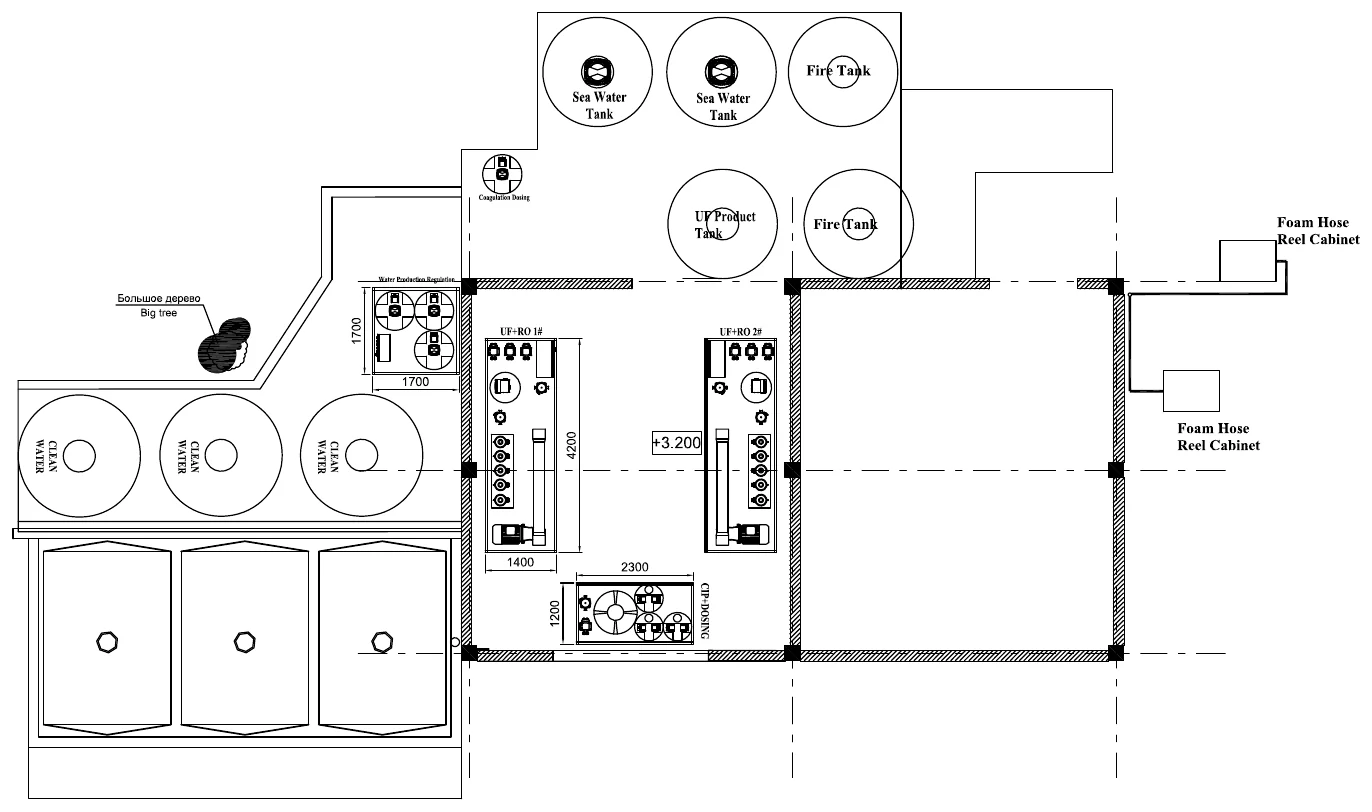
GUANYA prepared a dual-train, containerized UF + seawater RO treatment scheme: two trains of 2.5 m³/h, or 5.0 m³/h together (a planning figure of 100 m³/day at 20 operating hours). The process is coagulant (PAC) mixing → existing seawater buffer tanks → multimedia filtration → manganese-sand filtration → cartridge filtration → ultrafiltration (ten modules, five per train, with automatic backwash) → UF product tank → seawater RO in two trains, with CIP and a shutdown flush. Product disinfection is ultraviolet plus residual chlorine in the hotel network. Intermittent biocontrol is used in pretreatment; continuous pre-chlorination is not the selected route in this design.
Single-train RO feed in the 37% recovery projection is 6.76 m³/h, with 2.5 m³/h of permeate. Design feed TDS is up to 36,000 mg/L; membrane projections were also run at about 31,000 mg/L (25 °C) and 36,000 mg/L (32 °C). A design water balance after flush and CIP gives about 99 m³/day delivered to the existing product tanks if the plant is run for 20 hours. The process equipment is integrated in one 40 ft high-cube container, factory-assembled and factory-tested. Field work is hook-up of water, power and external interfaces; time to first water depends on site conditions. Seawater intake structures, civil works and existing tanks remain in the owner’s scope unless a later contract says otherwise.
Design drawings
Design basis
The owner asked for 80–100 m³/day of net drinking water, to be compared with repairing the existing plant. The existing unit was described as aged, short of capacity, and affected by organic matter and biological fouling. Existing ultrafiltration and RO equipment were not to be reused. The drinking-water target is the WHO Guidelines for Drinking-water Quality and Cambodia’s national drinking-water standard.
| Item | Design-basis value |
|---|---|
| Country / setting | Cambodia, remote island hotel (identity withheld) |
| Design treatment flow | Two trains of 2.5 m³/h, 5.0 m³/h together |
| Planning daily output | 100 m³/day at 20 operating hours. A design water balance, after flush and CIP, gives about 99 m³/day delivered to the existing product tanks. If operating hours are shorter, that daily figure does not apply automatically. |
| Design feed | Seawater, design TDS up to 36,000 mg/L. Membrane projections were also run at about 31,000 mg/L (25 °C) and 36,000 mg/L (32 °C). |
| Design recovery (projections) | 37% and 42% in the two membrane-projection cases. These are design calculations, not operating results or contract guarantees. |
| Product water (design) | Permeate TDS not higher than 500 mg/L before remineralization, under the agreed feed and stable operation. Chloride and TDS guarantees for contract purposes remain subject to a final feed analysis. |
| Integration | One 40 ft high-cube container, factory-assembled and factory-tested. Field work is hook-up of water, power and external interfaces. Time to first water depends on site conditions. |
Related reading
- Containerized SWRO for a Fiji island resort (shipped; operating results not published as measured performance)
- How Southeast Asian island resorts protect SWRO systems from algae and seasonal fouling
- Factory acceptance and commissioning for containerized SWRO
Frequently Asked Questions
How is the 100 m³/day figure derived?
It is a planning figure: 5.0 m³/h at 20 operating hours. A design balance after flush and CIP is about 99 m³/day to the existing tanks. Shorter operating hours would reduce daily output.
Why does the design include ultrafiltration?
The existing plant was reported to suffer from dissolved organic matter and biological slime that fouled cartridges and RO membranes. The proposed train places coagulation, multimedia and manganese-sand filtration and ultrafiltration ahead of the seawater RO.